
The Short Version
After police release a home, rental unit or business, the owner is responsible for cleaning it. That is a hard thing to hear when you are already dealing with shock, grief or fear. Professional crime scene cleaning follows a set process, called IICRC S540, that makes the space safe again while protecting the people who loved or lived there. Here is what it involves, step by step, so you know what to expect.
The Five Stages of an IICRC S540 Cleanup
| Stage | What happens | Why it matters |
|---|---|---|
| 1. Assess | Map visible and hidden contamination, note belongings to protect | Sets an accurate scope |
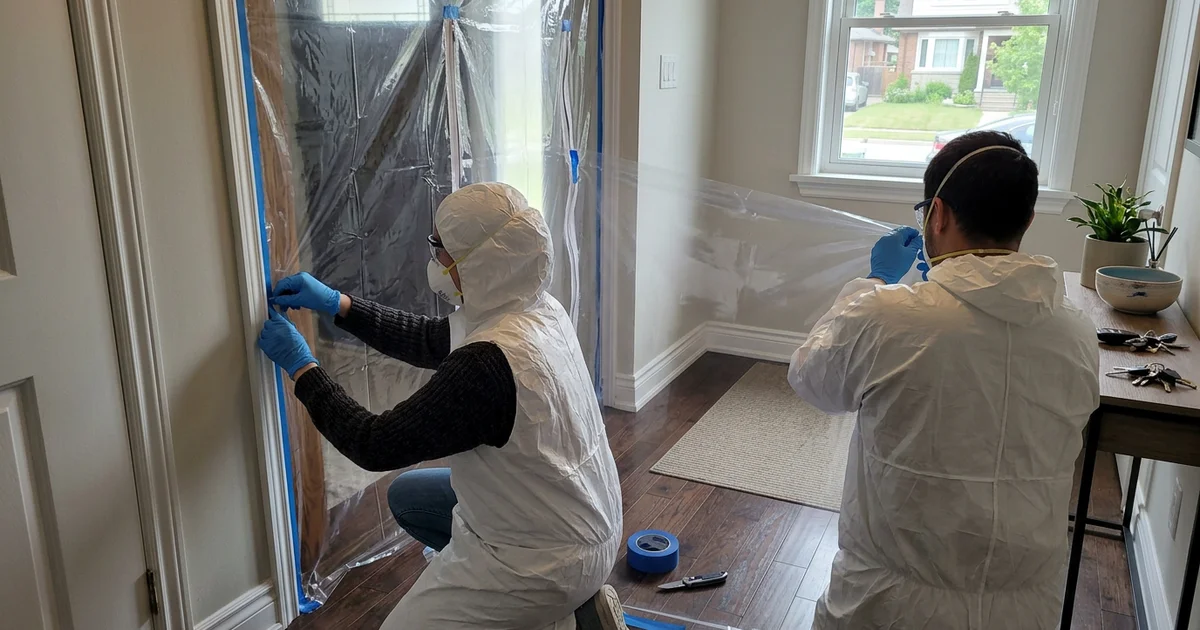
| 2. Contain | Poly sheeting, zipper doors, HEPA negative air | Keeps the rest of the home clean |
| 3. Remove | Cut out porous materials that absorbed blood or fluids | Removes the hazard and odour source |
| 4. Decontaminate | Enzyme cleaners, then hospital-grade disinfectant | Breaks down proteins and kills pathogens |
| 5. Verify | ATP testing, odour check, photos | Proves the space is clean |
Every stage is photographed, which gives you and your insurer a clear record of the work.

What Happens to the Home
Blood and fluids travel further than they appear to. They run into floor seams, under baseboards and into the gaps between hardwood boards, reaching the subfloor and sometimes the ceiling below. That is why crews lift trim and open seams rather than trusting the surface. Carpet, pad, upholstery, mattresses and drywall edges that absorbed fluids are removed. Hard surfaces are cleaned, treated with enzyme digesters and disinfected. Structure that cannot be removed is sealed with an encapsulating primer once it tests clean. Then the space is handed over, ready for flooring and drywall trades if any were removed.
You never have to see it
Family members are not required on site at any point. You can choose to see the finished room, or not at all.
What Happens to Belongings
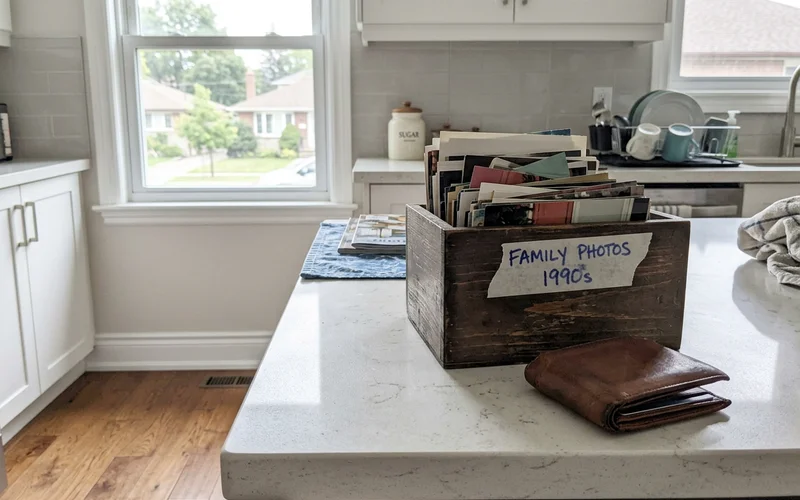
Before removal starts, we ask what matters most: photos, documents, ID, phones, jewellery, a particular piece of furniture. Items outside the affected area are cleaned and boxed. Non-porous items inside the area are decontaminated and returned where possible. Anything that must be disposed of is photographed first, so you have a record and can make decisions about it later.
Coordination With Police and the Coroner
We do not begin until the scene is released, and we never move anything investigators asked to stay in place. Our crew lead can confirm release timing with Toronto Police Service, Peel or York Regional Police, or the Office of the Chief Coroner’s contact, so you do not have to make those calls. If investigators need to return, we pause and keep containment in place.
Discretion
Vans are unmarked, crews look like any trades crew from the street, and suits go on inside. Waste leaves in plain outer boxes and goes to a licensed biohazard carrier with a manifest. For families already dealing with attention from neighbours or the news, this matters a great deal.
Cost and Payment
Most crime scene cleanups in the Toronto area cost $2,800 to $9,500, depending on spread and how much material must be removed. Many home and landlord insurance policies cover it, and victim support programs may help in some cases. Our guide on who pays for crime scene cleanup explains the options. You will get a written scope before any work begins, and we can speak with your adjuster directly.