5 Types of Biohazard Remediation We Handle in Toronto
Biohazard work is sorted by what the contamination is and where it went. Your scope names the type, the PPE level and every material we plan to remove.
Blood & Body Fluid Remediation (OSHA 1910.1030, Porous Material Removal)
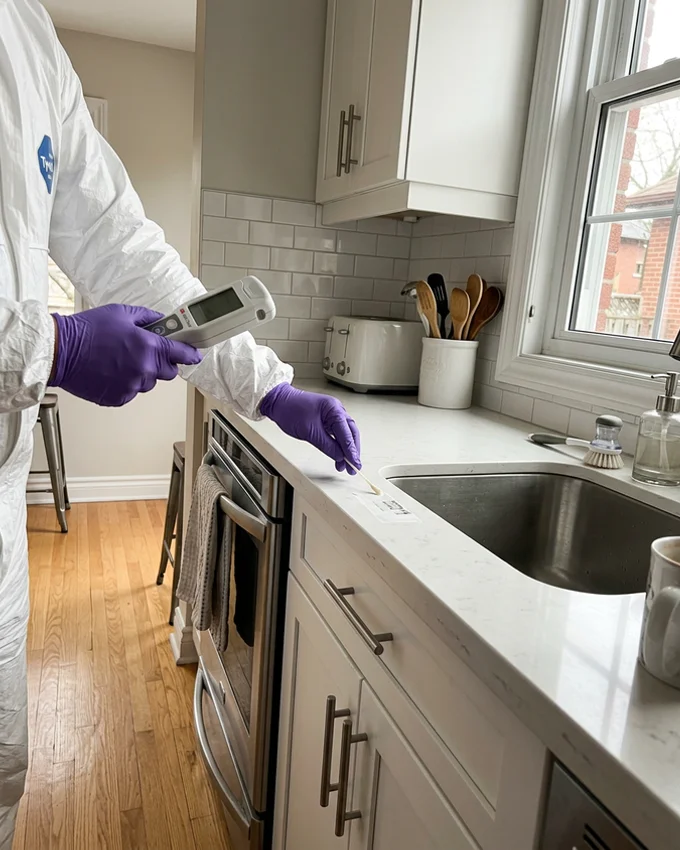
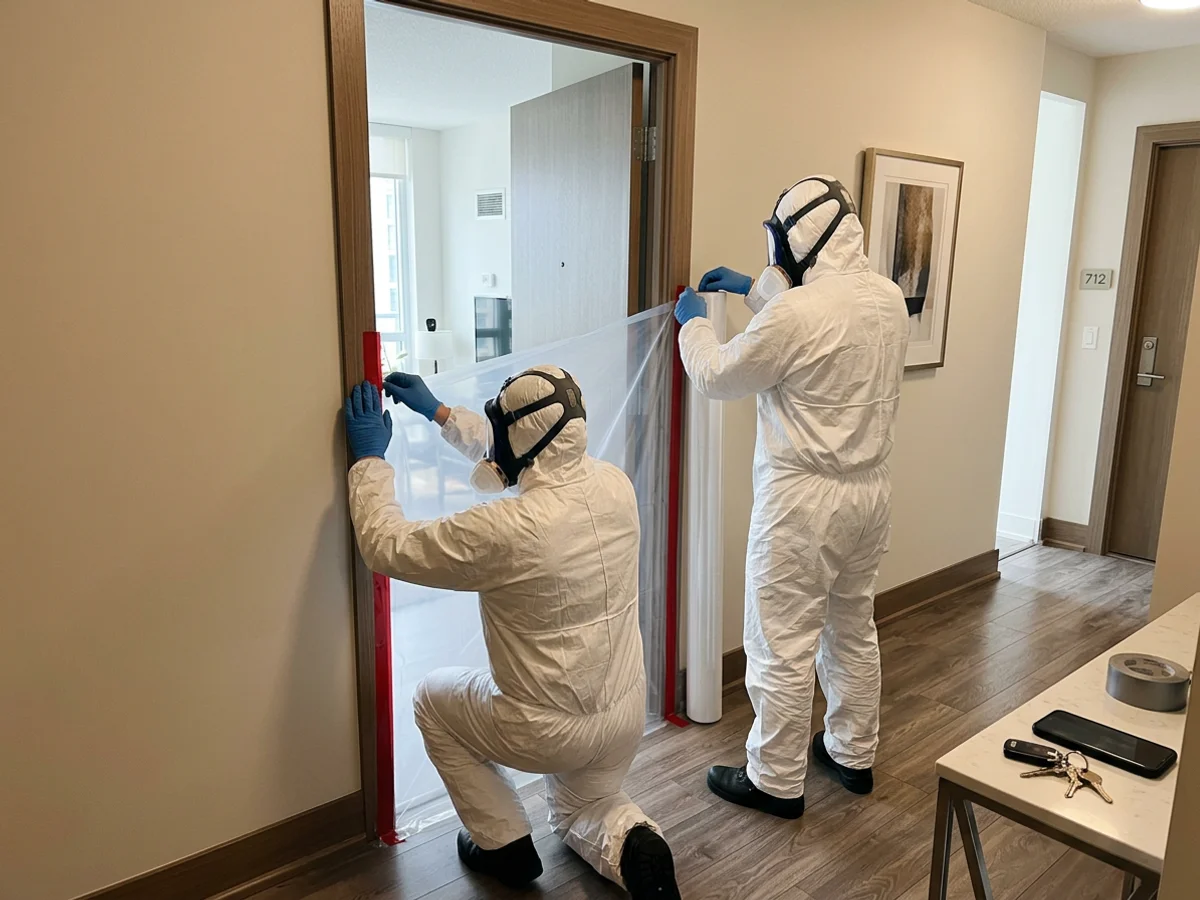
Blood and body fluid remediation follows the OSHA 1910.1030 bloodborne pathogen protocol from the first minute. The crew sets up a clean zone, a work zone and a decontamination point at the doorway, then works in fluid-resistant Tyvek, double nitrile gloves and respirators. Hard surfaces are cleaned and disinfected with an EPA-registered and Health Canada-approved product at the labelled dwell time. Porous materials, including carpet, pad, upholstery, mattresses and drywall edges, are cut out and bagged rather than scrubbed, because fluids sit below the surface. Waste is packaged as WHMIS biohazardous infectious material and leaves with a licensed carrier. ATP testing confirms the area before we hand it back.
Decomposition & Odour Removal (Putrescine/Cadaverine Source Removal, Hydroxyl Treatment)
Decomposition and odour removal is mostly about removing the source. Putrescine and cadaverine, the compounds behind the smell, bind to flooring, subfloor, furniture and even the framing below. We open the floor where fluids travelled, remove everything they reached, disinfect the structure and test it. Only then do we treat the air. Hydroxyl generators are used when people or pets are nearby, while ozone is reserved for sealed, empty spaces. Surfaces that cannot be removed are sealed with an encapsulating primer such as Zinsser B-I-N. This order matters. Skipping straight to fogging is why odour so often comes back on the first warm, humid day.
Sharps Recovery (Room-by-Room Sweep, Rigid Containers, Fentanyl Caution)
Sharps recovery happens before any sorting or bagging begins. Crew members wear cut-resistant gloves under nitrile and sweep each room in a set pattern: floors, furniture seams, drawers, pockets, bedding and the gaps behind appliances. Needles are never recapped or carried by hand. They go straight into puncture-proof rigid containers that are sealed and manifested. Unknown powders, residue and paraphernalia are handled with fentanyl caution, which means no dry brushing, no bare skin and respirators on. Families get a short report of where sharps were found. This sweep protects our crew, and it protects the family members who help with sorting later.
Sewage Backflow Cleanup (Category 3 Water, Antimicrobial Treatment)
Sewage backflow is Category 3 water, the most contaminated class, and it changes the whole job. Anything porous that it touched, including drywall up to the wicking line, insulation, carpet and stored cardboard boxes, is removed. In hoarded basements that often means sorting wet contents fast, with family deciding what is worth saving. We extract standing water, remove affected materials, wash and disinfect the structure, then apply an antimicrobial treatment before drying equipment goes in. Moisture readings are logged so your adjuster and your drywall trade know when the space is ready. Sewage events are usually sudden, which makes them one of the more insurable biohazard jobs. Our 2026 update on how we work with adjusters on biohazard insurance claims lists every document in that package.
Hoarding-Biohazard Cross Contamination (Waste, Mold and Pest Contamination in Hoarded Homes)
Hoarding-biohazard cross contamination is the most common job we see. It rarely starts with one event. It builds as food rots, pipes leak behind stored items, pets or rodents leave waste, and mold grows in damp corners. The risk is that everything is mixed together, so any piece of a pile can carry droppings, spores or fluids. We treat the whole affected zone as contaminated, sort under P100 respirators with HEPA negative air running, and route regulated waste to a licensed carrier with a manifest. Exterminator coordination and mold containment are built into the same scope, so one crew handles it from start to finish.
When Toronto Properties Need Biohazard Remediation Fast
Sewage Backflow in a Finished Basement
Symptom: A main sewer line backup or sump pump failure during heavy rain pushes raw sewage up through basement floor drains into finished living space. Water contains fecal matter, bacteria and pharmaceutical residue. Children or pets may have been in the room. Insurance adjuster is on the way.
Immediate action: Shut off power to the basement at the panel. Do not try to clean it yourself. Raw sewage carries hepatitis, E. coli and other pathogens that household cleaners cannot neutralize. Photograph everything before touching, then call us within 2 hours so documentation stays fresh for the insurance claim.
Scope: We arrive within 2 hours in Toronto 24/7, extract contaminated water with wet vacs rated for category 3 water, remove saturated drywall and insulation to 12 inches above the water line, disinfect with hospital-grade sodium hypochlorite, run HEPA air scrubbers and dehumidifiers, and provide manifests for licensed biohazard carrier disposal. Typical sewage backflow $4,000 to $12,000, 2 to 4 days with crew of 3 to 5. Insurance package ready in 48 hours.
Qualified contractor response: Needs IICRC S500 (water damage) and IICRC S540 (biohazard) and OSHA 1910.1030 training, licensed biohazard carrier, moisture meter and hygrometer documentation for the adjuster, and ability to work with your plumber on the backflow source. Avoid any crew that quotes based on square footage alone without a moisture inspection.
Discovered Needles in a Shared Rental Common Area
Symptom: A property manager, cleaner or new tenant discovers used hypodermic needles in a shared basement, parking lot, hallway or storage room of a multi-unit building. Risk of accidental needle stick and fentanyl exposure is immediate.
Immediate action: Rope off the area with warning tape. Do not try to collect needles yourself. Toronto Public Health protocol requires sharps containers, cut-resistant gloves and professional handling. Document locations with photos (no touching). Notify other tenants to avoid the area until cleared.
Scope: We respond within 2 hours in Toronto 24/7, perform full sweep with FDA-approved sharps containers and cut-resistant gloves, decontaminate surfaces where needle contact may have occurred, test with ATP swabs, and provide manifested disposal through a licensed medical waste carrier. Cost $800 to $3,500 depending on area size and quantity, usually completed same day or next.
Qualified contractor response: Needs OSHA 1910.1030 bloodborne pathogen training, hepatitis B vaccination for all crew, licensed sharps disposal partnership (not general waste), and documented chain-of-custody for the manifest. Toronto Public Health may want notification depending on the location.
Decomposition Fluid Through Subfloor in a Long-Vacant Unit
Symptom: A rental unit or inherited property is opened days or weeks after an unattended death, and decomposition fluid has seeped through flooring into subfloor and joists. Odour returns the first humid week after a surface clean, meaning the fluid is still active in the structural material.
Immediate action: Keep the unit sealed. Do not run air conditioning or heating. These systems spread odour and spores through HVAC returns. Call us within 24 hours so we can get in before fluid migrates further into wall cavities and joists.
Scope: We work with the coroner’s office if the death was recent, remove flooring and subfloor to the extent of fluid penetration, inspect joists for staining, replace saturated sections, run HEPA and hydroxyl treatment on persistent odour, disinfect with hospital-grade chemistry, and manifest all removed material through a licensed carrier. Typical decomposition cleanups $5,000 to $18,000 depending on time elapsed, 3 to 7 days with crew of 2 to 4.
Qualified contractor response: Needs IICRC S540, OSHA 1910.1030, hydroxyl generator (ozone is not safe in occupied adjacent units), licensed biohazard carrier, and willingness to tear up flooring rather than mask with cover materials. Avoid any crew that promises to treat decomposition fluid without physical removal.
When Do You Need a Biohazard Team Instead of a Cleaner?
If there is blood, a body fluid, sewage, waste, sharps or decomposition, you need trained remediation, not a cleaning service. The same goes for a hoarded home where droppings, rotting food or mold are mixed into the contents. Read our guide on when hoarding becomes a biohazard or see biohazard cleanup costs in Ontario if you are still weighing the options.