4 Types of Trauma Scene Cleaning We Handle
Trauma scenes are hard for everyone who loved the person. The work itself falls into four kinds of job, and your scope says which apply.
Unattended Death Cleanup (Decomposition Fluids, Subfloor Removal, Odour Chain)
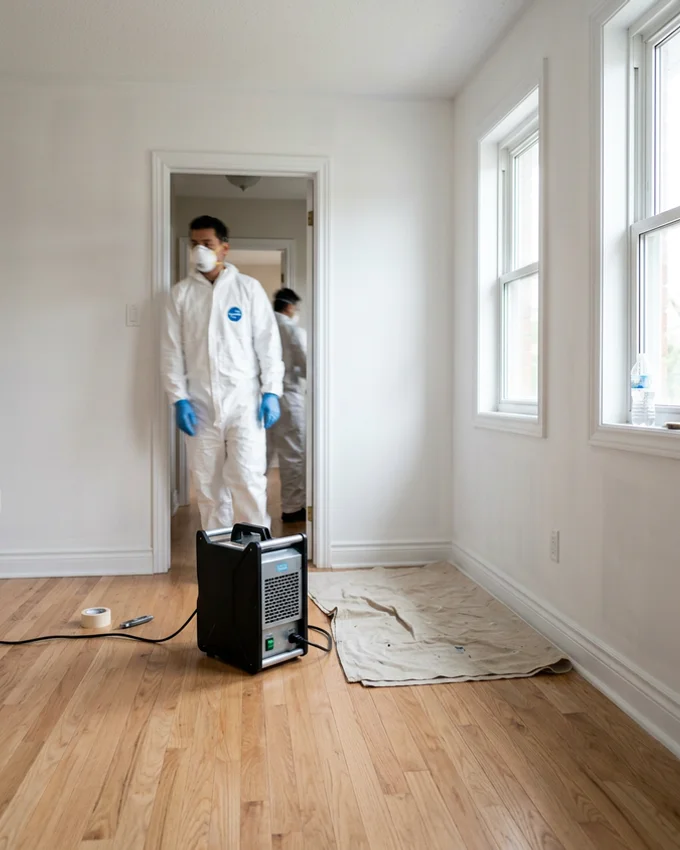
Unattended death cleanup is mostly structural work. When someone passes alone and is found days later, body fluid saturation reaches the flooring, the subfloor and sometimes the joists or the ceiling below. Putrescine and cadaverine bind to these materials and drive the odour. We contain the area under HEPA negative air, remove flooring and subfloor as far as fluids travelled, treat the framing with enzyme cleaners and disinfectant, and test it. Remaining surfaces are sealed with an encapsulating primer such as Zinsser B-I-N. Hydroxyl generators clear the air. Thermal fogging is used only as a final step, never instead of source removal.
Suicide Cleanup (Private, Family-Sensitive, Belongings Preserved)
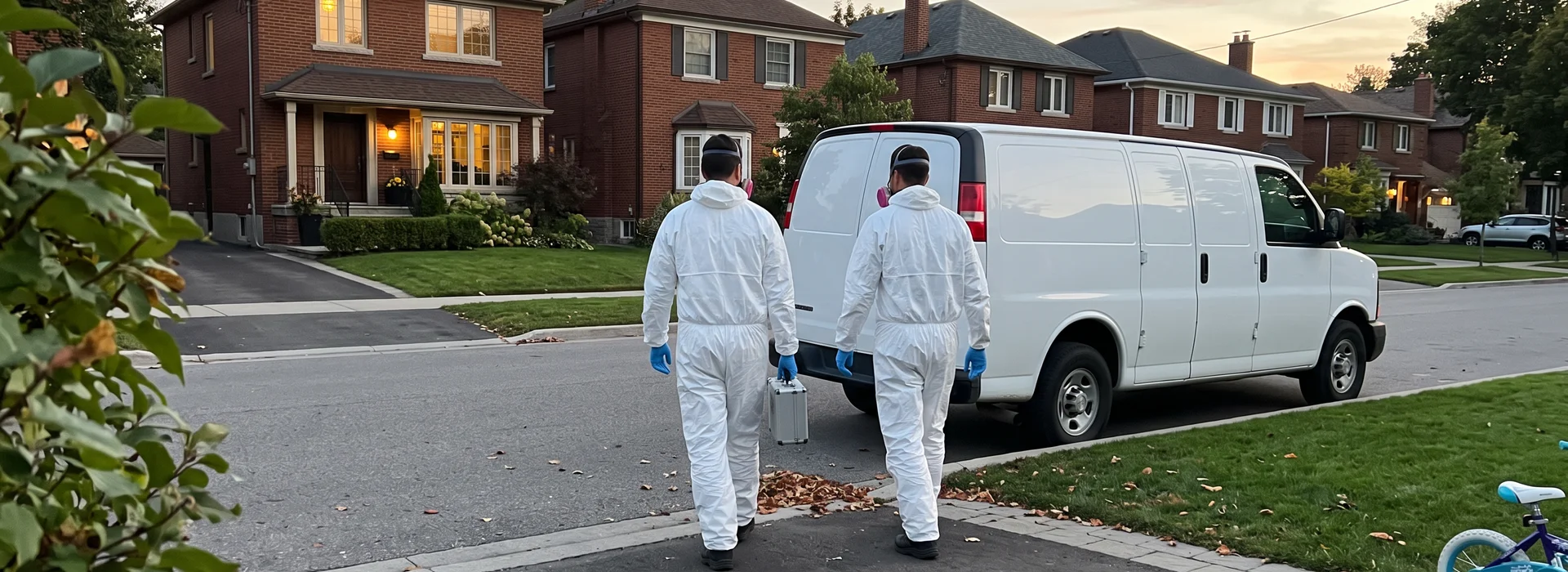
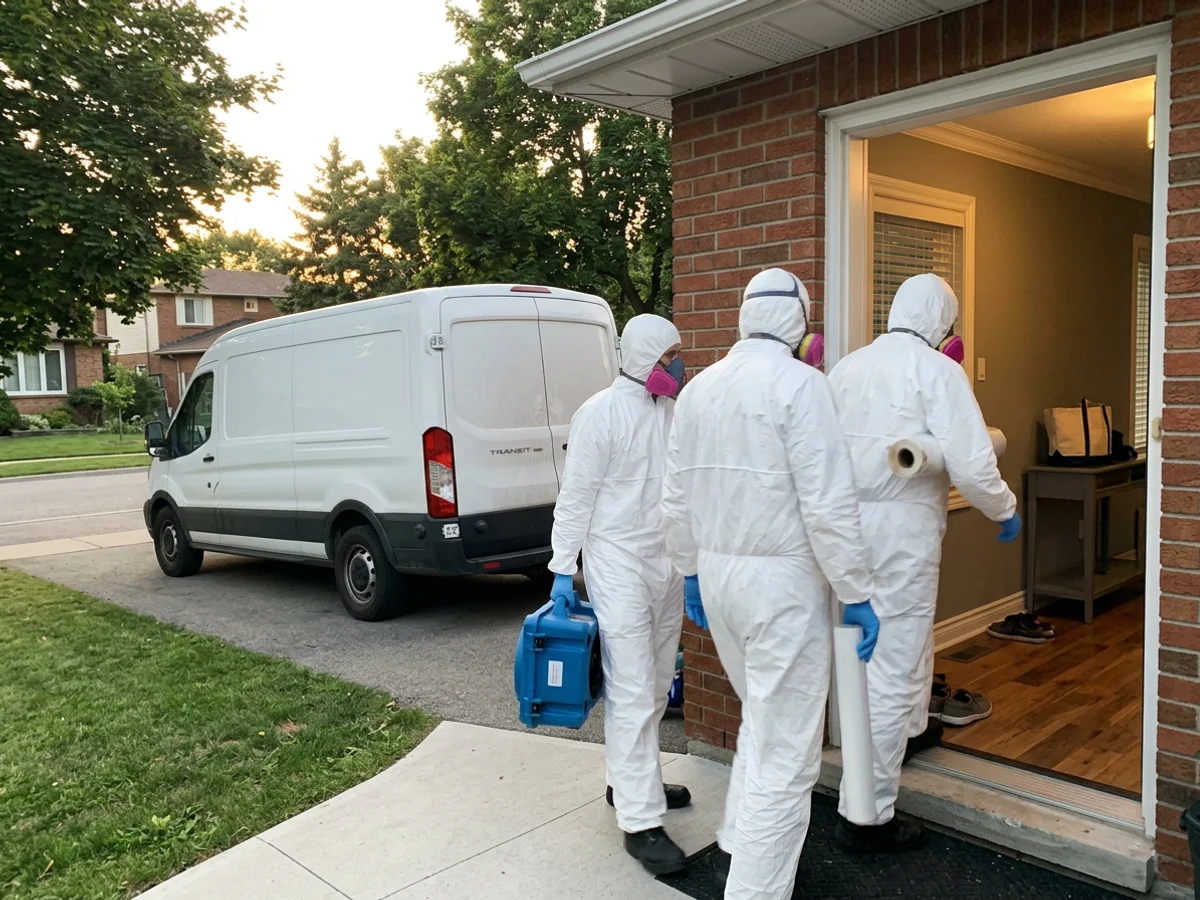
Suicide cleanup asks for privacy and gentleness above all. We arrive in unmarked vehicles, speak with one family contact, and never discuss the circumstances with neighbours or building staff. Inside, the crew follows IICRC S540 and OSHA 1910.1030: containment, careful removal of affected materials, structural checks and disinfection. Personal belongings in the room are sorted with extra care. Letters, phones, photos, journals and jewellery are cleaned where possible and placed in a sealed, labelled box for the family. We never throw out a personal item without a photo record. When you are ready, we can share a short written report, or nothing at all.
Accident & Industrial Trauma (Workplace and Home Injury Scenes)
Accident and industrial trauma covers serious injuries at home or work: falls down stairs, kitchen accidents, power tool injuries and incidents in garages, shops or small offices. The approach is the same as any bloodborne pathogen job. We contain the area, remove porous materials that absorbed blood, clean and disinfect hard surfaces and equipment, and verify with ATP testing. In workplaces we coordinate with the owner and the health and safety contact so the area can reopen quickly under OHSA rules. Machinery and tools are decontaminated where the manufacturer allows. Documentation is set up for both the insurer and any Ministry of Labour follow-up.
First-Responder Communication (Coroner, Police and Paramedic Handoff)
First-responder communication is the part families often do not know they need. After paramedics, police and the coroner leave, there are questions about release timing, what was taken, what can be touched and who is allowed in. Our crew lead handles that handoff. We confirm the home is released, ask whether any items must stay in place, and follow Public Health Ontario guidance on exposure. Executors and landlords get the same single contact. This keeps the family away from repeated, painful conversations and lets the cleanup begin as soon as it is allowed.
When Toronto Properties Need Trauma Scene Cleaning Fast
Unattended Death in a Rental Discovered After Days or Weeks
Symptom: A landlord, property manager or welfare-check officer discovers a tenant who has died alone, with decomposition visible or odour reaching the hallway. Toronto Police and the coroner are on scene. The landlord is panicked about the rental, other tenants are complaining, and the family has not been notified yet.
Immediate action: Secure the unit and keep it sealed until the coroner releases it. Do not enter without PPE after release. Call us within 24 hours of release so decomposition fluid has not fully migrated into subfloor. Have the next-of-kin contact ready. We often need their written authorization for personal effects.
Scope: We coordinate with the coroner, Toronto Police victim services and the landlord’s insurance adjuster, work after the body is removed, document the scene before and after, remove flooring and subfloor to the extent of fluid penetration, run HEPA and hydroxyl odour treatment, disinfect with hospital-grade chemistry, and provide a licensed biohazard carrier manifest. Typical rental unattended-death cleanups $4,500 to $14,000, 2 to 5 days with crew of 2 to 4.
Qualified contractor response: Needs IICRC S540, OSHA 1910.1030, hydroxyl treatment (not ozone in multi-unit buildings), licensed biohazard carrier, and discreet unmarked vehicles that do not advertise the situation to neighbours. Must work with the coroner’s office and victim services, not against them.
Suicide in a Family Home With Grieving Relatives Nearby
Symptom: A family member discovers a suicide in a parent’s, sibling’s or child’s home. Police and coroner have attended. The family is in shock, needs to make funeral arrangements, and cannot bear to re-enter the room where it happened.
Immediate action: Call us before anyone else enters the room. Do not let a well-meaning friend or relative try to clean. Request the family give us one point of contact for all decisions, and offer them the choice to be on-site or completely absent during the work.
Scope: We meet one family member briefly if they want (not required), work in the affected room with HEPA negative air to prevent odour spreading to other rooms, remove and dispose of any items touched by biohazard under OSHA 1910.1030, replace affected flooring and wall materials, disinfect with hospital-grade chemistry, and provide before-and-after photos to the family only if requested. Typical cost $3,500 to $10,000, 1 to 3 days with crew of 2 to 3. Discreet unmarked vehicles, PPE donned inside.
Qualified contractor response: Needs trauma-informed training (not just technical certification), willingness to work without the family present or with them present (their choice), discreet communication (no neighbours asking questions), coordination with the funeral home on timing, and a crew lead who can hold a calm conversation when needed.
Accident Scene With Ongoing Insurance Investigation
Symptom: A serious accident (industrial, vehicular into a building, home medical event) has left blood, bodily fluid or hazardous material in a home or workplace. Insurance adjuster and possibly WSIB or OPP are documenting the scene. Family or employees are told not to touch anything.
Immediate action: Respect the investigation hold. Do not clean, move or alter anything until the adjuster and investigators give written release. Have the release in hand before our crew enters. Photograph everything in parallel for the insurance file.
Scope: We work after investigative release, coordinate with the adjuster on preservation of any items they want for the file, document our starting condition with time-stamped photos, remove biohazard under OSHA 1910.1030, disinfect with hospital-grade chemistry, provide manifested disposal, and give the adjuster a complete photo log and itemized scope within 48 hours. Cost varies widely by scope, $2,500 to $18,000, 1 to 7 days with crew of 2 to 5.
Qualified contractor response: Needs demonstrated experience with insurance adjuster workflow, understanding of what evidence must be preserved vs removed, time-stamped photo documentation standard, and willingness to pause work if the investigation reopens. Avoid any crew that starts without written release.
You Do Not Have to Do Anything Before We Arrive
Close the door, keep others out and call when you are ready. If you want to understand the process first, read what families should know about unattended death cleanup or how death odour is removed from a home.