4 Types of Animal Hoarding Cleanup We Handle
Animal hoarding homes need more than waste removal. Most jobs combine these four parts, and the written scope tells you which apply to each room.
Multi-Animal Home Remediation (Waste Removal Under P100 PPE)
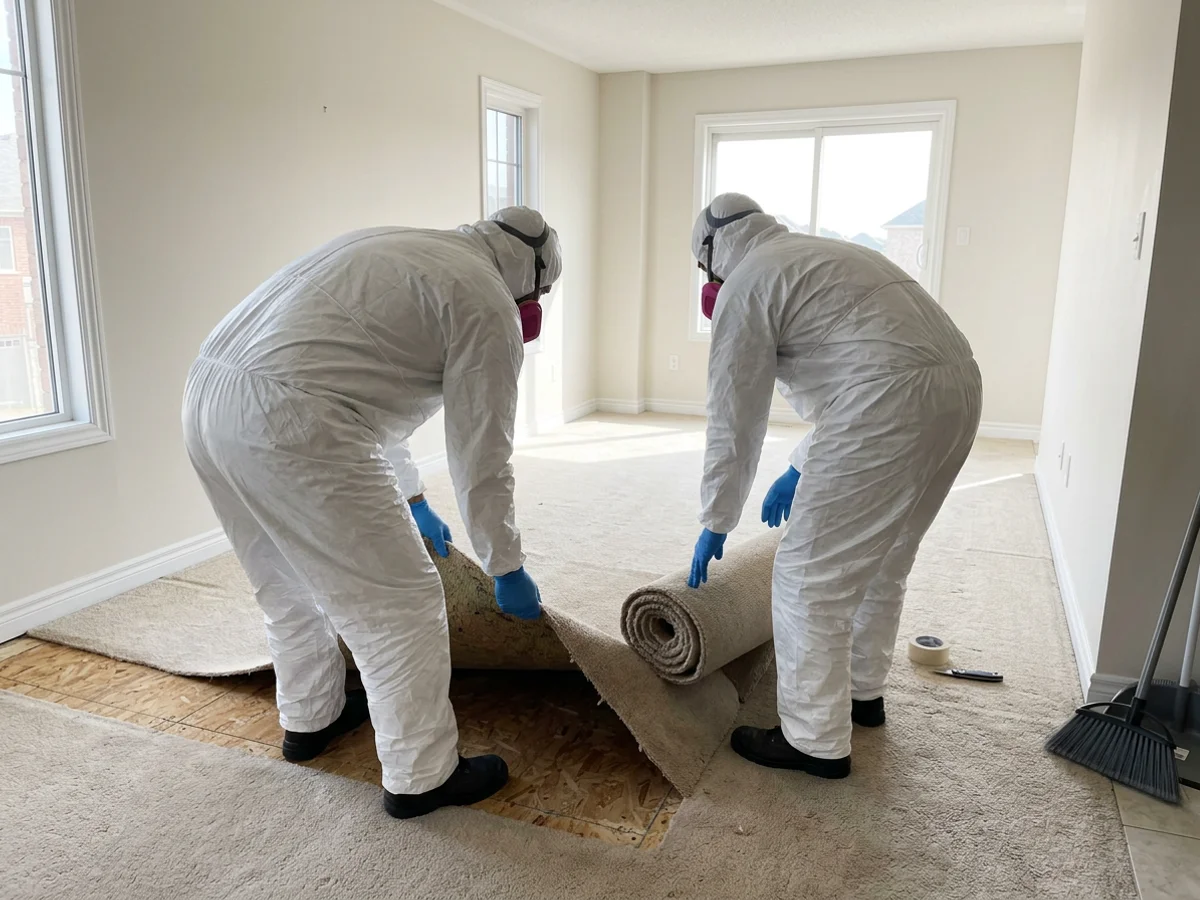
Multi-animal home remediation starts only after the animals are out. Crews then work room by room in Tyvek, nitrile gloves and NIOSH P100 respirators, because ammonia gas saturation and dried waste make the air unsafe without them. Litter, feces, soaked bedding and contaminated contents are removed and bagged. We wet dried droppings with disinfectant before lifting them, which keeps Histoplasma capsulatum spores and other particles out of the air. HEPA negative air runs throughout. Belongings are sorted with the family as we go, and anything salvageable is cleaned and set aside. Waste is weighed and leaves through the most discreet exit available.
Pet Waste & Ammonia Neutralization (Enzymatic Digesters, Ammonia Scrubbing Media)
Pet waste and ammonia neutralization is chemistry, not perfume. Feline urine crystallization leaves uric acid salts that standard cleaners cannot dissolve. We apply enzymatic odour digesters that break those salts down, give them the full dwell time, then extract the residue. Air scrubbers fitted with ammonia scrubbing media pull gas from the room during and after the work. We take ammonia readings before, during and after, so the crew and the family know when the air is safe. Cat urine on walls is treated up to the height it reaches, which is often higher than people expect. Bathrooms and laundry rooms get the same attention as living spaces.
Flooring & Subfloor Coordination (Urine Crystallization, Sealing or Replacement)
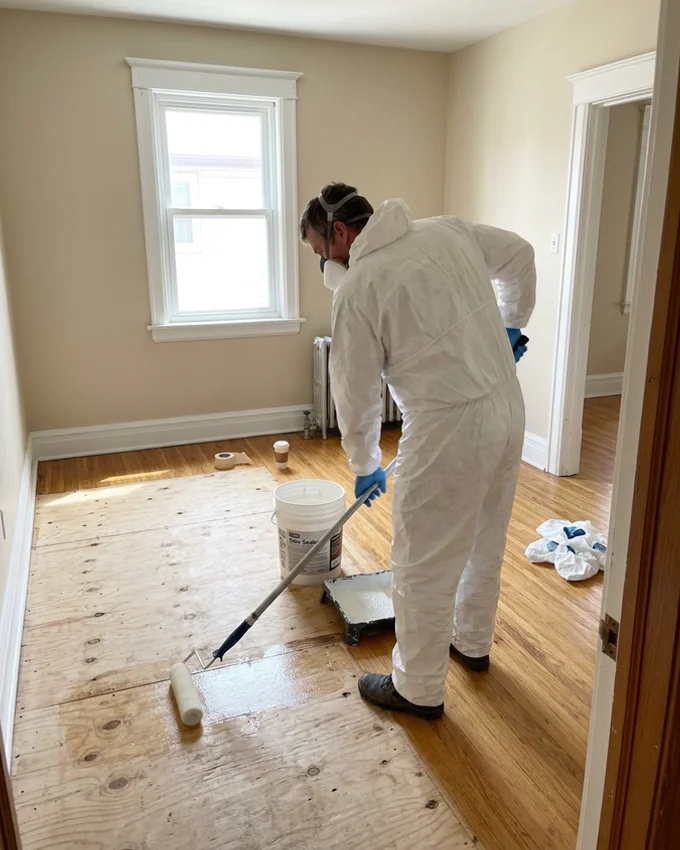
Flooring and subfloor coordination decides how much of the home has to be rebuilt. We pull carpet and pad first, then test the subfloor with moisture meters and UV light to map where urine crystallized. Boards that are only stained on the surface are cleaned, treated with enzymes and sealed with a shellac-based subfloor sealer. Sections that are soaked through are cut out and replaced. Drywall bottoms are checked too. Once the sealed subfloor passes an odour check on a warm, closed-up day, we hand off to a flooring trade, ours or yours. Skipping this step is the most common reason odour returns months after an animal hoarding cleanup.
Humane Society & Animal Services Coordination (Rehoming Handoff Before Cleanup)
Humane society and animal services coordination is the first call, not the last. We do not handle animals. Toronto Animal Services, Ontario Animal Welfare Services, local humane societies or rescue groups take the animals into care, check their health and work on rehoming. We can help families make those calls and line up the cleanup so the home is not left empty and smelling for weeks. When a bylaw officer has cited the home under Toronto Municipal Code Chapter 349 or a similar GTA bylaw, we share the cleanup plan and completion photos with the family so they can respond.
When Toronto Families Need Animal Hoarding Help Fast
Multi-Cat Colony Discovered in a Senior’s Bungalow
Symptom: An adult child, caregiver or neighbour discovers 15 or more cats living in a Scarborough or East York bungalow where the owner can no longer manage them. Ammonia odour is strong at the front door, carpets and subfloor are saturated with urine, and Toronto Humane Society or Animal Services may already be involved.
Immediate action: Do not try to catch or move the cats yourself without PPE. Call Toronto Humane Society first for intake capacity and animal welfare triage, then call us to coordinate the cleanup. If the owner is on scene, let the Humane Society or a social worker handle animal removal before our crew begins.
Scope: We work after animal welfare has done triage and intake. HEPA negative air contains ammonia and airborne particles, subfloor and carpet are removed where urine has saturated through, sodium hypochlorite disinfection on all hard surfaces, and ATP verification before handoff. Typical animal hoarding cleanups run $3,500 to $12,000 depending on number of animals and subfloor damage, 3 to 6 days with crew of 3 to 5.
Qualified contractor response: Needs IICRC S540 for biohazard protocols, respirator fit-testing for ammonia exposure under OSHA 1910.134, a working relationship with Toronto Humane Society or local animal control, and willingness to coordinate with by-law officers if municipal orders are involved. Should quote only after assessing subfloor and HVAC return damage, not from photos alone.
Landlord Discovery After Pet-Hoarder Tenant Eviction
Symptom: A sheriff-enforced or voluntary eviction reveals a unit with multiple pets (cats, dogs, reptiles, birds) that may have been left behind or abandoned. Urine and feces are everywhere, the unit stinks for days, and the landlord’s insurance may not cover tenant-caused damage of this scale.
Immediate action: Lock the unit immediately. Call Animal Services for any live pets left behind. Do not approach them yourself as they may be aggressive or carrying zoonotic disease. Photograph the unit through the doorway for insurance before we arrive. Flag any valuables for Residential Tenancies Act 72-hour storage.
Scope: We coordinate with Animal Services for any remaining animals, then clear waste under OSHA 1910.1030 bloodborne pathogen protocol (feces and urine qualify as biohazard), remove saturated carpet and subfloor, disinfect with sodium hypochlorite, and inspect walls and HVAC returns for ammonia damage. Insurance-ready documentation included. Typical cost $4,500 to $14,000, 3 to 7 days with crew of 4 to 6.
Qualified contractor response: Needs OSHA 1910.1030 training (animal waste is biohazard), IICRC S540 certification, licensed biohazard carrier for manifested disposal, and understanding of Residential Tenancies Act requirements for tenant possessions. Avoid any crew without respirator fit-testing or without animal-waste experience. Cat urine ammonia is harder to clear than most residential cleaners realize.
Dementia-Driven Pet Hoarding in a Family Home
Symptom: A parent or grandparent with declining cognition has slowly accumulated 8 to 20 pets they cannot physically care for. Family members notice the problem during a visit, the senior refuses to acknowledge the issue, and the house is unlivable for grandchildren or in-home caregivers.
Immediate action: Loop in CCAC or the family’s social worker before any cleanup begins. Do not confront the senior directly about the animals. This is a mental health situation and animal welfare should coordinate removal. Document the condition with photos (hallway only, not detailed) for any power of attorney steps that may follow.
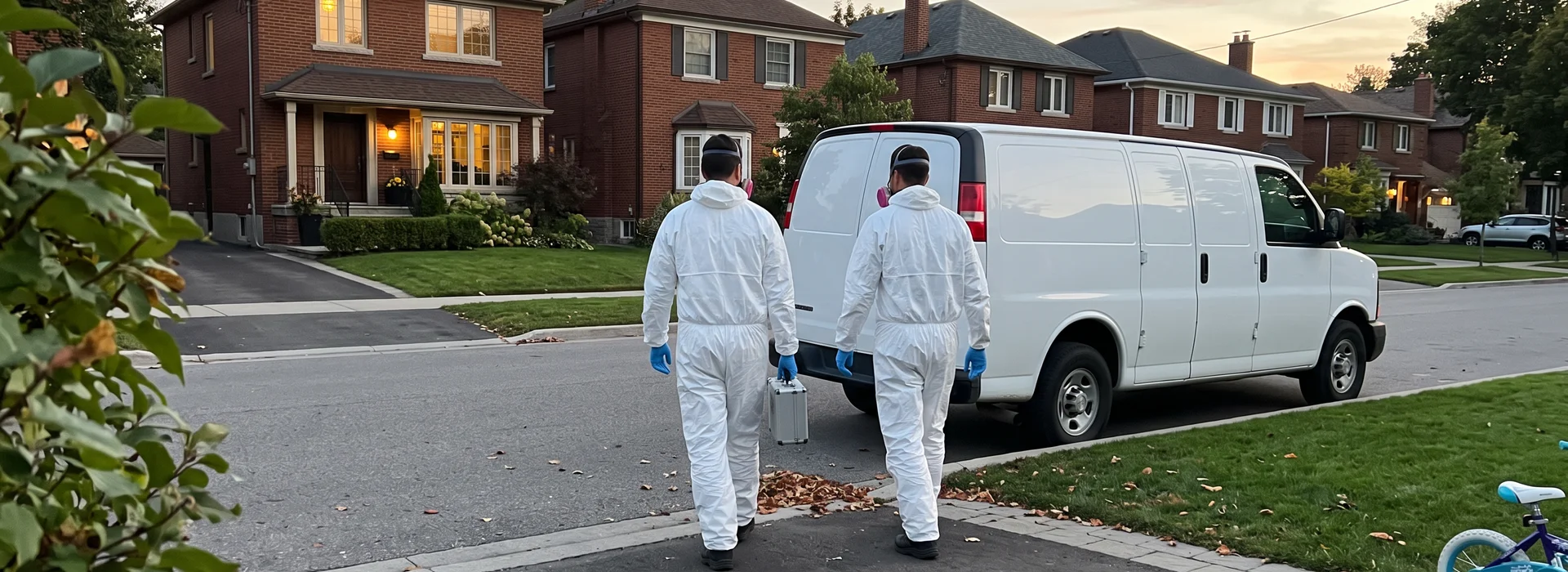
Scope: We work alongside CCAC, the family’s social worker and Toronto Humane Society, scheduling the cleanup for after the senior has moved to respite or long-term care if that is the plan. Discreet unmarked vehicles, HEPA negative air, disinfection and odour source removal to make the home safe for return or sale. Cost $3,500 to $10,000, 3 to 5 days with crew of 3 to 4.
Qualified contractor response: Should defer to the family’s social worker on timing, work discreetly without discussing animal numbers with neighbours, and understand that power of attorney authorization is often required before work begins. Needs animal welfare coordination experience and willingness to pause work if family dynamics shift.
Where to Start
The animals come first. Once they are safe, we can usually assess within 24 hours. Read about the animal hoarding cleanup process step by step or whether floors can be saved after urine and ammonia damage.