4 Types of Severe Squalor Cleaning We Provide
Squalor jobs are about contamination, not quantity. These four types cover nearly every home we see, and the scope names which apply.
Level 4-5 Squalor Remediation (Organic Build-Up, Waste, Rotten Food)
Level 4 to 5 squalor remediation deals with organic build-up that has gone past what cleaning products can lift. That includes spoiled food in fridges and cupboards, human or pet waste, layers of grease and nicotine tar, and stained bedding or carpet. Crews work in Tyvek, nitrile gloves and P100 respirators. Spoiled and contaminated items are bagged, and regulated waste goes to a licensed carrier with a manifest. Surfaces are pre-treated with heavy degreasers, then cleaned and disinfected with quaternary ammonium. Under the Health Protection and Promotion Act, public health can sometimes step in when a home becomes a health hazard, and a documented cleanup resolves that quietly.
Floor-to-Ceiling Sanitization (Degreasers, 293°F Steam Extraction)
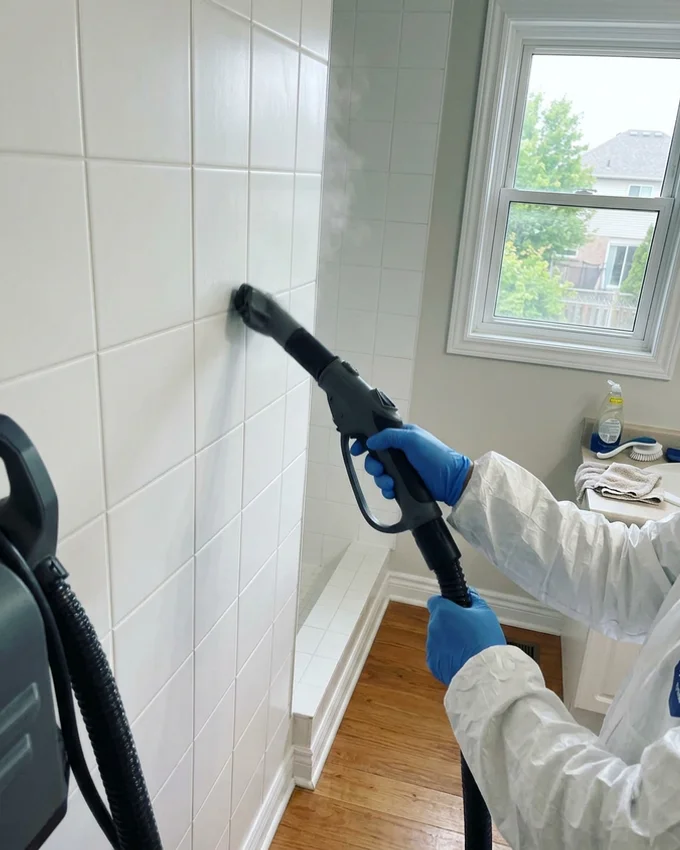
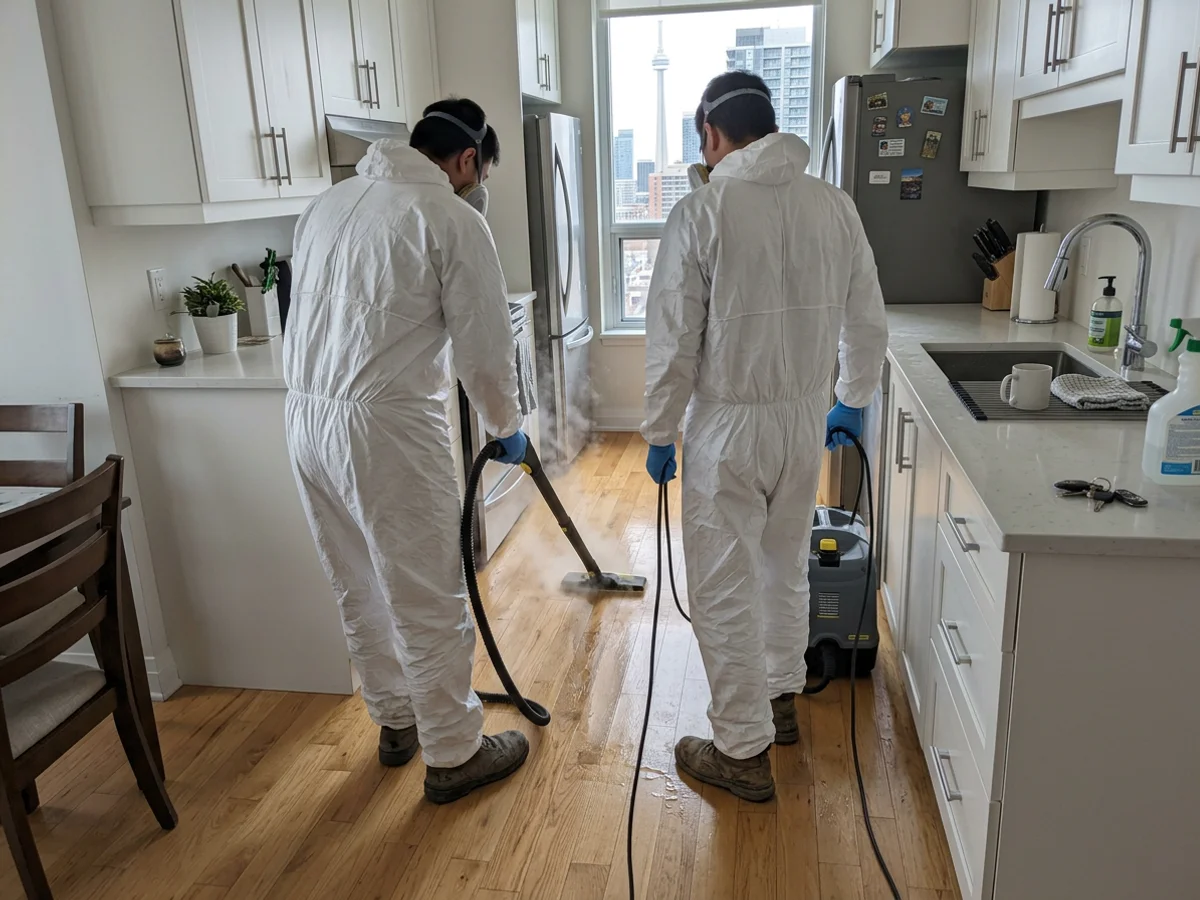
Floor-to-ceiling sanitization means every surface, in order, top to bottom. Ceilings and light fixtures come first, often coated with nicotine residue or cooking grease, then walls, cabinets, counters, appliances, baseboards and floors. Industrial steam extractors run at about 293 degrees Fahrenheit, which loosens build-up and kills bacteria without soaking the surface. Grout and tile get rotary scrubbing. Cabinet interiors are emptied, cleaned and dried. Floors are steam extracted or, where they cannot be saved, lifted for replacement. HEPA air movers run during the work to capture what is stirred up. When we finish, the room looks and smells like a different place.
Odour Chain Removal (Source Removal, Hydroxyl, Sealing)
Odour chain removal follows a strict order: find the source, remove it, clean, then treat the air. In squalor homes the source is often hidden, such as liquid under a fridge, waste in a subfloor seam, a dead mouse behind a cabinet or residue inside HVAC returns. We pull appliances, lift kick plates and check vents. Affected materials are removed or deep cleaned. Then hydroxyl generators break down remaining odour molecules in the air and soft furnishings, safely, even with people nearby. Surfaces that keep odour, like bare wood or drywall, are sealed with a stain and odour blocking primer. Toronto Municipal Licensing & Standards complaints about odour usually stop here.
No-Diagnosis Discretion (No Referral, No Labels, Unmarked Crew)
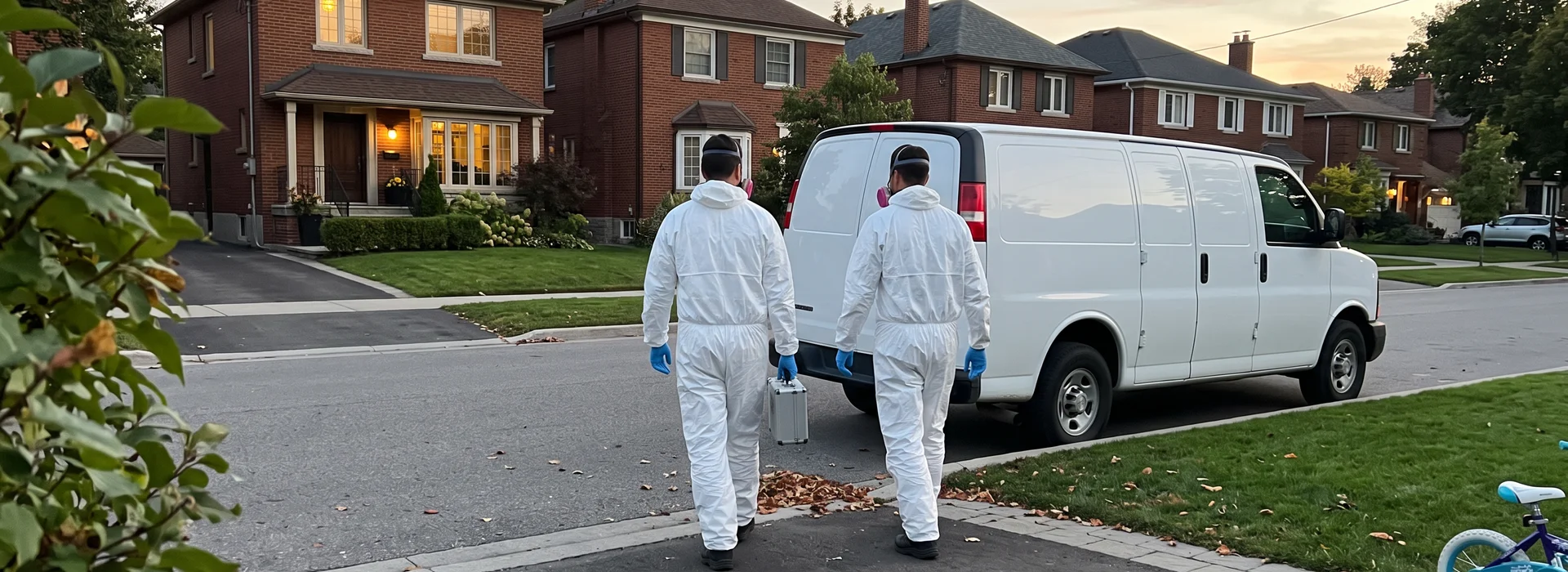
No-diagnosis discretion is a promise, not a sales line. You do not need a referral, a doctor or a reason to book. Many of our squalor clients book for themselves, often after depression, an injury, grief or a long stretch of just getting by. We do not ask why. Vans are unmarked, crews dress in plain clothes outside and change into PPE in the entry, and bags leave in plain outer boxes. Nothing about your home is shared with family, landlords or anyone else unless you ask. The crew lead speaks with you directly and keeps the conversation about the plan, not the past.
When Toronto Properties Need Gross Filth Cleaning Fast
Severe Squalor With Blocked Exits and Fire Code Violation
Symptom: A Toronto Fire Services inspection, insurance walkthrough or MLS visit has found blocked exits, blocked stairwells or accumulations near heat sources in a home or unit. The occupant may be alive and present but non-cooperative. A fire code violation notice has been issued.
Immediate action: Photograph the condition and the violation notice. Note the exact compliance deadline. Do not try to clear it with family or friends in a weekend. Fire-code-related cleanouts require specific documentation that the exits are clear and the heat sources are safe.
Scope: We work on the deadline, prioritize exits, stairwells and heat source clearance first (that is what the fire department wants to see), produce dated photos of each cleared area, decontaminate with sodium hypochlorite, remove regulated waste with manifested disposal, and provide a compliance letter that the owner can send to Toronto Fire Services or the insurance adjuster. Typical fire-code squalor cleanups $2,500 to $7,500, 2 to 4 days with crew of 3 to 5.
Qualified contractor response: Needs understanding of Ontario Fire Code requirements, documentation standard for compliance letters, coordination with the occupant’s social worker if involved, and the willingness to focus on the fire-safety path first before cosmetic cleanup. Avoid any crew that treats this like a general clean.
Rental Turnover With Cat Urine Saturation and Nicotine Tar
Symptom: A long-term tenant has moved out of a Toronto, Etobicoke or North York rental, leaving years of cat urine saturation in the subfloor and nicotine tar coating all surfaces. The landlord’s insurance will not cover tenant damage of this scale. The unit cannot be shown.
Immediate action: Photograph everything for documentation (LTB case, insurance claim if applicable). Do not try to clean with household products. Residential cleaners cannot neutralize nicotine tar or cat urine ammonia at the structural level. Lock the unit until our crew arrives.
Scope: We assess subfloor damage with a moisture meter and odour source identification, remove carpet and any saturated subfloor, degrease nicotine-coated walls and ceilings with industrial degreaser (TSP), repaint with odour-blocking primer (BIN or similar shellac-based), replace HVAC filters and clean returns, run hydroxyl treatment for ammonia residue, and provide ATP verification. Typical heavy rental turnover $3,500 to $9,500, 3 to 5 days with crew of 2 to 4.
Qualified contractor response: Needs industrial degreaser capability (TSP), shellac-based odour-blocking primer experience (not standard latex paint), HVAC return cleaning, hydroxyl treatment for ammonia, and moisture-meter documentation. Avoid any crew that promises to “clean the smell” without addressing subfloor and HVAC. The odour will return.
Welfare Check Discovery With Toronto Police on Scene
Symptom: A welfare check by Toronto Police has discovered a resident living in severe squalor, possibly with a mental health or hoarding disorder. The resident may be alive and present but refusing help, or has been removed to hospital or shelter. Police or EMS are documenting the scene.
Immediate action: Coordinate with Toronto Public Health hoarding response team BEFORE our crew begins. If a mental health call is active, their social worker may need to engage the resident first. Do not clean anything until the appropriate authority (public health, police, next of kin) has given written authorization.
Scope: We work after public health or next-of-kin authorization, document the starting condition, use HEPA negative air and PPE as if biohazard is present (safer to assume), remove and manifest regulated waste, decontaminate with hospital-grade chemistry, and provide complete documentation for the public health file, the LTB case or the next-of-kin. Cost $2,500 to $8,500, 2 to 5 days with crew of 2 to 4.
Qualified contractor response: Needs working relationship with Toronto Public Health hoarding response team, trauma-informed training for any resident contact, authorization-first workflow (no cleaning without written OK), and discretion with neighbours. Avoid any crew that will clean without clear authority.
Not Sure if It Is Squalor or Hoarding?
If the home has lots of belongings, it may be a hoarding job. If it is about build-up and odour, it is squalor. Many homes are a bit of both. Our guide on severe squalor vs hoarding explains the difference, and squalor cleanup without a diagnosis covers how we protect your privacy.