4 Types of Landlord and Property Manager Response We Provide
Landlord jobs are about deadlines and documents as much as cleaning. These four parts make up most of our property management work.
Municipal Code Ch. 629 Compliance (Scope Matched to the Order, Compliance Letter)
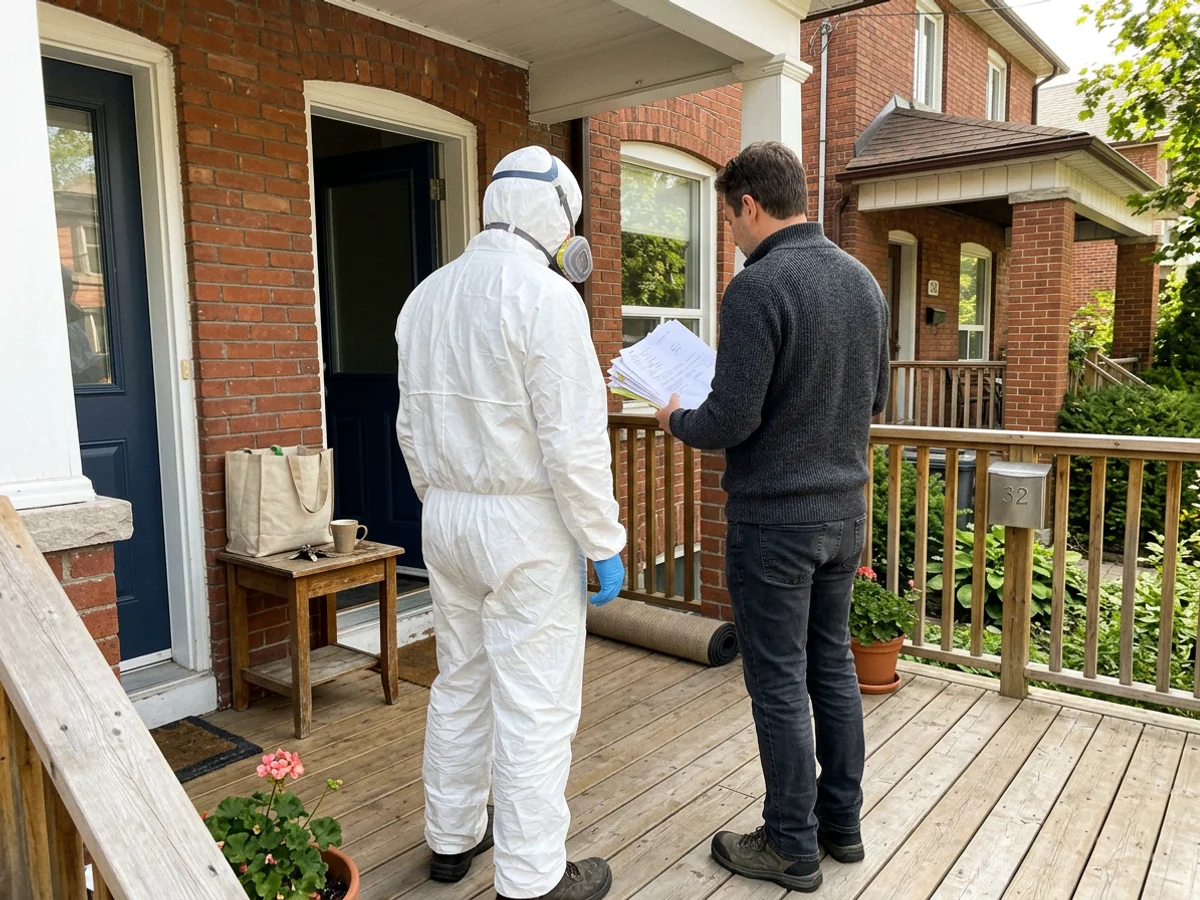
Municipal Code Chapter 629 compliance starts with reading the order line by line. A Property Standards Order from Municipal Licensing & Standards lists specific violations, such as accumulations of waste, vermin, blocked exits, damaged fixtures or unsanitary conditions. Our scope mirrors that list, so every item has a matching task and a matching photo. We clear, decontaminate and, where needed, coordinate repairs with your trades. When the work is done, we issue a compliance letter that ties each violation to the work completed, with the photo log attached. You can share it with the inspector before the re-inspection. If you plan to appeal to the Property Standards Committee, we can still proceed so the deadline is protected.
Tenant Eviction Coordination (LTB Timelines, Documented Unit Condition)
Tenant eviction coordination supports the legal process without taking sides in it. Under the Residential Tenancies Act, a landlord must go through the Landlord and Tenant Board, and a Form N5 gives the tenant a period to fix the problem. We help in two ways. If the tenant agrees to a cleanup, we do it within the N5 window, which can void the notice and keep the tenancy. If the matter goes to a hearing, our dated photos, scope and disposal records document the unit’s condition. We work respectfully with the tenant throughout. We always recommend a paralegal or lawyer for any LTB step.
Landlord Insurance Documentation (Photo Log, Manifests, Itemized Scope)
Landlord insurance documentation protects your claim and your premiums. Before work begins, we photograph every room as found, with date stamps, and note signs of sudden loss such as fire, burst pipes or sewage backup. The itemized scope breaks down every task and cost. Biohazard waste leaves with a licensed carrier and a manifest, and general waste with weigh tickets. Everything goes into one package you can forward to your adjuster or broker. Many insurers want proof that a hoarding condition was resolved before they renew, and the completion letter and photo log give them that.
Rapid City Deadline Response (24h Assessment, 72h Start)
Rapid city deadline response is the reason many landlords call us first. Most Property Standards Orders give 7 to 30 days, and time is lost quickly to tenant notice, building access and quotes. We commit to an on-site assessment within 24 hours of your call and a cleanup start within 72 hours when the deadline is binding. For larger units we bring a bigger crew rather than stretching the schedule. In condos, we book elevators and loading docks with management the same day. If you are already close to or past the date, call anyway. We have helped owners avoid a city-forced cleanup with days to spare. Our 2026 Property Standards Order case studies show how that timeline plays out on real jobs.
When Toronto Landlords Need Hoarding Response Fast
Chapter 629 Property Standards Order Deadline Approaching
Symptom: Municipal Licensing & Standards (MLS) delivered a Property Standards Order citing accumulations of waste, vermin, blocked exits or unsanitary conditions, with a 7, 14 or 30-day compliance deadline. The tenant is uncooperative or unable to coordinate.
Immediate action: Photograph the order, note the exact deadline, and call us within 24 hours. Do not try to clear the unit yourself. Self-performed cleanouts without PPE, HEPA containment and licensed disposal can trigger additional violations.
Scope: We assess within 24 hours, build a written scope matched line by line to each listed violation, and start within 72 hours when the deadline is binding. Typical PSO cleanups in Toronto take 2 to 5 days with a crew of 3 to 6, costs run $3,000 to $10,500 depending on unit size and biohazard presence, and include the dated photo log and compliance letter for re-inspection.
Qualified contractor response: Look for a cleanup company that commits to the 24h assessment / 72h start timeline in writing, has IICRC S540 certification, carries $2M commercial general liability, uses a licensed biohazard carrier for manifested disposal, and provides the compliance letter in the initial quote (not as an add-on).
Tenant Eviction Discovery with Hoarder Unit
Symptom: A sheriff-enforced eviction or voluntary tenant exit reveals a hoarded unit full of biohazard, pests, or structural damage behind the clutter. Rent is lost each day the unit sits.
Immediate action: Lock the unit immediately. Do not let anyone enter without PPE. Rat and mouse droppings, dead animals, needles and bodily fluid residue carry serious health risks. Photograph and video the unit through the doorway for insurance documentation before any work begins.
Scope: We document the unit’s starting state, flag salvageable tenant possessions per Residential Tenancies Act 72-hour storage obligation, remove debris in hand-sorted phases, inspect subfloor and walls for hidden damage, and hand off a ready-to-list or ready-to-rent unit. Typical turnaround 3 to 7 days with crew of 3 to 5, $4,500 to $15,000 depending on contamination severity.
Qualified contractor response: Needs OSHA 1910.1030 bloodborne pathogen training for sharps and body fluid handling, coordinates with your pest control vendor, understands the 72-hour tenant possession rule, and provides a line-itemized quote within 48 hours of assessment. Avoid any contractor who quotes by truckload rather than scope.
Condo Board Letter After Tenant Complaints
Symptom: The condo board or property management company issued a letter about odour, pests spreading through plumbing stacks or hallway contamination from a hoarded unit. Fines accumulate daily, and other owners are escalating.
Immediate action: Request the specific board rule being cited and the response window. Notify the tenant in writing with the right of entry per condo declaration. Coordinate with the board on service elevator booking and corridor containment plans before the first crew visit.
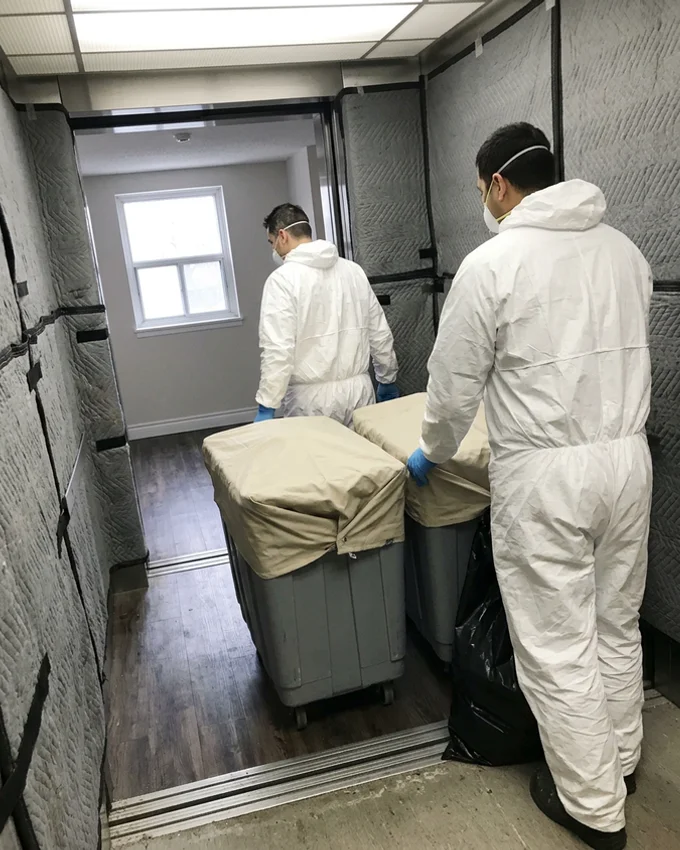
Scope: We work with the condo property manager to book service elevator for quiet hours, use padded covers and plain carts in common areas, deploy HEPA negative air inside the unit to prevent corridor contamination, and provide the board with a completion report plus photo documentation. Projects typically take 2 to 4 days, $3,500 to $9,000, and include certified insurance paperwork for the board file.
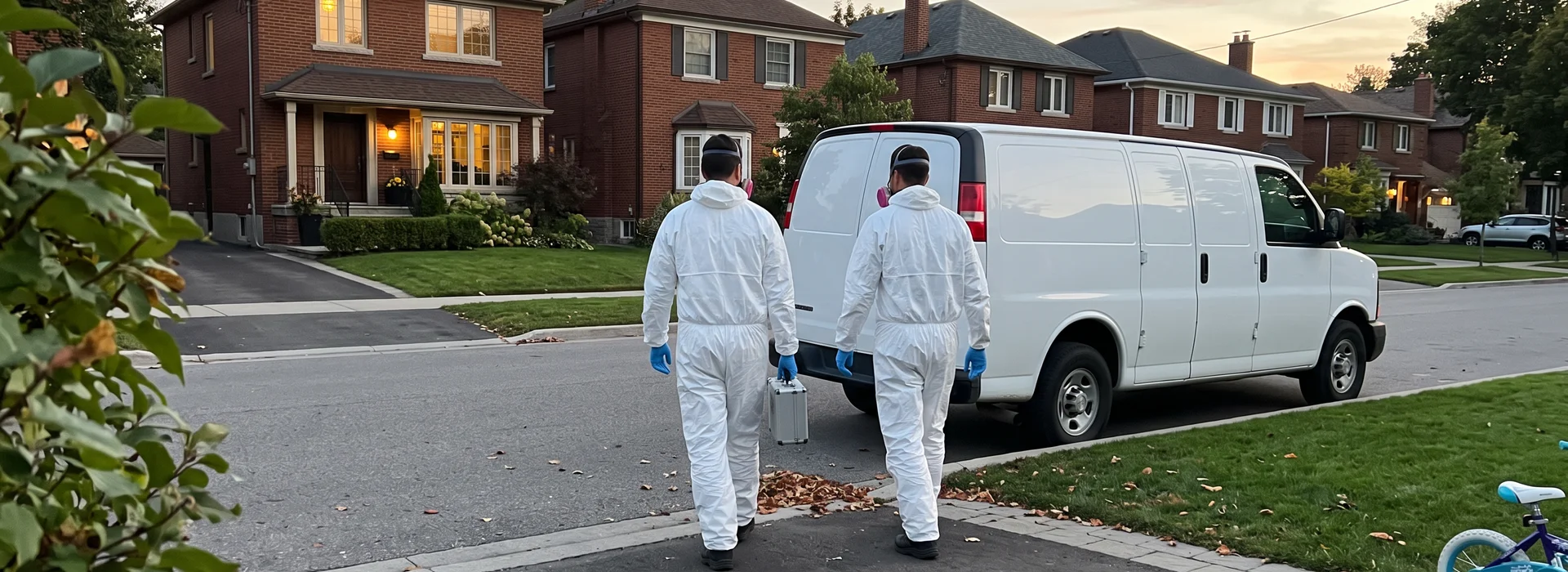
Qualified contractor response: Must have proof of $2M commercial general liability (boards usually require $5M for some buildings), unmarked white vehicles only, PPE donned inside the unit not in hallways, coordination with building pest control, and a short completion report formatted for board records.
Holding an Order Right Now?
Read our Toronto Property Standards Order compliance guide and what happens if you miss a PSO deadline, then send us a photo of the order.