5 Types of Whole-House Hoarding Cleanup We Handle
A whole-house job is never one task. Most homes need a mix of the five below, and your written scope spells out which ones apply, room by room.
Level 3-5 Hoarding Clearing (Clutter Image Rating 4-9, Egress Restoration)
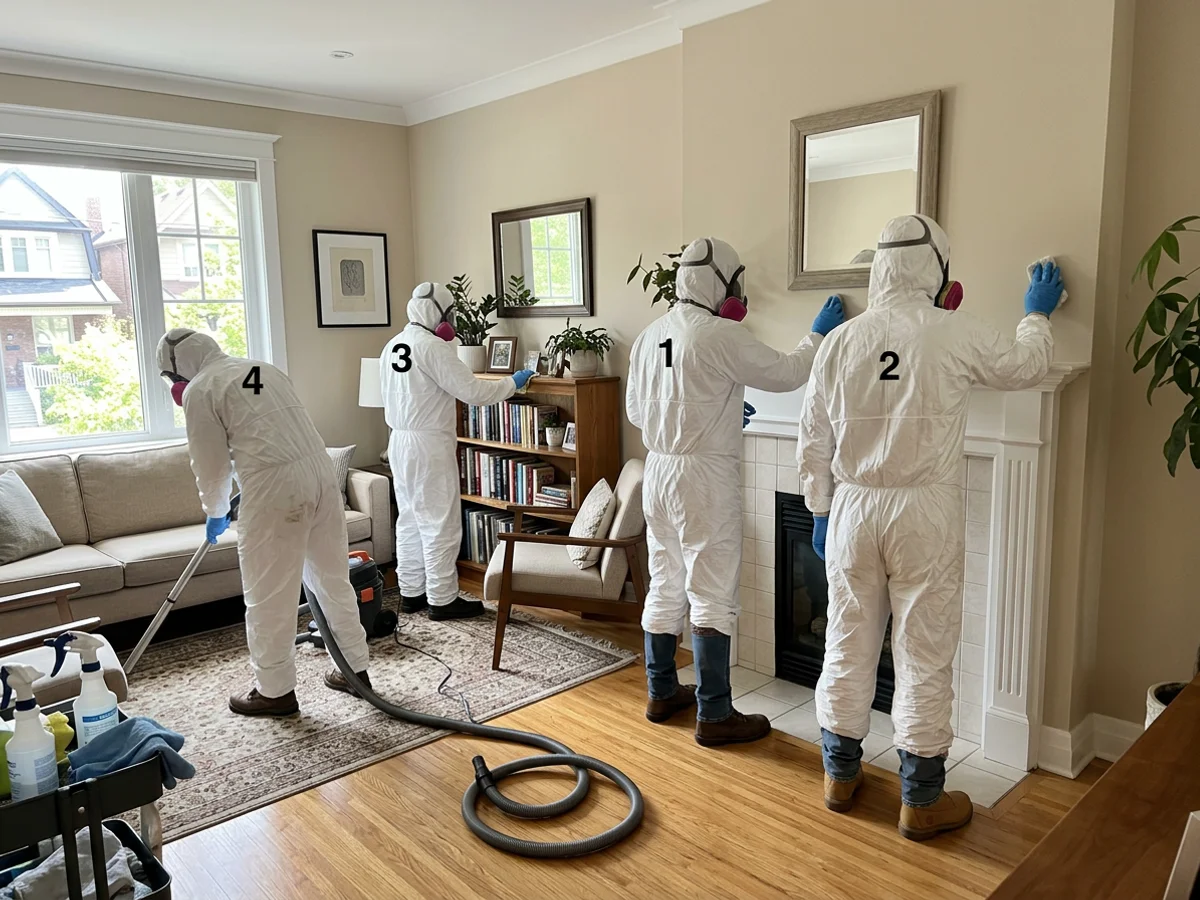
Level 3 to 5 clearing starts with the Clutter Image Rating scale. We rate each room from 1 to 9, then plan the order of work so the most dangerous problems go first. Egress obstruction comes before everything else: front and back doors, stairs, hallways and bedroom windows are opened so residents and firefighters can move. Combustible load reduction follows, focused on paper, cardboard and fabric near the furnace, stove and electrical panel, in line with Ontario Fire Code 2.4.1.1. Crews wear Tyvek coveralls, nitrile gloves and NIOSH P100 respirators. Sorting happens in place with the family, so nothing is bagged blind.
Multi-Room Decontamination (Quaternary Ammonium + Sodium Hypochlorite, HEPA Scrubbers)
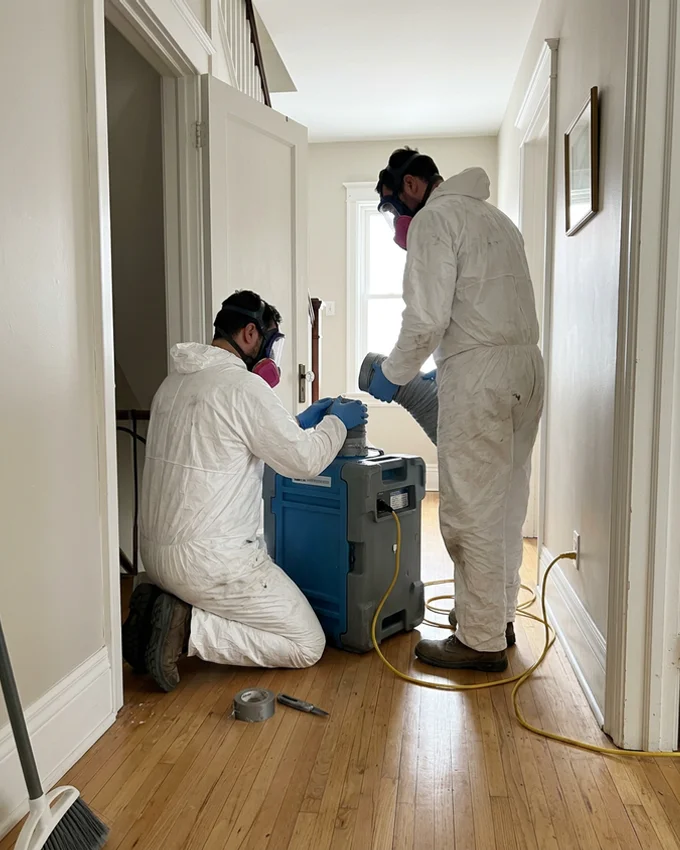
Multi-room decontamination begins once rooms are cleared. We seal the work zone with poly sheeting and run HEPA negative air machines so dust, mold spores and odour are pulled out through filters instead of drifting into the next room or the hallway of a condo. Hard surfaces get a quaternary ammonium disinfectant with the right dwell time, and sodium hypochlorite where the surface tolerates it. Soft materials that soaked up waste or moisture are removed rather than masked. We finish with ATP spot checks on kitchen counters, bathroom fixtures and door handles, so clean is measured, not guessed. This step is what separates a cleanup from a cleanout.
Pest Vector Interruption (Rodent and Cockroach Nesting Removal, Exterminator Coordination)
Pest vector interruption is planned with a licensed exterminator before the crew starts moving contents. Treating first knocks down activity so pests do not scatter into neighbouring units or walls as the piles come down. Our crew then removes nesting material, droppings and contaminated food stores under P100 respirators, because dried rodent droppings can carry hantavirus and should never be swept dry. Droppings are wetted with disinfectant, lifted and HEPA vacuumed. We seal gaps around baseboards and pipes where the exterminator recommends it. A follow-up treatment after clearing removes what is left, and with food sources gone, re-infestation becomes far less likely than it was before.
Insurance Documentation (Itemized Scope, Photo Log, Biohazard Manifests)
Insurance documentation starts before the first box moves. We photograph each room as found, with date stamps, and note conditions an adjuster will care about: water staining, ceiling damage, sewage, mold behind contents and anything that points to a sudden loss rather than slow build-up. The itemized scope breaks the job into rooms, tasks, crew hours and disposal. Biohazard waste leaves with a licensed carrier and a manifest under O. Reg. 347, and you get copies. When a claim is possible, we talk with the adjuster directly so you do not have to repeat a painful story, and we send the completion letter at handoff. For what a typical home costs and what moves the number, see our post on hoarding cleanup cost in Toronto.
Family Discretion Protocol (Unmarked Vans, Keepsakes Hand-Sorted, Private Updates)
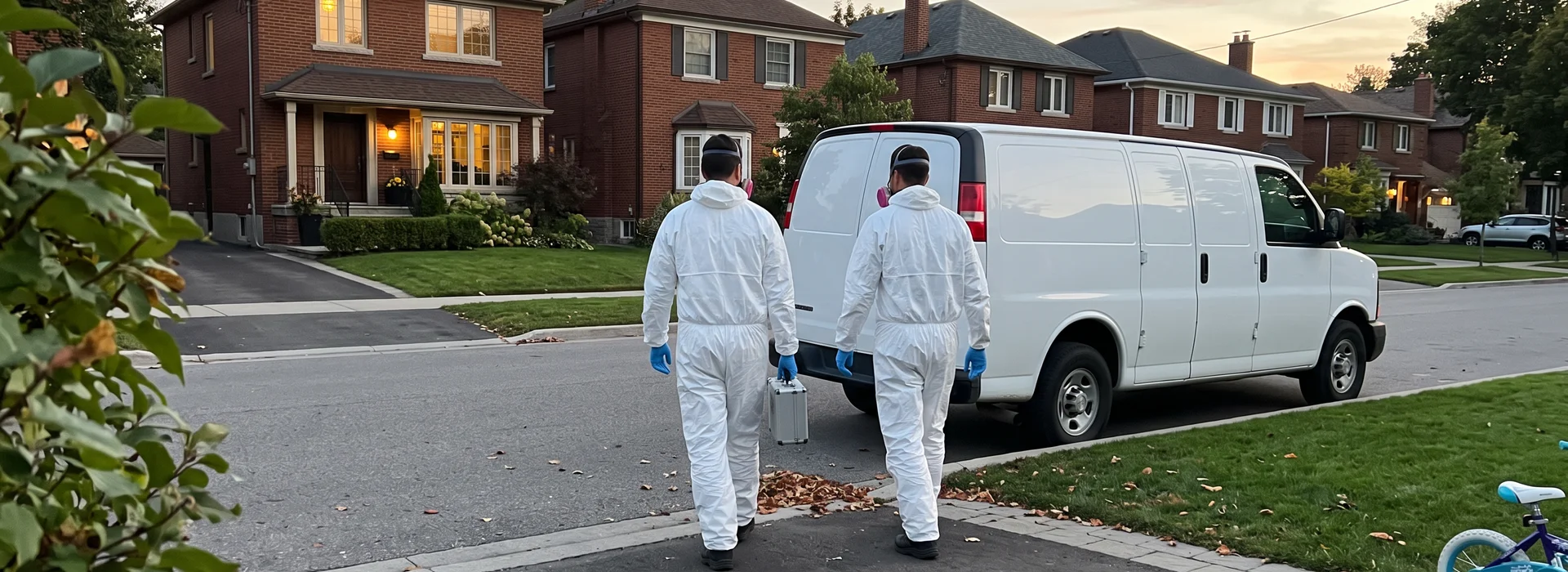
Our family discretion protocol covers what neighbours see and what family members hear. Vans are plain white with no lettering. Crews arrive in everyday clothes and change into PPE inside the home, and full bags leave through a side door, garage or rear lane when one exists. Inside, keepsakes are hand-sorted: photos, letters, documents, medals, cash and jewellery go into labelled boxes that only the family opens. One crew lead sends private daily updates to the family contact you choose, so siblings get the same facts at the same time. Nothing about the home is posted, shared or discussed outside the job, everytime.
When Toronto Families Need Whole-House Hoarding Cleanup Fast
Parent’s Home With Multiple Decades of Accumulation and Family Consensus Needed
Symptom: An adult child or sibling has finally gained access to a parent’s home after years of denial, and finds a Level 3 to 5 hoarded property. Every room full, pathways narrow, kitchen and bathroom unusable. Multiple family members disagree on how fast to act and what to save. The parent may still be living there.
Immediate action: Hold a family meeting (video call if siblings are in other cities) BEFORE our first visit to agree sorting rules, one point of contact, and whether the parent will be involved. Loop in Toronto Public Health hoarding response team or Thompson Anxiety Disorders Clinic at Sunnybrook if there is a diagnosed hoarding disorder. Do not force the parent out of their home for a weekend blitz.
Scope: We work alongside the family at a pace the parent can accept, start with low-stakes areas (not personal keepsakes or bedrooms), use a hold box for disputed items with weekly review, HEPA negative air through the whole floor, hospital-grade disinfection, hand-sorted donation routing to Furniture Bank and Habitat ReStore, manifested disposal. Typical whole-house cleanup $3,500 to $12,000 over 3 to 7 days, severe Level 5 up to 10 days with crew of 4 to 6. Daily photo updates to one family contact.
Qualified contractor response: Needs experience with hoarding disorder as a mental health condition, willingness to pause and reschedule based on the parent’s emotional state, written sorting-rule intake, and coordination with the family’s social worker or clinician. Avoid any crew that promises a weekend blitz of a 30-year hoarded home. That is a red flag for a traumatic cleanout.
Pre-Sale Whole-House With a Fixed Realtor Timeline
Symptom: An inherited or vacated hoarded home must be cleared and listed within 4 to 8 weeks. The realtor needs it staging-ready. The executor is managing from out of province or abroad. The home is Level 3 to 5 and the family wants to retain some sentimental items.
Immediate action: Confirm executor authority (certificate of appointment). Give the executor remote-decision tools (daily video walkthroughs, photo approvals via Dropbox). Coordinate with the realtor on target list date. Identify any family-retain items BEFORE our clearance begins.
Scope: We produce digital inventory with photos for executor approval, hand-sort every room, HEPA negative air during active work, hospital-grade disinfection, route donations with weigh tickets, manifest regulated waste, hand off a staging-ready home for the realtor and painter. Typical pre-sale whole-house $5,000 to $15,000, 2 to 4 weeks with crew of 4 to 6. Executor gets daily photo updates and weekly video walkthrough.
Qualified contractor response: Needs executor-remote-decision workflow, realtor timeline coordination, digital inventory capability, donation routing with weigh tickets, and the ability to coordinate with cleaners, painters and stagers for listing-ready handoff. Avoid any crew that works without a written executor-approved scope.
Insurance-Required Level 4-5 Cleanup to Reinstate Coverage
Symptom: A home insurer has refused to renew coverage on a Level 4 or 5 hoarded home, citing fire risk, health hazard or structural concern. The homeowner has 30 to 60 days to prove the hazard has been cleared or lose coverage entirely. The home is still occupied.
Immediate action: Request the insurer’s exact requirements in writing. What they need to see to reinstate coverage (photos, certifications, inspection). Loop in a public insurance adjuster if the dispute is complex. Agree with the homeowner on their involvement vs stepping out during the work.
Scope: We work to the insurer’s exact scope, document before and after with time-stamped photos per their requirements, address fire-safety path first (exits, heat sources), decontaminate biohazard, manifest regulated waste, and provide a compliance letter with our IICRC S540 certification + photo log for the insurance underwriter. Typical insurance-required cleanup $5,000 to $18,000, 1 to 3 weeks with crew of 4 to 6.
Qualified contractor response: Needs home insurance workflow experience, understanding of what underwriters want to see (not just what adjusters want), IICRC S540 + OSHA 1910.1030, documented compliance letters for insurance file, and the willingness to coordinate with a public adjuster if the policyholder has one. Avoid any crew that cannot produce an insurance-grade compliance letter.
When Do You Need a Whole-House Cleanup Instead of One Room?
If two or more rooms can no longer be used for what they were built for, if exits are partly blocked, or if there is odour, pests or water damage you can see from the doorway, you are past a one-room job. The same is true when a hospital discharge planner, insurer or city inspector has flagged the home. A whole-house scope lets us clear safely in the right order instead of moving the problem from one room to the next.
If you are not sure, start with our guide on the signs a loved one needs hoarding cleanup help or read what to expect during a hoarding cleanup day by day.