4 Types of Kitchen & Bathroom Recovery We Provide
Kitchens and bathrooms carry the highest health risk in any home. These four types of work bring them back, and the scope shows which ones your rooms need.
Rotting Food & Vermin Removal (Fridge and Pantry Clearing, Droppings Cleanup)
Rotting food and vermin removal starts with the fridge, freezer and pantry. Spoiled food is bagged and removed, and appliances are emptied, cleaned and tested or taken out wrapped if they cannot be saved. Cupboards and drawers are cleared one by one with the family, so dishes, recipes and keepsakes are kept. Where there are rodent droppings, crews wear P100 respirators, wet the droppings with disinfectant, then lift and HEPA vacuum them. Cockroach debris is handled the same way. We coordinate a licensed exterminator so treatment happens before and after the clearing. Gaps behind the stove and under the sink are sealed where the exterminator recommends it.
Mold Damage Remediation (Containment, HEPA, IICRC S520 Practices)
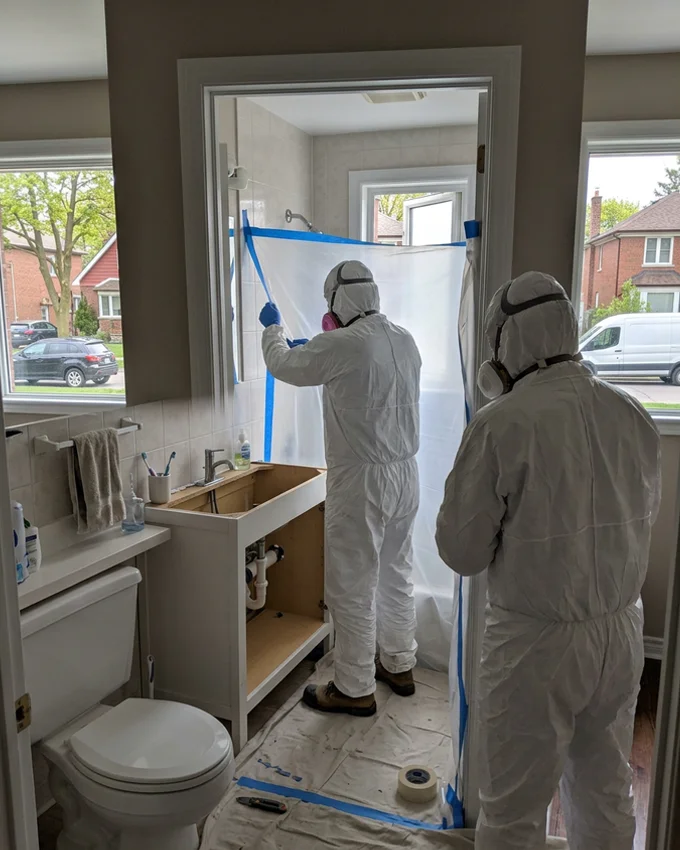
Mold damage remediation follows IICRC S520 practices. When clutter sits against walls and cabinets, small leaks go unnoticed for years and feed growth, sometimes including Stachybotrys chartarum, the dark mold people call black mold. We set up poly containment around the affected area and run HEPA negative air so spores stay inside. Drywall, cabinet backs and baseboards with active growth are cut out. Hard surfaces are HEPA vacuumed, cleaned and treated. Hidden plumbing leaks are documented for insurance and repaired by a licensed plumber. If mold covers a large area or spreads into the walls of other rooms, we tell you plainly and adjust the scope.
Fixture Replacement (Toilet, Vanity, Faucet, Appliance Haul-Away)
Fixture replacement turns a cleaned room back into a usable one. Toilets with cracked bases, vanities with rotten bottoms, corroded faucets and appliances that cannot be cleaned are removed, wrapped and hauled away with disposal records. We check the subfloor under each fixture, because slow leaks often rot the wood beneath a toilet or vanity. Damaged subfloor is cut out and replaced before anything new goes in. Licensed plumbers install new fixtures, and we coordinate the timing so the room is only out of service for as long as needed. You can pick basic replacements from our standard list or supply your own.
Hospital-Grade Sanitization (Quat Ammonium, ATP Verification)
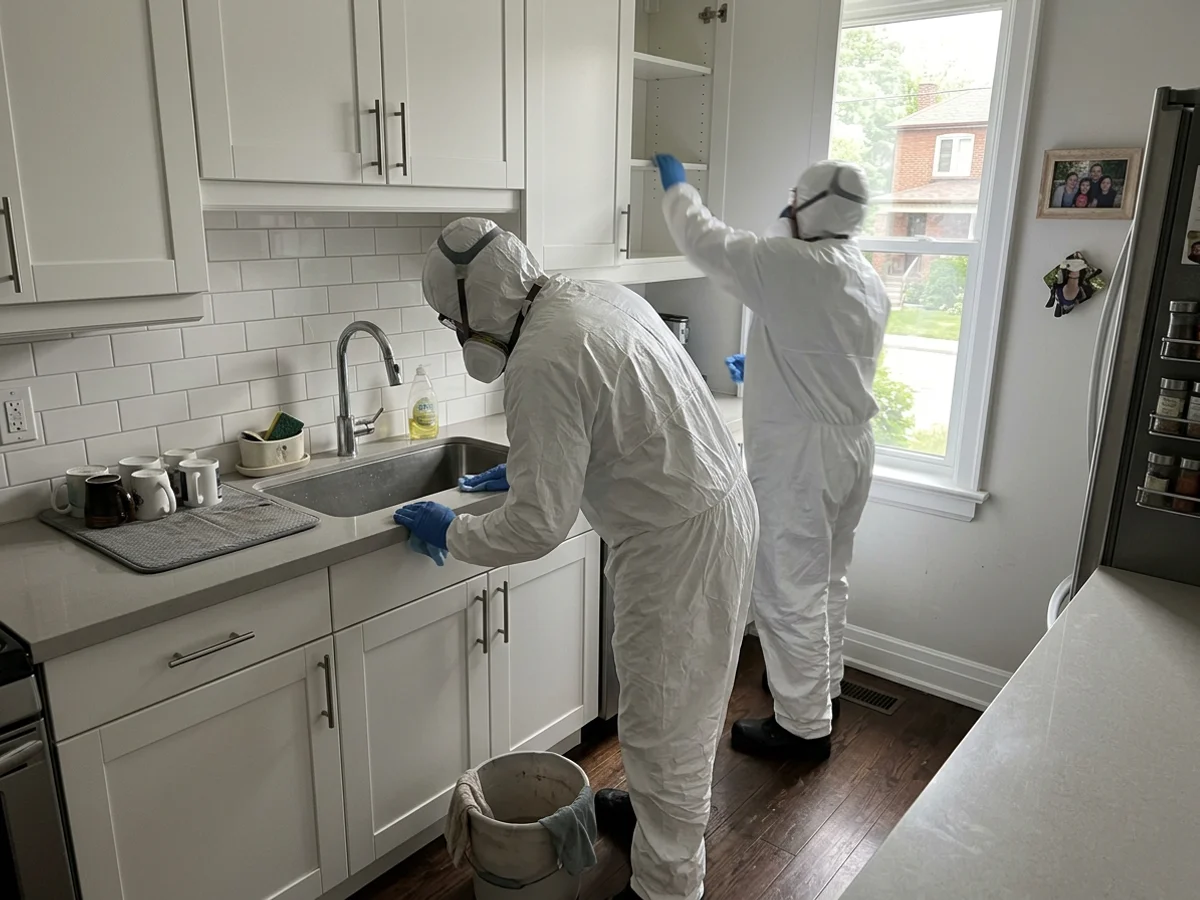
Hospital-grade sanitization is the last step and the one you can measure. Every surface is cleaned first, because disinfectant does not work through grime. Then we apply quaternary ammonium disinfectant at the labelled dwell time to counters, sinks, taps, toilets, tubs, cabinet fronts, handles and switches. Grout gets steam treatment. Before we leave, we run ATP surface testing on the high-touch areas and record the readings. If a surface fails, it is cleaned again and retested. You get the results in your handoff file, which is useful for realtors, landlords and anyone who needs proof that the room is safe to use.
When Toronto Homes Need Kitchen & Bathroom Recovery Fast
Burst Pipe With Mold Behind Cabinets Discovered During a Hoarding Cleanout
Symptom: A hoarding or extreme cleaning job in a Toronto, Mississauga or Brampton home uncovers a long-standing pipe leak behind kitchen cabinets or bathroom vanities. Black mold is visible on drywall, cabinet backs are swollen and crumbling, and the floor underlayment may be rotted.
Immediate action: Shut off water at the main valve. Do not try to clean mold yourself. Residential bleach does not kill mold at the root, and disturbing it releases spores. Call us within 24 hours so moisture does not spread further into wall cavities and HVAC returns. Photograph everything for your home insurance claim.
Scope: We work with your plumber on the leak source, remove affected cabinets and vanities, cut out mold-affected drywall to 12 inches beyond visible contamination, treat framing with EPA-registered mold killer, replace rotted subfloor, run HEPA air scrubbers and dehumidifiers to normalize moisture, and provide moisture-meter documentation for the insurance claim. Typical kitchen or bathroom recovery $3,500 to $9,500, 3 to 5 days with crew of 2 to 4.
Qualified contractor response: Needs IICRC S520 (mold remediation), IICRC S500 (water damage), moisture meter and hygrometer documentation standard, coordination with plumber and insurance adjuster, and willingness to tear out drywall rather than paint over. Avoid any crew that offers to clean mold without physical removal.
Grease Fire With Smoke Damage and Biohazard in a Rental Unit
Symptom: A kitchen grease fire or stove fire in a Toronto rental has left heavy soot on all surfaces, extinguisher residue everywhere, and possibly medical biohazard from a cooking injury. The tenant has moved out, the landlord needs the unit rentable within 2 to 3 weeks, and insurance is handling the claim.
Immediate action: Keep the unit sealed. Do not use household cleaners on soot. They smear it deeper into surfaces and increase restoration cost. Photograph everything with time stamps for insurance before any work begins. Request the fire department investigation report for the file.
Scope: We work with the insurance adjuster on scope approval, remove soot and extinguisher residue with professional-grade dry-sponge cleaning, deodorize with hydroxyl treatment (not ozone in multi-unit buildings), replace affected cabinets and countertops where damaged, decontaminate any biohazard material under OSHA 1910.1030, and provide a complete package of before-and-after photos plus manifested disposal records. Typical grease-fire recovery $5,000 to $18,000, 1 to 3 weeks with crew of 2 to 4.
Qualified contractor response: Needs smoke-damage experience (not just surface cleaning), hydroxyl treatment capability, insurance adjuster workflow, and the ability to deliver rentable condition for the landlord. Avoid any crew that quotes to “clean the soot” without discussing cabinet and countertop replacement.
Hoarder Bathroom With Hidden Plumbing Failure and Pests
Symptom: A hoarding cleanup reveals a bathroom that has been unusable for months or years. Toilet overflow residue, mold under the sink, possibly pest activity (roaches, silverfish) in the walls, and the resident has been using buckets or a different bathroom.
Immediate action: Shut off water to the bathroom. Loop in a plumber for the underlying failure before our work begins (we need the water working for cleanup). Coordinate with a pest control vendor if pest activity is active. Photograph the room for the insurance claim or landlord dispute.
Scope: We work after plumber restores water and pest control treats, remove affected cabinets, flooring and drywall to the extent of damage, disinfect with hospital-grade chemistry, replace affected framing, inspect subfloor for rot, and leave the bathroom ready for restoration trades (tile, plumbing fixtures, paint). Typical hoarder-bathroom recovery $2,500 to $7,500, 2 to 4 days with crew of 2 to 3.
Qualified contractor response: Needs coordination with plumbers and pest control vendors (not DIY), IICRC S540 and S520, hospital-grade disinfection, and the ability to deliver a bathroom ready for finishing trades. Avoid any crew that tries to do plumbing or pest work themselves. Those need licensed trades.
Found Mold or Leaks During a Cleanout?
Stop and close the room off. Do not scrub or dry sweep visible mold. Our guide on mold found behind clutter in kitchens and bathrooms explains the next steps, and you can call any time for a free assessment.