
The Animals Come First
Animal hoarding situations usually start from a place of genuine care.
People take in one more rescue until the sheer numbers overwhelm their ability to provide basic necessities. A proper animal hoarding cleanup process requires compassion and a highly structured approach.
We prioritize the safety of the animals before any remediation begins. Treating the resident with respect is just as crucial, because they are often grieving the sudden loss of their pets.
Step 1: Rehoming and Animal Welfare Handoff
Animals are always legally and safely removed before cleanup begins.
We coordinate closely with authorities like Toronto Animal Services or Ontario Animal Welfare Services to ensure a smooth transition. This handoff follows the Provincial Animal Welfare Services Act, ensuring pets receive immediate veterinary checks and rehoming support.
Key groups involved in the transition include:
- Toronto Animal Services for local municipal response
- Provincial PAWS inspectors for welfare investigations
- Local rescue groups handling specialized cat hoarding cleanup scenarios
Our team schedules the start date immediately after clearance. Letting a contaminated home sit sealed for weeks only intensifies the dangerous ammonia concentrations inside.
Step 2: Assessment and Readings
A crew lead maps the exact spread of contamination across every room using moisture meters and ultraviolet light.
We rely on 365-nanometer UV flashlights to reveal dried urine crystals that are invisible to the naked eye. This precise mapping dictates the scope of the project.
The initial assessment records specific data points:
- Ammonia gas concentration levels in parts per million
- Moisture penetration depth in drywall and baseboards
- Structural integrity of the affected subfloors
You receive a written scope detailing the exact days required for waste removal and structural treatment.
Step 3: Waste Removal Under PPE
Safe waste removal requires full protective gear to prevent exposure to dangerous pathogens and severe odours.
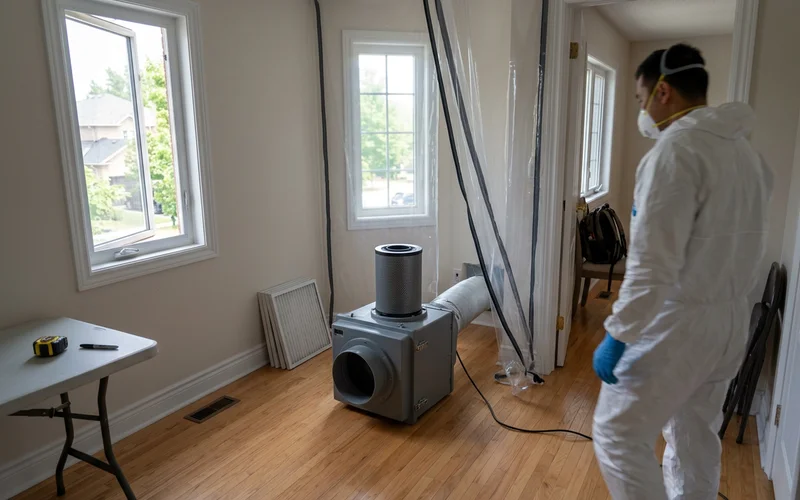
Crews operate in disposable Tyvek suits, double-layered nitrile gloves, and P100 respirators to filter out fine particulate matter. We soak dried droppings with a commercial-grade disinfectant before disturbing them. Wetting the material prevents toxic dust from becoming airborne during a pet waste cleanup toronto project.
Cat waste often carries Toxoplasma gondii, while bird droppings can harbour Histoplasma capsulatum spores.
The clearance phase systematically targets:
- Bagging soaked bedding and heavily soiled litter
- Dismantling contaminated cages and scratching posts
- Sorting salvageable personal belongings with the family
Heavy-duty HEPA negative air machines run continuously to maintain safe indoor air quality.
Step 4: Ammonia Scrubbing and Enzyme Treatment
Chemical neutralization is the only way to destroy uric acid salts embedded in building materials.
We deploy commercial air scrubbers equipped with specialized carbon-ammonia filters to pull toxic gas directly from the environment. Standard household cleaners fail here because uric acid is not water-soluble.
| Treatment | What it does |
|---|---|
| Air scrubbers with ammonia media | Pull ammonia gas from the air during and after work |
| Enzymatic digesters | Break down uric acid salts in surfaces and subfloor |
| Disinfection | Kills bacteria on hard surfaces after cleaning |
| Hydroxyl treatment | Breaks down remaining odour in air and soft surfaces |
Readings guide the work
We take ammonia readings before, during and after, so the crew and the family know when the air is safe.
Step 5: Flooring Removal and Subfloor Sealing
Severely contaminated flooring materials are surgically removed to access and treat the structural wood below.
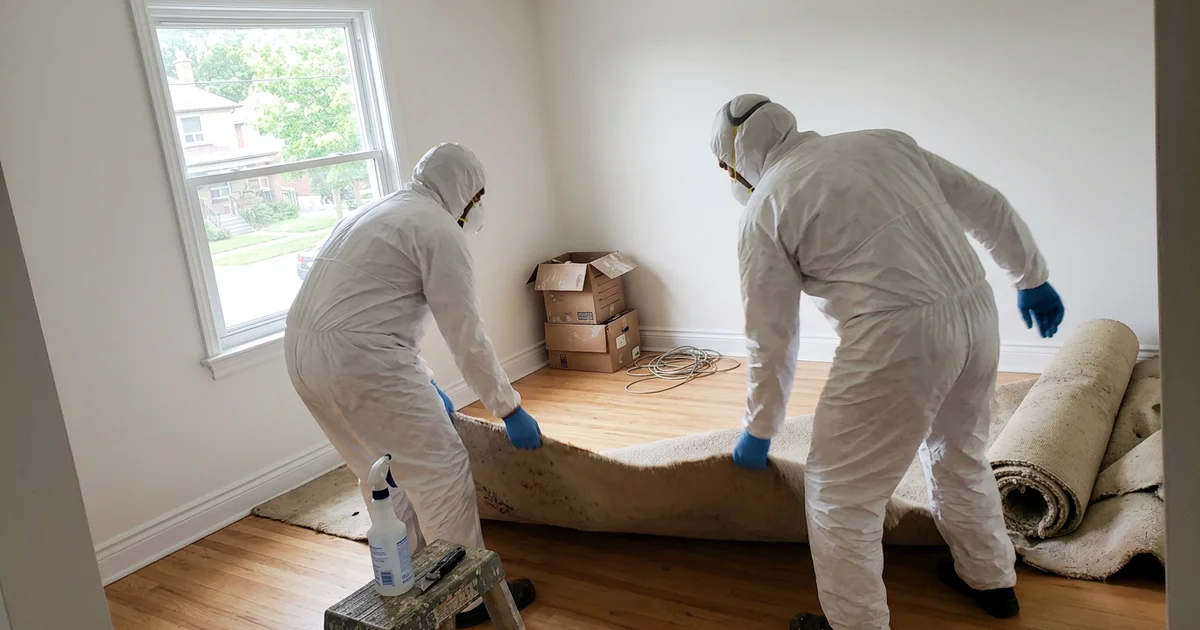
We pull out saturated carpets, pads, and compromised laminate flooring to expose the true extent of the damage. The bare subfloor receives a heavy application of targeted enzymes.
Our guide on urine and ammonia floor damage explains how we decide what can be saved.
Structural interventions include:
- Extracting ruined surface floors and underlayments
- Cutting out drywall sections that absorbed liquid
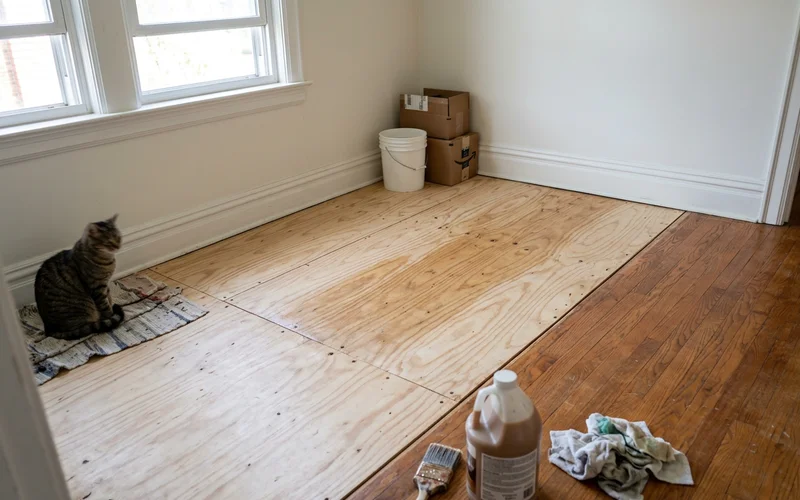
- Coating salvageable wood with a synthetic shellac primer
Applying a high-quality shellac primer permanently traps any lingering microscopic odour molecules inside the wood.
Step 6: Odour Verification and Handoff
A final environmental test confirms that the indoor air is completely free of chemical and biological odours.
We simulate warm, humid conditions during this test because uric acid salts reactivate at temperatures above 20 degrees Celsius. Raising the temperature reveals any missed spots before the space is cleared.
The verification process involves:
- Closing the windows to trap potential off-gassing
- Monitoring the space on a warm afternoon
- Applying spot treatments to any remaining problem areas
You receive a complete handover package containing disposal records, progress photos, and repair notes for your contractors.
Supporting the Person
The person living in these conditions usually experiences profound grief, shame, and anxiety during the clearance.
Our technicians maintain strict professionalism and never judge the circumstances or comment on the mess. Focus remains entirely on restoring the property to a healthy environment.
Many local support networks in Ontario, such as the Centre for Addiction and Mental Health, offer specialized counseling for hoarding disorders. Partnering with these professionals significantly reduces the risk of the cycle repeating. Completing an animal hoarding cleanup process provides a clean slate, but ongoing emotional support is what truly sustains the change.