
Your Things Should Not Just Go to Landfill
We hear the exact same concern from homeowners and business owners every single week. Seeing a lifetime of memories or usable office assets headed straight for a dumpster feels wrong.
Toronto’s Green Lane landfill is rapidly approaching its capacity limit, making waste diversion extremely critical.
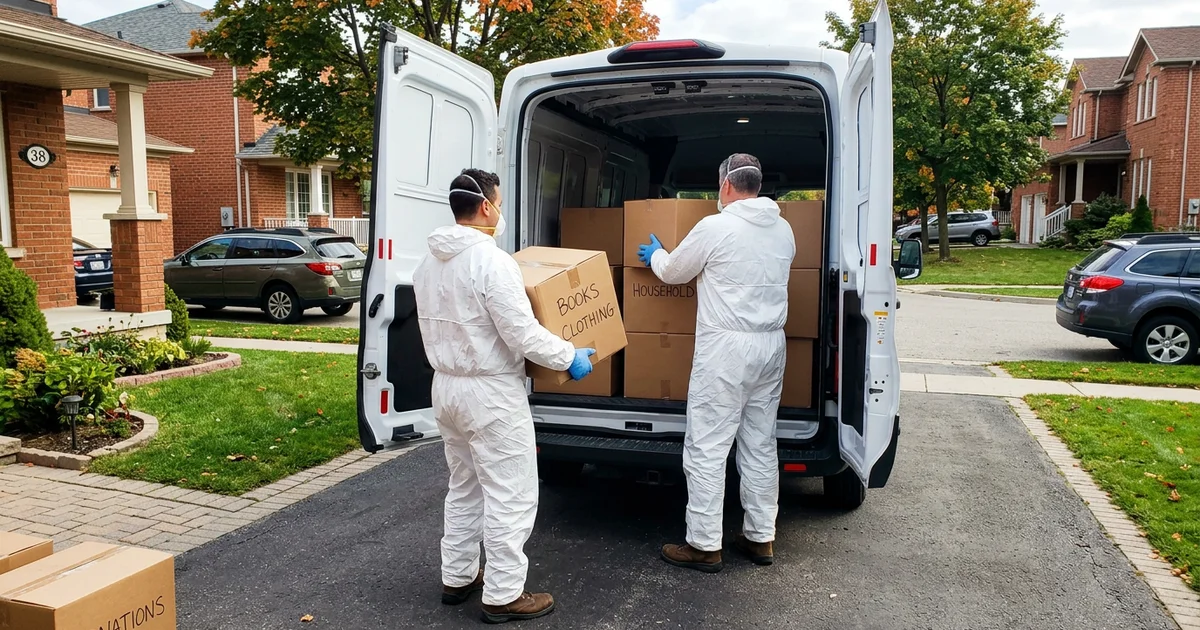
Our approach to debris removal and decluttering prioritizes giving every usable item a second life. This strategy keeps perfectly good materials out of the local waste stream.
If you are wondering where to donate items after cleanout, Toronto offers many options, so let us examine how proper sorting works.
How Sorting Works
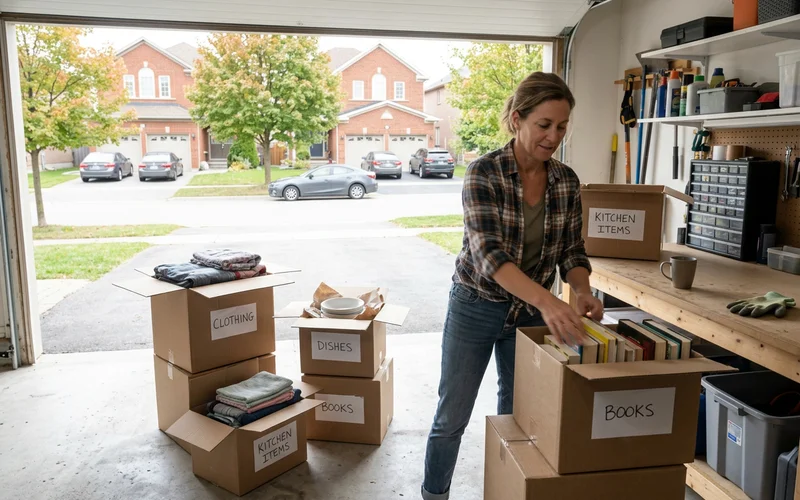
Sorting relies on separating items into keep, donate, and discard categories immediately on site. The donation pile is then subdivided based on specific charity requirements.
Our teams handle this physical sorting alongside the family or resident. Different organizations require different delivery methods and condition standards. For example, when handling a furniture donation, Toronto organizations like Furniture Bank successfully redirect over 1,500 tonnes of household goods from landfills each year.
We route gently used sofas and dining sets directly to their facilities to help furnish homes for thousands of individuals. Other items require specialized recycling channels. Electronic waste goes to certified groups like Free Geek Toronto for secure processing and reuse.
Our systematic process ensures the right items reach the correct local programs.
| Category | Specific Toronto Destination |
|---|---|
| Furniture in good condition | Furniture Bank, Habitat for Humanity ReStore |
| Clothing, shoes and linens | Oasis Clothing Bank, community thrift stores |
| Kitchenware and small appliances | Local community programs and charity shops |
| Books | Toronto Public Library sales, literacy programs |
| Tools and hardware | Community reuse centres, specialized maker spaces |
| Medical equipment like walkers | Local health equipment loan programs |
| Electronics | Certified e-waste recyclers like Free Geek Toronto |
What Charities Will Not Take
Charities reject items that pose health, safety, or resale risks. Most local organizations simply cannot accept heavily stained upholstery, broken appliances, or recalled baby gear.
We constantly monitor these evolving acceptance policies to prevent rejected deliveries. Health Canada regulations strictly prohibit the resale or donation of certain items. Cribs manufactured before September 1986 and all drop-side cribs are illegal to distribute.
Our sorting process immediately flags these hazards for proper recycling instead of donation. Hygiene is another major factor for Toronto donation centers. Mattresses, box springs, and items from homes with pest issues like bed bugs are universally declined.
We often handle pest or mold remediation before sorting begins to protect the salvageable goods.
During a donation pickup, Toronto cleanout crews immediately isolate these commonly rejected items:
- Mattresses and box springs
- Stained, torn, or pet-damaged upholstery
- Cribs, car seats, and safety-regulated infant gear
- Broken electronics or missing appliance components
- Items affected by mold, smoke damage, or pests
Clean donations get accepted
Items from a home with pests or mold usually cannot be donated, which is one more reason we deal with those problems before sorting.
Documented Disposal
Unusable items go to licensed City of Toronto transfer stations where they are weighed and processed. Clients receive a clear summary of all disposal weights, donation locations, and recycling destinations.
Our crews manage the entire transportation logistics to these municipal drop-off depots. Facilities like the Bermondsey or Commissioners locations require a minimum $40 deposit and weigh loads in five-kilogram increments. For 2026, the City charges $189.86 per tonne for general garbage.
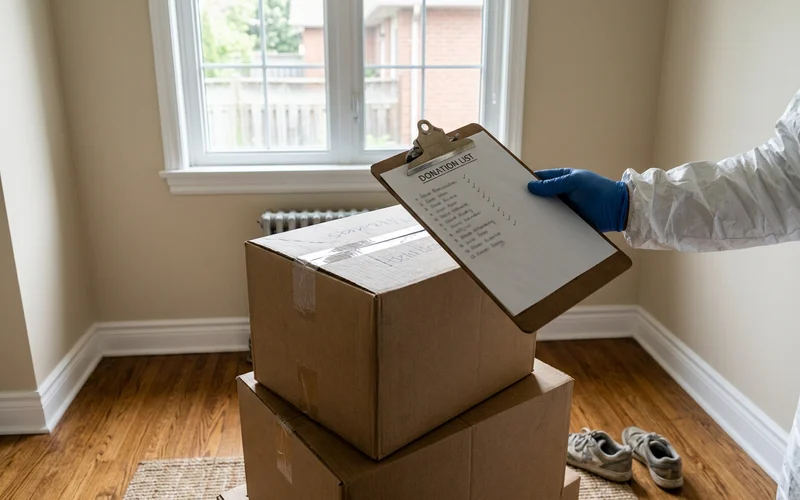
We keep all official weigh tickets to provide full transparency on disposal costs. Specific items require separate handling outside the general waste stream.
Paint, harsh chemicals, and old batteries go directly to household hazardous waste depots. Our final project reports give executors and families complete peace of mind.
Why It Matters to Families
Knowing items are helping others brings immediate emotional relief during a stressful transition. It also significantly reduces project costs by lowering weight-based disposal fees.
Our clients frequently express how comforting it is to see a parent’s dining table go to a family in need. Diverting just two tonnes of heavy furniture saves nearly $380 in local Toronto tipping fees.
Here are the primary advantages of this sorting method:
- Provides direct support to local community programs
- Lowers weight-based municipal disposal costs
- Gives families peace of mind during difficult transitions
Families downsizing a parent’s home often find this part especially meaningful, which our guide on clearing a home before long-term care explores further.
We build specific donation routing into every single project scope. This guarantees your belongings receive respectful handling from start to finish. Please tell the team during your initial assessment if you have specific donation priorities.
Our goal is to make the cleanout process as environmentally responsible and financially efficient as possible.
Contact the office today to schedule your consultation and start planning.