
Why Clutter Hides Leaks and Mold
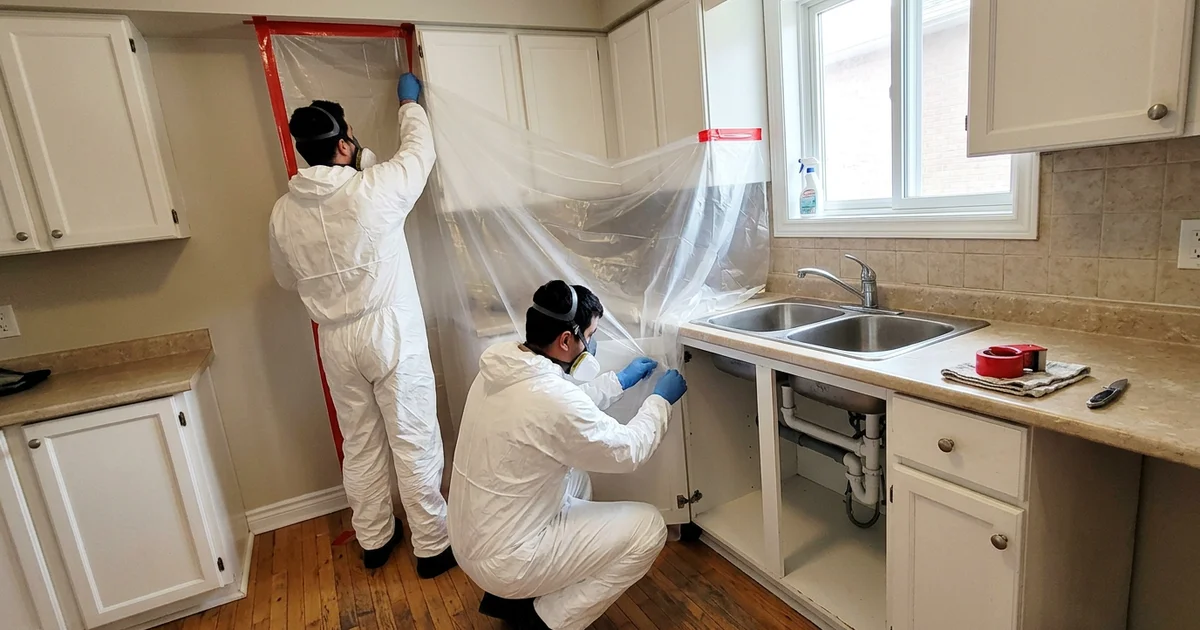
Kitchens and bathrooms have the most plumbing in a home, and plumbing leaks. A slow drip under a sink, a toilet seal that weeps or a dishwasher line that sweats can go unnoticed for years when cabinets and floors are covered with stored items. Paper, cardboard and fabric soak up the moisture and give mold something to feed on. By the time a cleanout uncovers it, the cabinet base may be soft, the drywall stained and the smell unmistakable. Finding it is actually good news, because now it can be fixed properly through kitchen and bathroom recovery.
Stop Before You Scrub
If you uncover mold during a cleanout:
- Stop clearing that area and close the door if you can.
- Do not dry scrub, sweep or use a household vacuum on it.
- Do not spray bleach on porous materials like drywall or particleboard.
- Turn off any leaking water supply if it is safe to do so.
- Keep children, older adults and anyone with breathing problems away.
Why not just wipe it?
Wiping and scrubbing release spores into the air, spreading the problem to other rooms. Containment comes first.
How Containment and Removal Work
| Step | What happens |
|---|---|
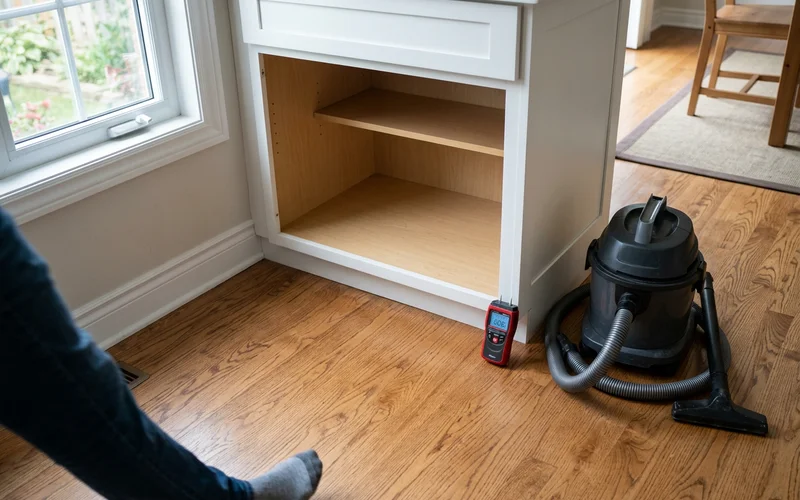
| Assess | Moisture meters and inspection find the leak and the extent of growth |
| Contain | Poly sheeting around the area, HEPA negative air to keep spores in |
| Remove | Drywall, cabinet backs and baseboards with active growth are cut out |
| Clean | Hard surfaces HEPA vacuumed, cleaned and treated |
| Dry | Area dried and moisture readings logged |
| Repair | Leak fixed by a licensed plumber, materials replaced |
We follow IICRC S520 mold remediation practices for this work. When mold has spread widely inside walls or into other rooms, we tell you plainly and adjust the scope.
Fixture Repair vs Full Remediation
Not every mold find means a full renovation. Often it is limited to one cabinet base or the drywall behind a toilet. In those cases the job is targeted: remove the affected section, fix the leak, replace the fixture if it failed and finish the room to hospital-grade sanitation. Larger problems, such as mold across a whole bathroom wall or under kitchen flooring, need more removal and more trades. Your written scope separates these so you can see each cost.
Is It Covered by Insurance?
Sudden water damage is often covered by home insurance, while long-term leaks and mold are usually excluded. When a leak is found, we photograph it and the damage before anything is removed, so your insurer can decide with real evidence.
When It Is More Than Mold
If you also find rotting food, droppings or waste, the area may need biohazard handling. Our guide on when hoarding becomes a biohazard explains how to tell. Either way, one crew can handle it in a single scope.