

Why a Hoarding Family Intervention Plan Beats a Weekend Blitz
You know how tempting it feels to rent a dumpster and clear a cluttered house in one weekend after finally having that hard initial talk. As a professional service team, we strongly advise against this rushed method because it almost always backfires. A structured hoarding family intervention protects your relationship and ensures the home stays safe long after the work finishes.
The person living there often feels ambushed by a sudden weekend blitz. Our crews have seen how quickly siblings fight and valuable items disappear during a chaotic rush. This careful pacing is exactly how professional family-guided hoarding cleanup works.
The True Cost of Rushing
Forced cleanouts frequently cause intense trauma and almost always result in the home refilling within a year.
A 2026 Canadian Psychological Association review indicates that hoarding disorder affects up to 6 percent of the population across Canada. We know that residents in areas like Toronto face unique housing pressures that make resolving these situations urgent.
This guide picks up where the first conversation leaves off. Your loved one has already agreed that something needs to change.
Now you need a practical roadmap to get the job done right.
Step 1: Agree on Roles
Agreeing on specific roles before anyone touches a box prevents the chaos of everyone talking and nobody making decisions. We require families to designate a main contact, a decision-maker, and clear support roles to keep the project moving smoothly. The Institute for Challenging Disorganization (ICD) clutter scale shows that higher-level hoarding requires strict role boundaries to prevent overwhelming the resident. Setting expectations early saves hours of arguing later.
- Main contact. One family member the resident trusts entirely. They speak for the family with the cleanup crew and keep everyone updated on the progress.
- Decision-maker. Usually the resident holds this power. We always confirm alternative legal authority with a doctor or Ontario estate lawyer if there are capacity concerns.
- Supporters. Siblings and relatives manage helpful tasks like transport, meals, and appointments. They avoid arguments about keeping or tossing items.
- Professionals. The crew lead, a case worker, the family doctor, and perhaps a landlord or legal representative.
Many families in our area rely on resources from the Toronto Hoarding Support Services Network (THSSN) to help fill some of these professional support roles. We recommend reaching out to local case workers early in your planning phase. A strong team makes the physical labor much easier to manage.
Step 2: Write the Sorting Rules Down
Writing down short, clear sorting rules on a calm day makes them much easier to follow during a stressful cleanup session. We find that referencing a written list stops arguments before they start. The VHA Home HealthCare hoarding support program emphasizes giving the resident control over personal items to build trust. Following a documented plan keeps the emotional temperature low.
| Rule | Example |
|---|---|
| Safety items are non-negotiable | Exits, stairs, stove, furnace and bathroom must be cleared |
| The resident decides on personal items | Clothing, books, collections and keepsakes are their call |
| Disputed items go to a hold box | Photographed and stored, decided later |
| Documents and valuables are set aside | Photos, papers, cash, jewellery never go in a bag unchecked |
| Donations before disposal | Usable items go to local charities where possible |
| One room at a time | Finish a space before starting the next |
The hold box
A single box for “not sure” items prevents most family fights. It keeps the work moving and tells the resident their opinion still counts.
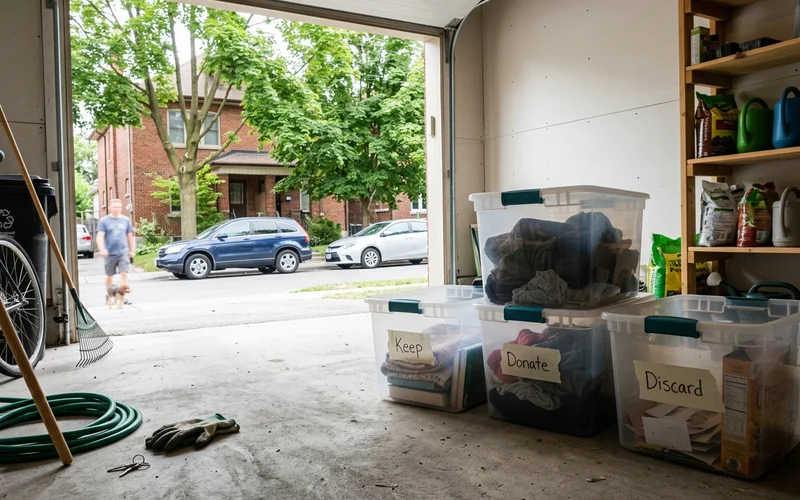
Using a labeled bin system actively reduces decision fatigue. We typically see clients make faster choices when they only have to decide between three clear options. Processing a severe level four or five hoarding situation can easily unearth thousands of hidden documents.
Step 3: Choose a Pace the Resident Can Manage
Selecting a realistic pace based on the resident’s energy level prevents exhaustion and complete project abandonment. We structure cleanup schedules around short sorting sessions followed by crew-only heavy lifting. A standard three-bedroom home with severe accumulation takes anywhere from three to seven days for a professional crew to clear. A family attempting a hoarding intervention in Toronto by themselves often takes four to six times longer.
Structuring a Sustainable Schedule
Establishing a sustainable rhythm keeps the project moving without overwhelming anyone. We use these pacing guidelines for most residential projects:
- Limit active sorting. Cap decision-making sessions at two to three hours maximum.
- Separate the heavy lifting. Move hauling and disinfecting tasks to crew-only hours.
- Adapt to stamina. Shift from full days to half-days if the resident shows signs of distress.
- Document the timeline. Put the expected schedule into the written scope of work.
Our senior hoarding cleanup service adds specific fall-risk planning and case worker coordination for older parents. This approach prioritizes clearing tripping hazards like loose rugs and blocked hallways first.
We know from a 2025 Toronto Public Health report that securing clear walking paths immediately reduces the risk of serious at-home injuries by over 40 percent. Safety must always come before sorting.
Step 4: Let the Crew Lead Mediate on Site
Using a neutral crew lead to mediate disputes removes the emotional history that usually derails family cleanups. We step between the resident and the clutter to enforce the rules calmly and objectively. Family members inevitably carry decades of baggage into every conversation about keeping or discarding items. A professional project manager does not share that history. Our crew leads ask simple, direct questions about each object on active cleanup days.
Expert Insight on Mediation
An objective third party transforms a hostile argument into a simple logistical choice. Removing the family dynamic is often the single most important factor in a successful cleanout.

When emotions run high, the lead calls a mandatory break to let the tension dissipate. We redirect siblings into supportive roles instead of letting them police each other. This professional boundary keeps the environment respectful.
If a severe disagreement happens, the disputed item goes straight into the hold box and the physical work continues. We frequently hear from clients that this specific mediation tactic saved their family relationships during the process. Resolving the hardest choices later prevents the entire day from stalling over a single stack of old newspapers.
Step 5: Plan for After
Planning for ongoing maintenance guarantees that the freshly cleared house stays functional and safe. We always establish follow-up routines because homes easily refill without a solid support system in place. Data from a 2025 CMHC housing study shows that hoarding disorder has an extremely high relapse rate if the underlying habits remain unaddressed. The day the last dumpster rolls away is absolutely not the end of the journey. We strongly advise finalizing a maintenance strategy before the heavy cleanup phase even concludes.
Agree on these critical follow-up elements:
- A regular visit schedule, handled by family or through professional maintenance visits from the crew.
- A simple daily routine for processing incoming mail, recycling, and shopping bags.
- Ongoing emotional support from a family doctor, therapist, peer group, or dedicated case worker.
- Early warning signs to watch for, like newly blocked pathways or unused rooms filling up again.
Connecting with regional organizations like the Toronto Hoarding Support Services Network (THSSN) provides crucial long-term assistance. We encourage families to lean on these established community pillars for ongoing guidance. The most successful interventions pair a clean environment with continuous mental health support.
What a Good Hoarding Family Intervention Feels Like
A well-executed hoarding family intervention feels like a collaborative project where everyone works for the same healthy goal. We know that replacing confrontation with a clear plan drastically lowers the stress for everyone involved.
There will definitely still be hard moments during the process. Letting go of familiar possessions is genuinely painful, and watching a parent struggle is emotionally taxing.
We have personally witnessed these struggles during countless residential cleanouts. A successful plan always relies on three key elements:
- A solid roadmap for pacing
- A neutral mediator for disputes
- Written rules for decision-making
Following these guidelines turns an overwhelming crisis into a manageable task with a clear endpoint. We focus on protecting the person while fixing the property.
Your loved one deserves a safe living space.
If you need a professional crew lead to help you build and execute your family hoarding cleanup plan, reaching out for a free, private assessment is the smartest place to start. We are ready to help you restore safety to your home.