
The Short Answer: Sometimes, and It Depends on the Cause
Most Ontario home insurance policies do not pay to clear clutter that built up slowly over many years. They often do pay for sudden, accidental damage, even when it happens inside a hoarded home. The difference between “gradual” and “sudden” decides most claims, and good documentation decides the rest. If you are weighing the overall budget first, our page on hoarding cleanup costs shows the published price bands for every service.

Every policy is different, so treat this guide as a map rather than a promise. Your broker and your policy wording have the final say.
Sudden vs Gradual Loss in Canadian Policies
Canadian homeowner policies are built around sudden and accidental loss. They usually exclude damage from wear and tear, lack of maintenance, gradual leaks, mold that developed slowly and pests. Hoarding itself is almost always treated as gradual, so the cost of sorting and removing contents is rarely covered.
What is often covered are events that happen suddenly, even if the home was hoarded at the time:
| Situation | Often covered? | Why |
|---|---|---|
| Clearing years of accumulated contents | Rarely | Gradual condition, not a sudden loss |
| Burst pipe soaking stored items | Often | Sudden water damage, check water coverage |
| Sewage backup in a full basement | Often, with sewer backup coverage | Sudden event, needs the right endorsement |
| Fire or smoke damage | Usually | Named peril on most policies |
| Unattended death or injury cleanup | Often | Sudden event, biohazard remediation |
| Mold behind clutter over many years | Rarely | Gradual, often excluded |
| Rodent or insect damage | Rarely | Usually excluded |
Landlord and condo policies follow similar logic, with their own wording. Tenants with contents insurance may have coverage for their own belongings after a sudden event, but not for clearing the unit.
Ask early
Call your broker before work starts, not after. Adjusters want to see conditions as they were found, and once items are moved, that evidence is gone.
Biohazard and Water-Damage Triggers
Two kinds of events open the door to coverage most often. The first is water: a supply line bursts behind stored boxes, a water heater fails in a packed basement, or a heavy storm overwhelms the sewer. The second is a biohazard event, such as an unattended death or a serious injury, which turns part of the home into a biohazard remediation job.
In both cases, the insurer will usually look at the damage caused by the event, not the clutter around it. That can still be a large share of the cost, because removing wet or contaminated contents, drywall and flooring is often the heaviest part of the work.
Documentation Adjusters Need
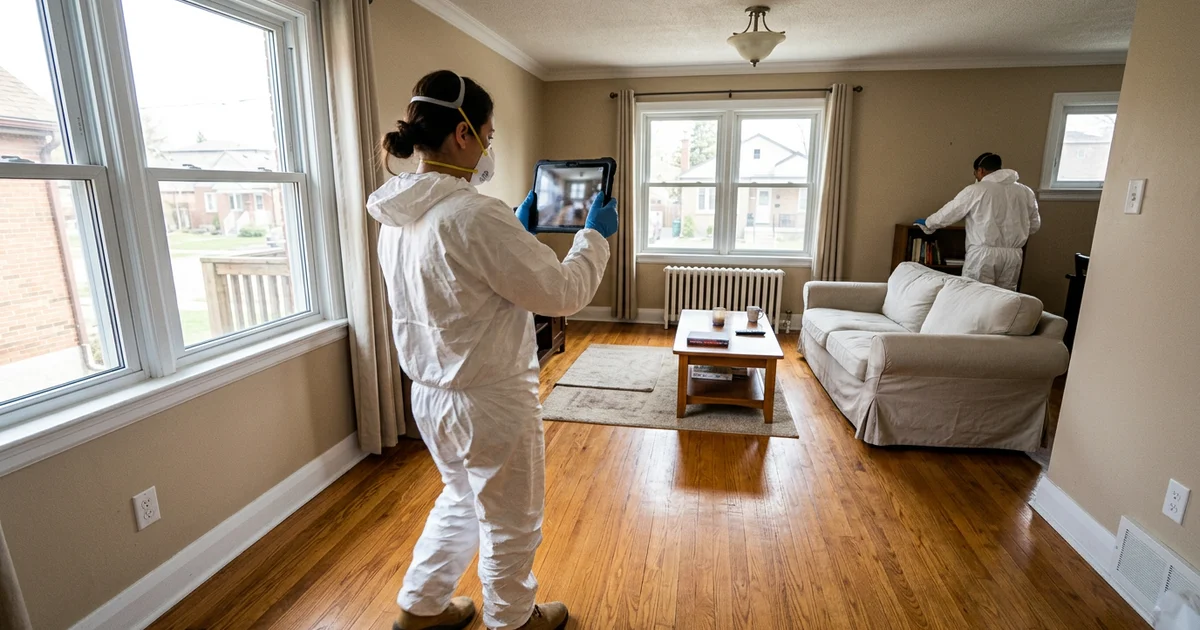
Strong documentation is the single biggest factor you can control. On every job where a claim is possible, we put together:
- Dated photos as found. Every affected room, before anything moves.
- Itemized scope. Rooms, tasks, materials removed, crew hours and disposal, line by line.
- Moisture and damage notes. Where water travelled, what is wet, what is structural.
- Disposal records. Weigh tickets for general waste and manifests from a licensed carrier for biohazard waste under O. Reg. 347.
- Before and after photos. Showing the completed work.
- Completion letter. Summarizing what was done and when.

Working With Your Adjuster
We coordinate with adjusters from Intact, Aviva, TD, Allstate, Economical and other major Canadian carriers. In practice, that means we can speak with your adjuster directly, send our scope in the format they prefer, and answer their technical questions about PPE, containment and disposal, so you do not have to repeat a painful story. If part of the job is covered and part is not, we split the scope so the claim and your out-of-pocket portion are clear.
What If Insurance Says No?
A denied claim does not mean the home cannot be made safe. Options include a safety-first scope that clears exits, the kitchen and bathroom first, staging the work over time, paying from an estate if the owner has passed away, or, for landlords, recovering some costs through the Landlord and Tenant Board with good documentation. If an insurer has flagged the home at renewal, our guide on insurance renewal denial explains how a documented cleanup can support reinstatement.
Whatever the answer from your insurer, a written scope with a fixed price gives you something solid to plan around. A free assessment is the easiest way to get one. Our guide on how to choose a hoarding cleanup company in Toronto lists the questions to ask before you sign.