
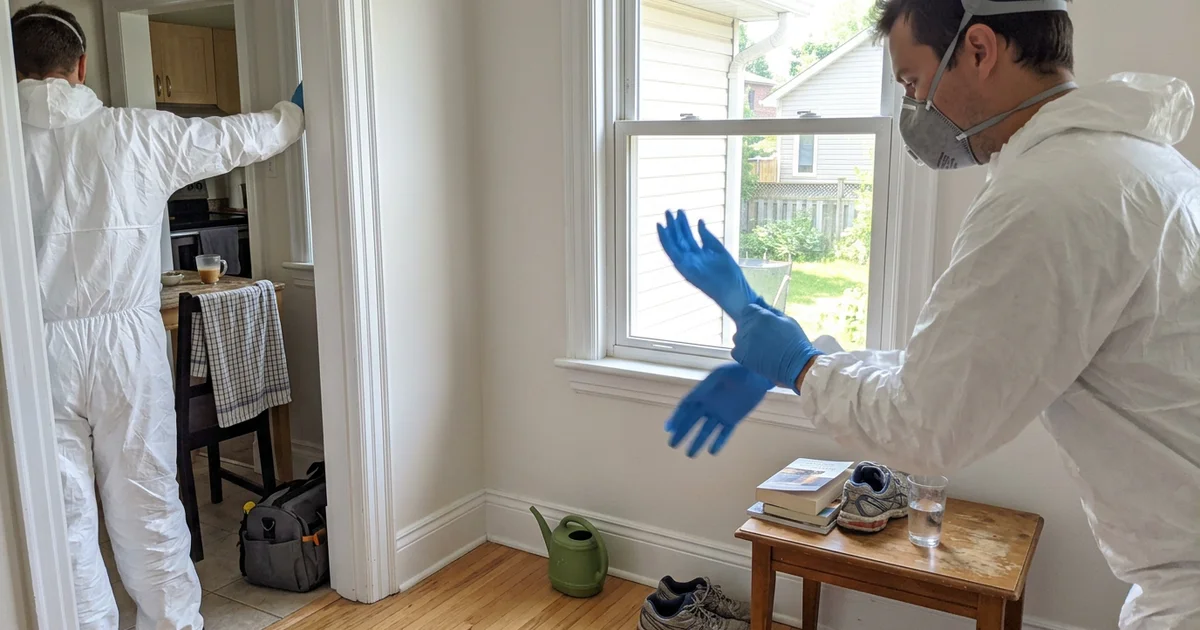
We know the immediate reaction to a localized accident is often to grab a mop and restore a sense of normalcy. That dividing line between a standard mess and a biological hazard is often misunderstood by property owners.
Our teams see well-intentioned scrubbing push dangerous contaminants deeper into floorboards every week.
Is it safe to clean up blood yourself?
Let’s look at the clinical data, what it actually means for your health, and explore practical ways to respond safely while you wait for biohazard remediation help.
Why Families Want to Do It Themselves
The biological risks make doing it yourself highly unsafe. We completely understand why families want to handle a cleanup after an injury or death at home. Taking care of the space feels like a final act of care or a practical way to protect a loved one’s privacy.
Our technicians witness these completely understandable emotions regularly. But blood and body fluids carry severe, verifiable health risks. A home cleanup almost always leaves microscopic contamination behind.
We align our practices with the Canadian Centre for Occupational Health and Safety (CCOHS), which mandates strict universal precautions for handling bodily fluids. Unprotected contact with contaminated surfaces exposes you to life-altering illnesses.
The Health Risks in Plain Terms
The primary bloodborne pathogen risk comes from direct exposure to viruses like hepatitis B, hepatitis C, and HIV. We follow strict safety protocols because a contaminated surface can look perfectly clean while still harboring disease.
Infection occurs through contact with broken skin, the eyes, nose, mouth, or from sharp debris like broken glass. Our crews are trained to the OSHA 1910.1030 standard and vaccinated for hepatitis B. Most family members lack this specialized medical protection.
| Risk | How exposure happens | Why it matters at home |
|---|---|---|
| Hepatitis B | Blood contact with cuts or mucous membranes | Can survive on dried surfaces for up to 7 days |
| Hepatitis C | Blood contact, sharp injuries | No vaccine available, making prevention the only defense |
| HIV | Blood contact with broken skin | Survives briefly outside the body, still a mandatory precaution |
| Bacteria from fluids | Decomposition, waste | Creates severe odour, infection risk, and cross-contamination |
| Sharp debris | Glass, needles, broken items | Puncture wounds allow pathogens directly into the bloodstream |
Porous Materials Hold Fluids Below the Surface
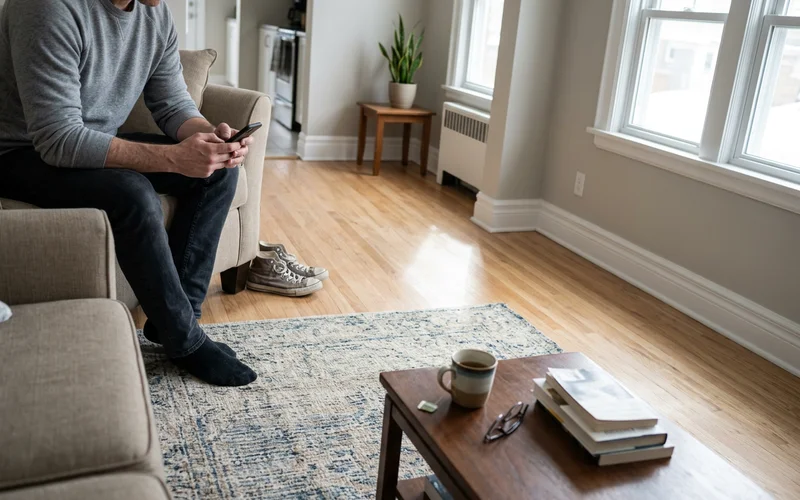
Blood soaks deep into porous materials, making surface scrubbing completely ineffective and often destructive. We routinely find that the biggest problem with blood cleanup at home is what you cannot see. Blood acts like water and quickly wicks into anything absorbent.
What stays below the surface keeps the health hazard alive and drives lingering odour. Our professionals remove these saturated materials rather than trying to scrub them. Treating and testing what remains guarantees the environment is actually safe.
Common Materials That Absorb Contaminants
- Carpet and pad. The carpet may look clean after scrubbing while the pad and subfloor stay saturated. Replacing carpet in Canada costs between $3 and $10 per square foot, and pushing blood into the subfloor just increases repair expenses.
- Upholstery and mattresses. Fluids soak deep into foam and fabric, making extraction impossible.
- Hardwood seams. Liquid runs between boards into the structural subfloor below.
- Drywall and baseboards. Lower edges wick up fluid like a sponge and require physical removal.
- Grout and unsealed concrete. Both absorb significantly more biological matter than they appear to hold.
Why Household Bleach Falls Short
Standard bleach cannot penetrate porous surfaces and is instantly neutralized by heavy organic matter. We see property owners make the mistake of pouring bleach on blood, which only creates a larger, more toxic mess. Bleach is a useful disinfectant on hard, non-porous surfaces only when it is diluted correctly and left on long enough.
Standard household chemicals have severe limits during a biohazard event:
- It requires a strict 1-to-10 dilution ratio and a full 10-minute dwell time to work on non-porous surfaces.
- It cannot reach fluids soaked into wood, drywall, or carpet padding.
- Heavy organic matter inactivates the active chlorine, meaning surfaces must be perfectly clean first.
- It does nothing about odour compounds bound into the subfloor or structural framing.
Our specialists clean the area first and then use protease enzyme digesters to actively break down the specific protein bonds found in blood. Applying hospital-grade disinfectants at the correct dwell time ensures complete decontamination. We verify the final results with ATP (Adenosine Triphosphate) testing.
The emotional cost is real too
Many people who clean up after a loved one’s death or injury carry those images for years. Letting a crew handle it is not giving up. It is protecting yourself.
Safe First Steps Before Help Arrives
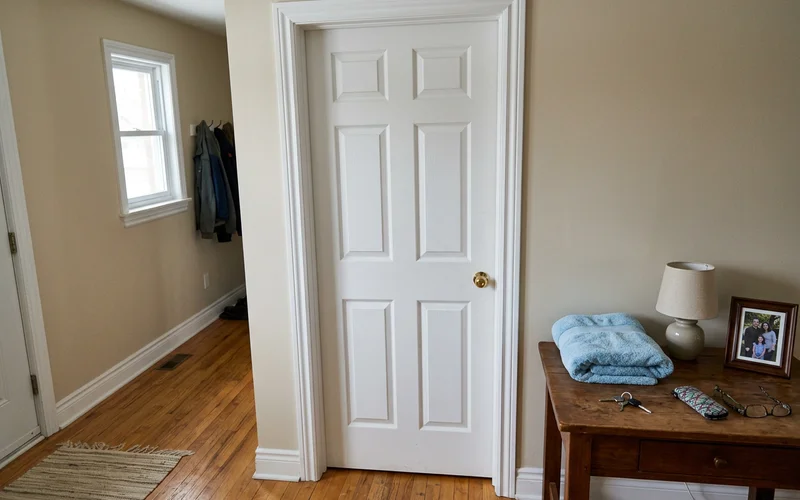
The safest first step is to isolate the affected room and prevent anyone from entering. We advise families to step back and let the authorities or a professional team assess the area first.
If a scene has been released by police or the coroner, or the incident did not involve them, here are the exact steps to follow:
- Isolate the area. Keep the room shut, and ensure children and pets are kept well away to prevent tracking microscopic blood into other rooms.
- Do not touch or move items. Leave bedding, clothing, and furniture exactly where they are.
- Turn off forced-air systems. Shut off heating or cooling to that room to limit the spread of aerosolized bacteria.
- Gather necessary personal items. Retrieve things you need from other, unaffected parts of the home only.
- Seek medical advice. If you were exposed, wash the area with soap and water and call your doctor or Telehealth Ontario at 811.
- Call a remediation team. We answer 24/7 to provide immediate guidance.
What a Professional Cleanup Involves
Professional cleanup involves full structural containment, material removal, and scientific testing to verify safety. We contain the area and safely extract any porous materials that absorbed fluids. This precise removal process protects the underlying structure from permanent damage.
Our technicians then clean and disinfect the room, test the surfaces, and seal what remains. Personal belongings are carefully set aside for the family.
We transport all biohazardous waste using a licensed carrier and provide a legal manifest for your records. For incidents involving a death, the trauma scene cleaning crew handles complete odour removal and coordinates with the coroner’s office. Our guide on how biohazard waste is disposed of in Ontario explains what that manifest records.
Is it safe to clean up blood yourself given these severe risks? The dangers simply outweigh any perceived benefits.
You do not need to see the room again until it is fully restored. Our priority is ensuring your space is completely decontaminated. Reach out to a certified professional to handle the hazard safely so you can focus on moving forward.