
Stop, Step Back, Then Make a Plan
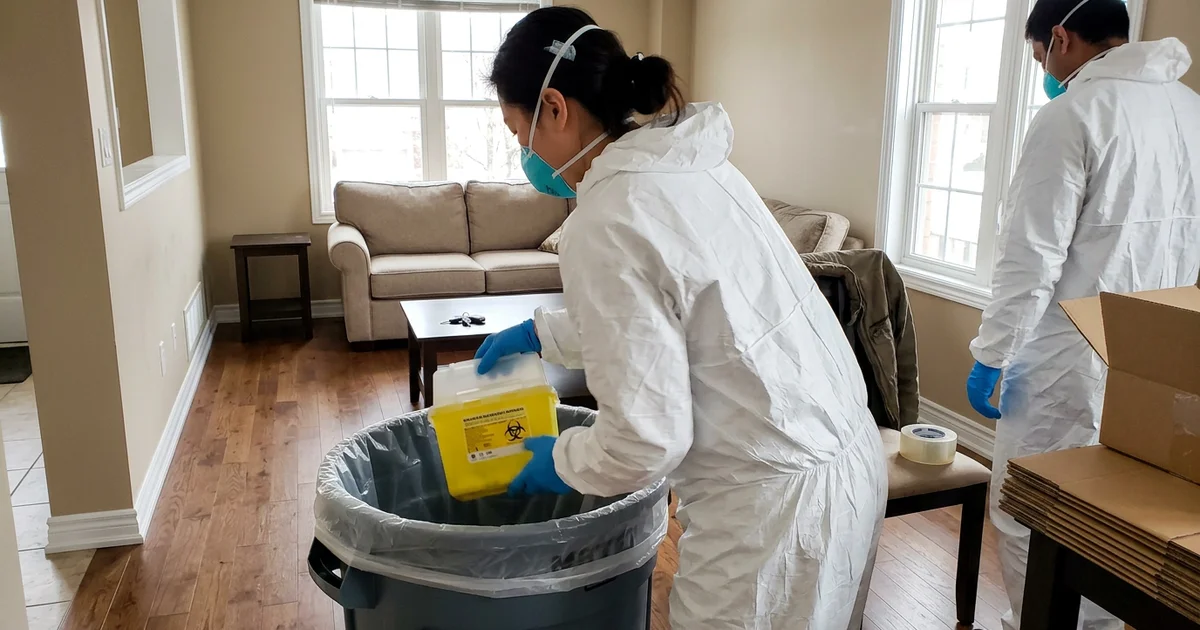
Finding a needle while clearing a home is frightening. It happens more often than people think: in a relative’s condo after they enter treatment, in a rental unit after a tenant leaves, in an estate home, or deep inside the piles of a hoarded house. The most important thing you can do in the next few minutes is stop clearing. Many needle-stick injuries happen not with the first needle someone sees, but with the second one hidden under the next layer. This is exactly the kind of situation biohazard remediation crews are trained for.
What to Do in the First Few Minutes
- Do not touch it. Do not pick it up with your fingers, and never try to recap it.
- Stop moving items in that area. More sharps may be nearby.
- Keep others out, especially children and pets. Close the door if you can.
- Do not touch unknown powders or residue. Do not brush, sniff or wipe them.
- Note where you found it so the crew knows where to start.
- Call for help. We answer 24/7.
If someone was poked or cut, wash the wound gently with soap and water, do not squeeze it, and seek medical advice right away from a doctor, an emergency department or Telehealth Ontario.
Fentanyl caution
Treat any unknown powder or residue as potentially dangerous. Leave the area and let trained crews handle it with proper protection.
If You Absolutely Must Move One Needle
Sometimes a needle is in a spot where someone could step on it before help arrives. In that case only:
- Use tongs, pliers or a dustpan and brush, never your hands.
- Wear thick gloves if you have them, knowing they are not puncture-proof.
- Keep the point facing away from you at all times.
- Drop it point-first into a rigid, puncture-proof container with a lid, such as a thick plastic bottle.
- Close the lid tightly and set the container somewhere out of reach.
- Do not put it in household garbage or recycling.
How a Professional Sharps Sweep Works
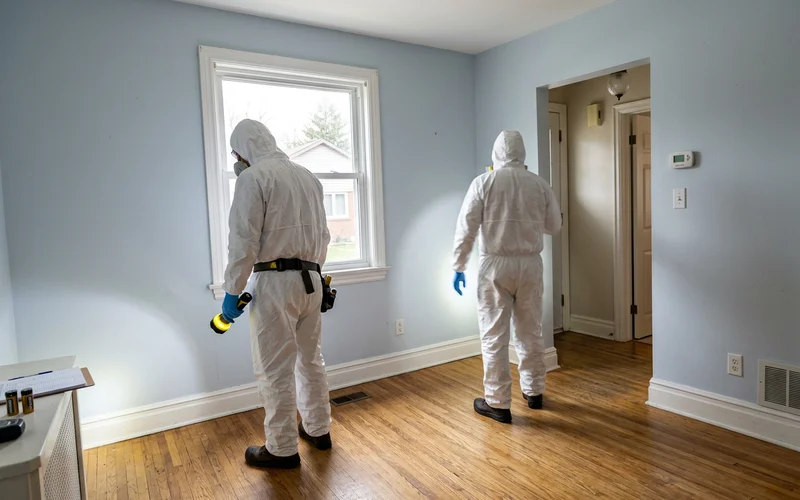
A professional sweep is slow and methodical by design. Crews wear cut-resistant gloves under nitrile, Tyvek coveralls and respirators, and they use strong lighting. They work each room in a set order:
| Area | What crews check |
|---|---|
| Floors | Under furniture, along baseboards, inside floor vents |
| Furniture | Seams, cushions, under mattresses, inside drawers |
| Clothing and bags | Pockets, purses, backpacks, shoes |
| Bathrooms and kitchens | Cabinets, behind toilets, inside appliances and bins |
| Piles and boxes | Layer by layer, never by reaching in blind |
Every sharp goes straight into a rigid container. Paraphernalia and unknown substances are bagged and handled with fentanyl caution. Only when a room is cleared of sharps does normal sorting begin.
Disposal and Documentation
Sharps are regulated waste in Ontario. They must be packaged in proper containers, transported by a licensed carrier and tracked on a manifest to an approved facility. You will receive a copy of the manifest with your completion documents. Our guide on biohazard waste disposal in Ontario explains the full chain.
Privacy and Dignity
Finding needles often comes with difficult news about someone you love. Our crews never comment on what they find, never share it with neighbours or building staff and never photograph it for anything other than your private records. Personal belongings found during the sweep, like phones, wallets, ID and photos, are set aside and returned to the family. If the person is in treatment or recovery, we can also help get their home ready for their return.
Who Pays
When sharps are found during a broader cleanup, such as a hoarded home, an estate or a rental turnover, the sweep is added to that scope as its own line. When it is a standalone job, it is quoted as biohazard remediation. In rentals, the landlord usually arranges it, and some costs may be recoverable. Either way, the price is written down before the work starts.
If you have found needles, stop where you are and call. The safest cleanup is the one you leave to people with the right gear.