
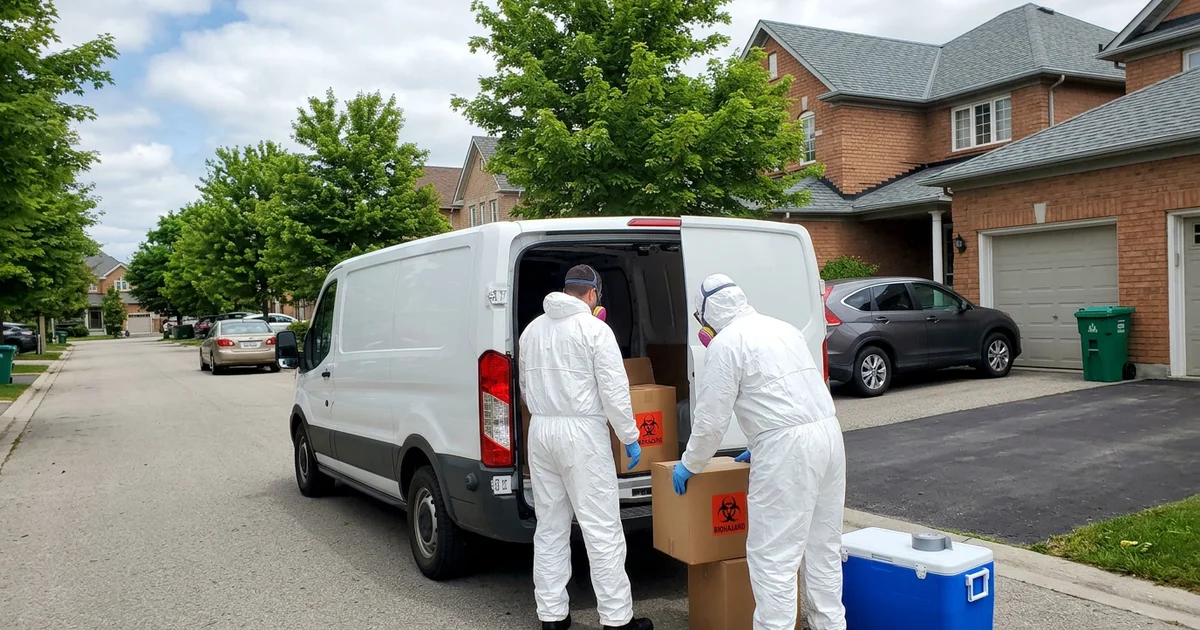
When planning a trauma cleanup, most property owners focus entirely on the visible cleaning phase, completely overlooking the strict biohazard waste disposal ontario mandates.
The truth is, managing the contaminated materials afterward is where the real liability hides.
We see clients face unexpected legal issues simply because a contractor tossed regulated materials into a standard dumpster. That single mistake can trigger environmental penalties in the province starting at $1,000 per day. Your choice of a biohazard remediation provider dictates whether you inherit that financial risk or safely eliminate it.
Our team will break down exactly what provincial regulations require for legal waste management and how the mandatory tracking system works. This roadmap outlines the exact steps to ensure complete compliance.
What Counts as Regulated Waste
Not everything removed from a cleanup job qualifies as hazardous. Clean items and lightly soiled general debris can usually go through normal licensed municipal streams. We assess the scene immediately to identify materials that demand specialized handling. Regulated biomedical waste typically falls into a few specific categories locally.
Common Types of Regulated Materials
Identifying the exact hazard dictates the packaging required by law. These are the main categories you will encounter:
- Sharps: Needles, syringes, and lancets require rigid, puncture-proof yellow containers meeting the specific CSA Z316.6 safety standard.
- Saturated Materials: Carpet pads, mattresses, and drywall sections soaked with blood or bodily fluids must be sealed in leak-resistant red biohazard bags.
- Anatomical and Pathological Waste: Tissues or organic matter related to decomposition require distinct labelling and expedited processing.
- Associated Chemical Hazards: Solvents, reagents, or other hazardous substances found during a cleanup follow their own distinct transportation codes.
Our technicians separate these hazardous items from general debris right at the source. Mixing them up is a fast way for a property owner to face rejected loads at the waste facility. You stay protected when a contractor strictly segregates the materials on site.
The Rules: O. Reg. 347
Ontario Regulation 347 under the Environmental Protection Act sets the exact laws for hazard classification and transportation. This legislation dictates how companies must store, label, and haul o reg 347 waste across the province. We take these regulations seriously because the financial risks of non-compliance are severe. The Ministry of the Environment, Conservation and Parks can issue penalties reaching up to $100,000 per day for the most serious environmental violations. Disposal is one of the larger lines in our breakdown of biohazard cleanup cost in Ontario.
The Shift to Digital Tracking
The days of tracking hazardous materials on paper carbon copies are gone. As of January 1, 2023, the province replaced the old HWIN system with a mandatory digital portal.
This new platform is the Resource Productivity and Recovery Authority (RPRA) Hazardous Waste Program Registry. All generators, carriers, and receivers must use this digital registry to log every movement of regulated material. Our administrative staff handles this electronic registration so you never have to manage the complex portal yourself. The system provides real-time oversight to ensure nothing ends up in a local landfill illegally.
Not legal advice
Waste classification involves complex technical details based on volume and specific chemical properties. Your remediation company should fully understand these metrics and manage the legal reporting on your behalf.
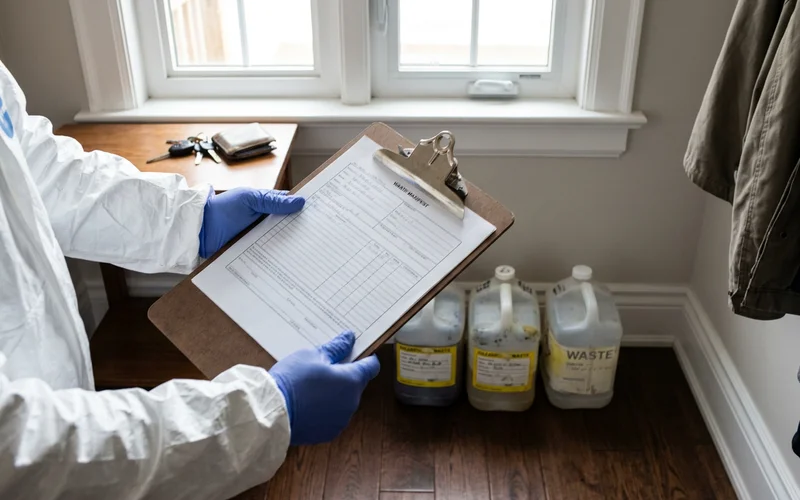
The Chain of Custody, Step by Step
A secure chain of custody guarantees that hazardous items move safely from your property to a licensed destruction facility. Every individual touching the material must hold specific credentials. We use the official RPRA HazTrack mobile app to log data instantly during transport. This strict sequence eliminates blind spots in the removal process.
| Step | What happens | Who is responsible |
|---|---|---|
| 1. Segregation | Regulated materials separated from general debris | Remediation crew |
| 2. Packaging | Sharps placed into CSA Z316.6 rigid containers; saturated items double-bagged in red liners | Remediation crew |
| 3. Labelling | Containers marked with biohazard symbols and dated | Remediation crew |
| 4. Temporary storage | Sealed boxes held securely in a climate-controlled zone until pickup | Remediation company |
| 5. Transport | Ministry-approved carrier collects waste using a digital manifest | Carrier with an ECA permit |
| 6. Treatment and disposal | Approved facility treats the waste via incineration or autoclaving | Receiving facility |
| 7. Records | Digital manifest is finalized in the RPRA registry | Company and property owner |
Every single handover is time-stamped and recorded in the provincial database. If a question ever arises about where the debris went, the digital footprint provides an immediate answer.
Why Manifests Matter to Insurers
Major biohazard events like an unattended death or a severe sewage backup can easily generate cleanup costs ranging from $5,000 to $10,000 CAD. Adjusters require hard proof that contaminated materials were managed legally before they approve those high-value payouts. We provide the finalized digital manifest directly to your insurance provider to accelerate the claims process.
Securing Your Coverage
This digital biomedical waste manifest ontario regulators mandate serves as the ultimate receipt for environmental compliance. It details the exact weight of the waste, the hazard class, the carrier, and the final destruction facility.
Without this official record, an adjuster can easily reject the disposal portion of your claim. A missing manifest raises immediate red flags about the contractor’s legitimacy. Our detailed guide on insurance coverage details exactly what else adjusters demand before cutting a check. You save weeks of stressful back-and-forth communication when you submit the correct paperwork on day one.
Discretion Through the Whole Chain
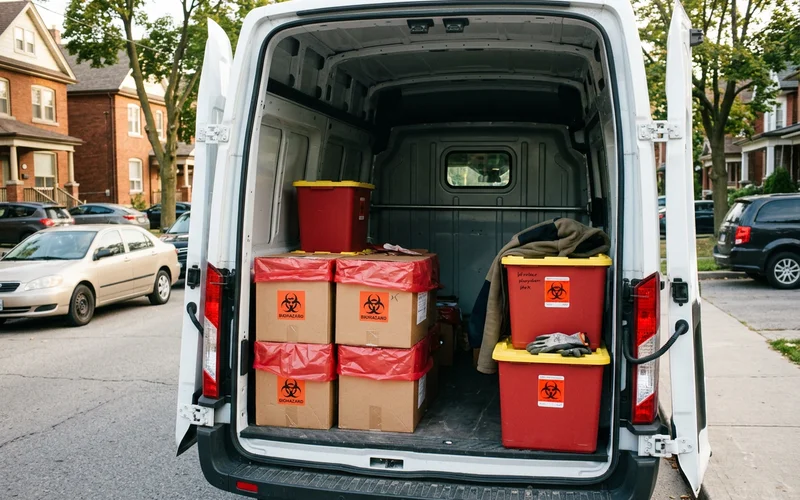
Proper hazard removal should never turn your property into a neighborhood spectacle. Privacy is just as critical as regulatory compliance during a sensitive event. We place all red biohazard bags and yellow sharps bins inside plain corrugated transport boxes before stepping outside.
Our Privacy Protocols
This double-layer approach keeps the striking warning labels completely hidden from public view. We implement several strict measures to protect your confidentiality:
- Unmarked Packaging: Outer transport boxes carry required transport codes but omit glaring biohazard graphics.
- Discrete Loading: Technicians move materials quickly through the most private property exit available.
- Off-Site Transfers: The handover to heavy-duty, licensed disposal trucks happens away from your residential street.
- Standard Vehicles: Service vans lack sensational trauma-cleaning logos.
Neighbours will simply see a standard home service visit. This careful planning protects your family from intrusive questions during an already difficult time.
Questions to Ask Any Company
Hiring a contractor without verifying their disposal methods is a massive financial gamble. You must confirm that the company fully complies with Ontario Ministry of the Environment standards. Our team welcomes these compliance questions because they separate legitimate professionals from corner-cutting operations.
Protect yourself by demanding clear answers to these specific technical questions:
- Are you actively registered with the digital RPRA Hazardous Waste Program Registry?
- Can you provide the Environmental Compliance Approval (ECA) number for your transport carrier?
- Do you separate regulated biomedical waste into approved red bags and CSA-certified sharps containers?
- Will I receive a digital copy of the finalized manifest for my insurance adjuster?
- Where is the saturated material stored securely before the licensed carrier arrives?
A reputable organization will produce this documentation instantly. If a contractor claims they just double-bag everything and take it to the local dump, you must halt the work immediately. That illegal shortcut leaves you directly liable for the resulting environmental fines.
Strict biohazard waste disposal ontario regulations exist to protect everyone involved. We encourage you to contact our specialists today if you need a fully compliant, safe, and discreet remediation plan for your property.