
Yes, Cleanup Can Go Ahead With Active Pests
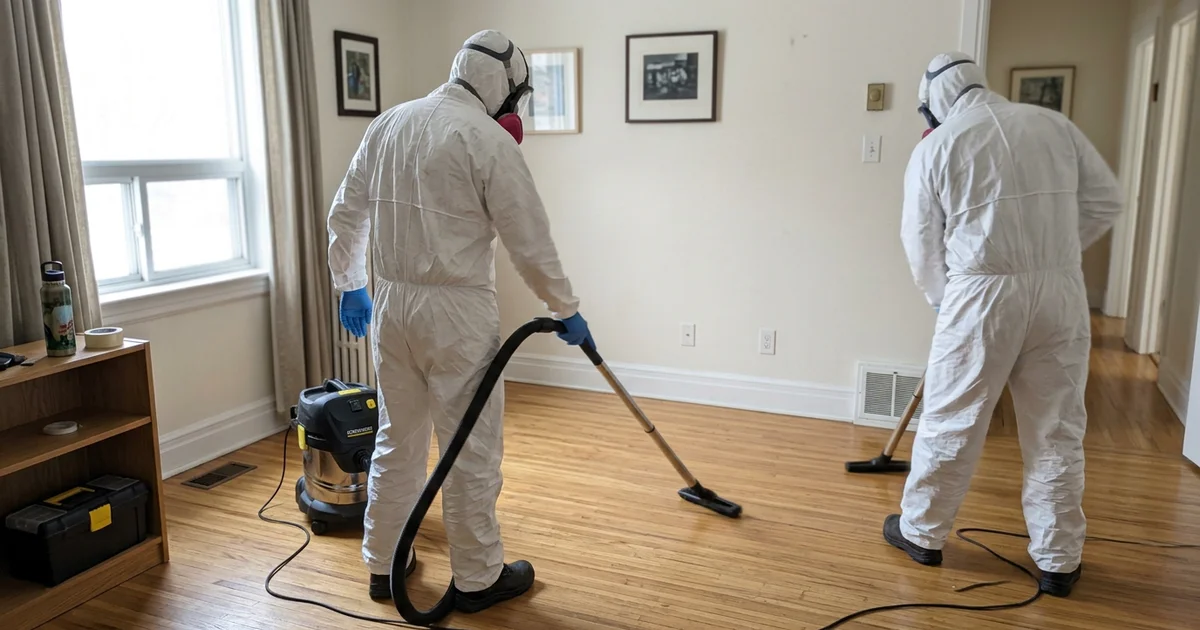
Pests and hoarding often go together. Piles provide shelter, stored food provides meals, and nobody can reach the corners to notice early signs. Families often ask whether they need to wait until the pests are gone before calling for help. You do not. In fact, waiting usually makes it worse. The key is doing things in the right order, with the right protection, as part of a whole-house hoarding cleanup plan.
The Right Order: Treat, Clear, Clean, Treat Again
| Step | What happens | Why |
|---|---|---|
| 1. First treatment | Licensed exterminator treats the home | Knocks down activity so pests do not scatter during clearing |
| 2. Clearing | Crew sorts and removes contents under PPE | Removes shelter, nesting and food sources |
| 3. Cleanup | Droppings, nesting and debris removed, HEPA vacuumed, disinfected | Removes health hazards and attractants |
| 4. Sealing | Gaps around pipes, baseboards and vents sealed where advised | Cuts off entry routes |
| 5. Follow-up treatment | Exterminator returns | Deals with any remaining pests once shelter is gone |
Skipping the first treatment is the most common mistake. Without it, moving piles sends mice and cockroaches into walls, other rooms and, in semis, row houses and condos, the neighbour’s home.
Mice and Rats: Droppings, Nesting and Hantavirus
Rodents are the pests we see most in GTA homes. They nest in paper, fabric and insulation, and they leave droppings and urine wherever they travel. The main health concern is hantavirus, which spreads when dried droppings or urine are disturbed and become airborne dust. It is rare in Ontario, but serious, which is why our crews treat every rodent job with care.
- Crews wear Tyvek, nitrile gloves and P100 respirators, not paper masks.
- Droppings and nesting are sprayed with disinfectant and left to soak before removal.
- Material is lifted, bagged and sealed, never swept dry.
- Floors and surfaces are HEPA vacuumed, then disinfected.
- Chewed wiring and damaged insulation are noted for the owner.
If you find droppings
Do not sweep or vacuum with a household vacuum. Open windows, keep pets and children away, and leave it for a crew with respirators.
Cockroaches: Kitchens, Bathrooms and Shared Walls
Cockroaches follow moisture and food, so they concentrate in kitchens, bathrooms and around appliances. In apartments and condos they travel through plumbing chases and electrical runs between units. Exterminators usually treat the affected unit and the units around it. Our crew then removes contaminated food, packaging and paper, pulls appliances to clean behind them and disinfects cabinets and counters. Clearing the clutter is what lets the treatment actually work, because it removes the hiding places.
Bed Bugs: Bag, Seal and Treat
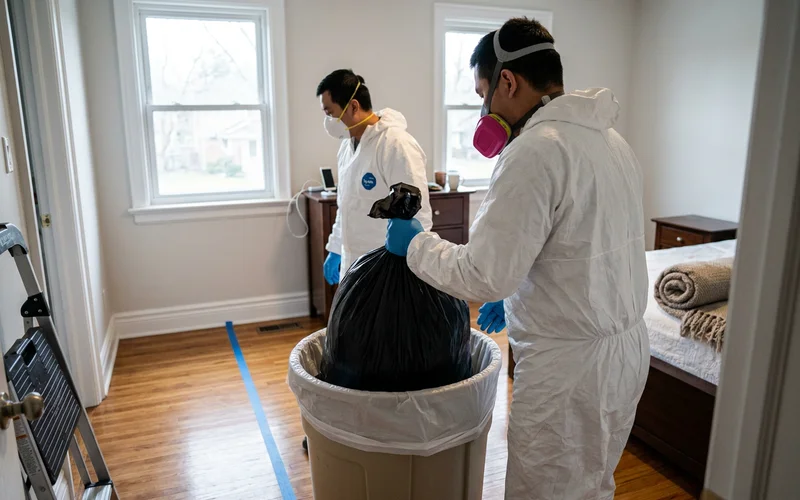
Bed bugs need a different plan because they travel on belongings. Items that are kept must be treated or sealed before leaving the infested area, or the problem moves with them. Our approach:
- Exterminator treatment and advice before sorting begins
- Kept items bagged and sealed in the room, then heat-treated or held as the exterminator advises
- Mattresses and heavily infested upholstery wrapped before removal so bugs do not drop in hallways
- Disposal in sealed bags, never left on the curb unwrapped
- Follow-up treatment after the room is cleared
Preventing Re-Infestation
Once the home is cleared and treated, a few habits keep pests from returning: store food in sealed containers, take out garbage and recycling regularly, fix leaks quickly, keep a clear gap between stored items and walls, and book a follow-up exterminator visit. Many families add a maintenance visit from our crew a few months later to check for early signs.
When Pests Make It a Biohazard Job
Heavy droppings, dead rodents, nesting in insulation or contamination mixed through the contents turn a cleanup into biohazard work. That changes the PPE, the disposal and the price. Our guide on when hoarding becomes a biohazard explains how to tell, and at the assessment we will tell you plainly which parts of the home need that level of care.
If you can see or smell pests, call before the problem spreads. We can usually assess within 24 hours and line up the exterminator so the work starts in the right order. Our guide on what to expect during a hoarding cleanup walks through the job day by day.