
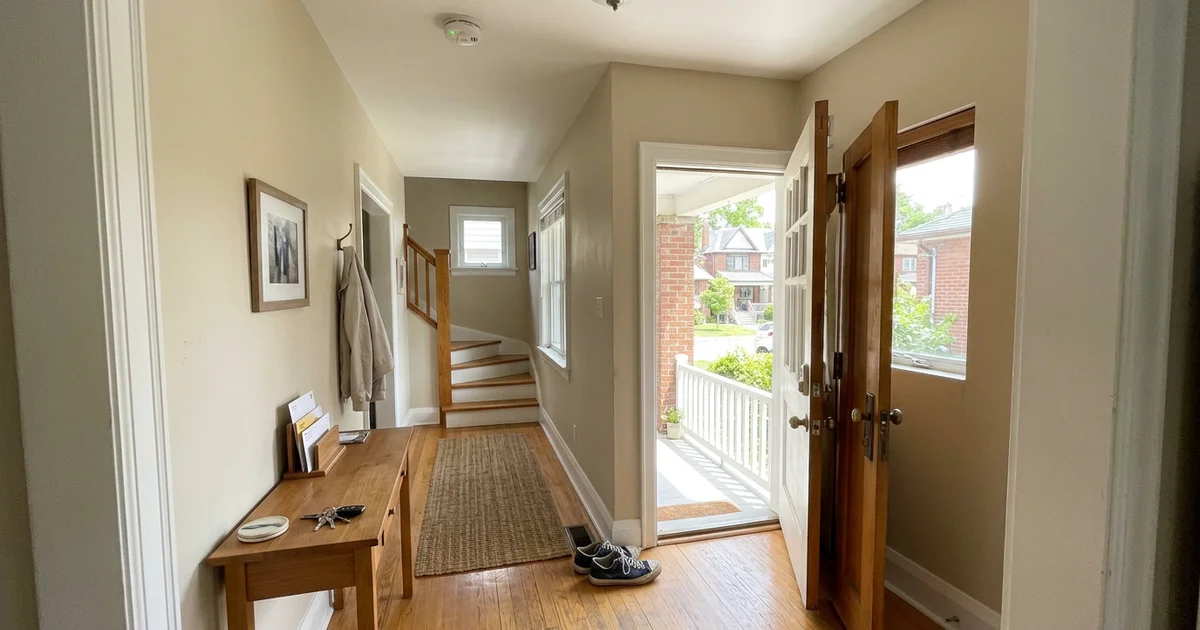
You know how quickly a standard room fire can escalate.
Our team understands that the hoarding fire risk ontario communities face requires a highly structured approach. The intense fuel load of packed items turns a routine hazard into an immediate crisis.
This guide will break down the specific statistics behind these extreme risks, clarify exactly what the regulations demand, and explore a few practical ways to respond. Often, recognizing these specific dangers is the exact reason a whole-house hoarding cleanup moves from a vague idea to an urgent priority this week.
Why Hoarding Changes Fire Risk
A hoarded home drastically alters fire dynamics by accelerating the spread rate, trapping occupants, and blocking firefighter access. Paper, plastics, and clothing act as concentrated fuel that burns significantly hotter than standard room contents.
Thirty years ago, residents had an average of 14 to 17 minutes to escape a standard burning home. According to 2025 data from Accomsure, modern synthetic materials have reduced that escape window to just 2 to 3 minutes.
Our crews know that a packed home cuts that survival time down to mere seconds. High fuel loads generate extreme heat that can trigger an early floor collapse. Tony Sabatini, a former chief fire prevention officer in Guelph, has publicly noted that excessive weight from hoarded materials severely compromises a structure’s integrity during a fire.
Three major ways excessive items change fire behavior:
- Rapid Fire Spread: Packed boxes and synthetic fabrics allow flames to jump quickly across a room.
- Impaired Search and Rescue: Firefighters cannot stay in contact with walls to orient themselves in smoke-filled, cluttered hallways.
- Structural Collapse: Water absorbed by tons of newspaper and clothing adds massive weight to already weakened floors.
What the Ontario Fire Code Says
The Ontario Fire Code hoarding regulations mandate that property owners must actively control and remove severe clutter. Article 2.4.1.1 specifically forbids the accumulation of combustible materials in quantities or locations that create an undue fire hazard.
The Fire Protection and Prevention Act (FPPA) gives local fire inspectors the authority to assess hazards and issue immediate compliance orders.
Our staff frequently sees the financial fallout when these orders are ignored. Fines for a conviction under section 28(1) of the FPPA are incredibly steep. An individual’s first offence carries a maximum statutory fine of $50,000, while corporate maximums can reach $500,000.
Starting January 1, 2026, Ontario Regulation 260/25 introduced a new administrative penalty framework. Municipalities now have the option to bypass the courts and issue administrative monetary penalties directly for specified contraventions. This update makes enforcement faster and much more common for issues like unsafe combustible accumulation.
Separately, municipal property standards bylaws, such as Toronto Municipal Code Chapter 629, cover accumulations of waste and blocked exits. Failure to comply with an order under Chapter 629 can trigger a $1,000 fine. That means a single hoarded home might draw attention from both a fire inspector and a Municipal Licensing and Standards officer.
Our guide on Property Standards Order compliance explains the city side in detail.
This is not legal advice
Fire Code duties depend on the type of building and occupancy. If you have received an order or notice, follow its exact wording and ask the issuing office if anything is unclear.

The Highest-Risk Areas in a Hoarded Home
The highest-risk areas in any hoarded property are the mechanical rooms, kitchens, and primary exit routes. Blocking these zones provides ignition sources with direct access to fuel and traps the occupants inside.
| Area | Why it matters | What we clear | Target Clearance Standard |
|---|---|---|---|
| Exits and stairs | Escape route for residents, entry route for firefighters | Full width of doors, halls and stairs | Minimum 36 inches wide |
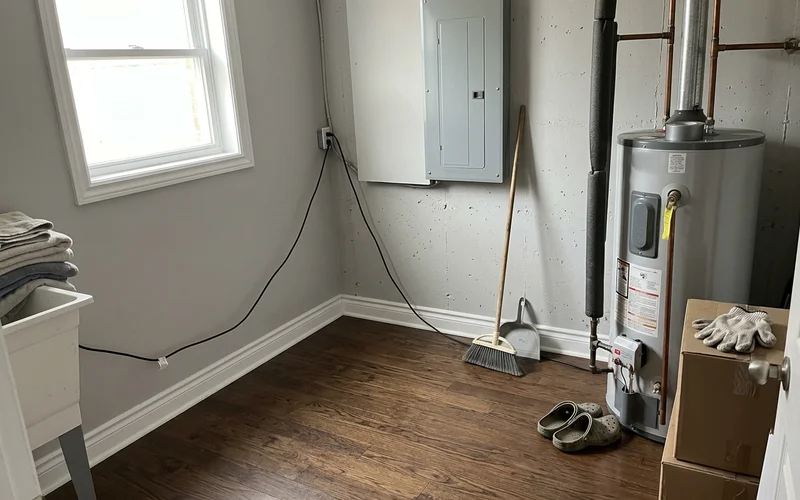
| Furnace and water heater | Open flames and heat beside fuel | At least a metre of clear space all round | 1 metre (39 inches) minimum |
| Kitchen stove | Most home fires start with cooking | Counters, burners, oven and nearby walls | 3 feet from all heat sources |
| Electrical panel | Overheated wiring near paper | Clear access and space in front | 1 metre clearance radius |
| Space heaters and cords | Overloaded outlets, heaters near fabric | Remove items within reach, flag cords | 3 feet (1 metre) minimum |
| Bedroom windows | Second exit for sleeping areas | Window and path to it | Fully unobstructed opening |
Our team approaches these areas with extreme caution because hidden hazards are very common. A major pitfall involves property owners clearing the floor but ignoring vertical storage. Stacks of cardboard or newspapers piled too close to overhead light fixtures can ignite just as easily as items placed next to a space heater.
We regularly uncover buried extension cords that have frayed under the heavy weight of surrounding boxes. Damaged wires provide a perfect spark for the surrounding paper, making electrical panels and cord pathways top priorities for immediate extraction.
Reducing Combustible Load First
When fire risk is the main concern, the primary focus must be reducing the combustible load immediately. This strategy targets the removal of the most flammable materials from the most dangerous places on day one.
Our technicians plan the job strictly around safety protocols rather than aesthetics. That means newspapers, flyers, cardboard boxes, and loose paper near heat sources come out early. We always sort for photos, documents, and anything important before removing the bulk debris.
Exits and stairs are cleared on the very first day to establish safe egress. Then the crew works outward from the mechanical room and kitchen. By the end of the first day or two, the biggest risks are usually gone, even if the full cleanup takes longer.
To ensure compliance with local bylaws, exact measurements dictate the physical space around appliances. The Ontario Office of the Fire Marshal recommends strict separation between ignition sources and fuel. Addressing these high-risk areas first gives property owners a verifiable improvement to show inspectors immediately.
Three steps we prioritize during day one:
- Establish Egress: Clear a full path from the front and back doors directly to the street.
- Create Defensible Space: Remove all loose paper and boxes within one metre of the furnace and water heater.
- Secure the Kitchen: Strip all flammable items away from the stove and oven burners.
Smoke Alarms and Egress After Cleanup
Ontario law requires working smoke alarms on every storey and outside all sleeping areas. Carbon monoxide alarms are also mandatory near sleeping areas in homes with fuel-burning appliances or attached garages.
Our inspectors frequently find alarms completely buried, disconnected, or missing their batteries in cluttered homes. A 2024 report from the National Fire Protection Association (NFPA) found that hoarded homes are statistically far less likely to have working smoke alarms. This missing early warning system is a primary reason why hoarding fires turn fatal so quickly.
As part of the final handoff, technicians check that every alarm is fully accessible. They point out any units that are missing or completely non-functional, so the owner or landlord can replace them immediately.
Next, the crew walks the escape routes with the family to verify safe egress. We physically test the following points to confirm they open fully:
- Primary entry doors (front and back).
- All interior stairwells and hallways.
- Ground-floor and bedroom windows.
In a true emergency, residents will only have seconds to use these routes before toxic smoke drops visibility to absolute zero.
Why Neighbours and Landlords Worry
In detached homes, the fire risk mostly falls directly on the people living inside. In semi-detached houses, row houses, duplexes, basement apartments, and condo towers, that intense risk spreads to everyone else.
Fire and toxic smoke move rapidly through shared walls, open attics, and common corridors. A fire starting in one heavily cluttered unit can easily force an entire multi-family building to evacuate.
That severe threat is exactly why landlords, property managers, and condo boards act quickly once they see the warning signs. The Ontario Residential Tenancies Act (RTA) allows landlords to issue eviction notices if a tenant’s clutter substantially interferes with other tenants’ reasonable enjoyment or violates strict health and safety codes.
Our property management clients know that insurers constantly flag heavy fire loads during routine inspections. If a landlord fails to demonstrate due diligence in enforcing the Fire Code, they can be held legally liable for any damages that occur during a subsequent fire. Our guide on hoarding and home insurance renewal denial explains what happens when an insurer flags a home.
Insider Tip for Landlords Property managers should document all communication regarding safety concerns. Providing a written request to clear a one-metre radius around the furnace demonstrates your proactive commitment to fire safety before an inspector ever arrives.
What to Do if You Are Worried
If you are worried about a loved one’s home, start by focusing the conversation purely on safety rather than the total volume of items. Ask if you can help clear the main hallway and the immediate area around the furnace first.
The American Psychiatric Association (APA) notes that forced cleanouts often cause severe emotional distress.
If you are a landlord or neighbour, talk to the resident calmly first if it is safe to do so. If there is an immediate, life-threatening danger, call 911 right away.
Otherwise, scheduling a professional assessment is the safest next step.
Our free assessment gives you a detailed, written plan that puts fire safety first. This approach relies on a compassionate crew that sorts items alongside the resident instead of discarding everything in one sweep.
Emergency hoarding cleanups in Ontario are often required to meet strict 30-day municipal compliance deadlines. Acting early prevents a stressful, forced intervention.
Contact our team today to schedule your confidential safety evaluation and take the first step toward a secure home.