Insurance is one of the first things families and property owners ask about after a biohazard incident: an unattended death, a serious injury, a sewage backup, a crime. It is also one of the most confusing parts of the process, at exactly the moment people have the least energy for paperwork. This update explains how Toronto Hoarding Cleanup handles biohazard claims in 2026: what goes into our documentation package, how the timeline usually runs and what families can do to protect their claim. We are describing our own process here, not any insurer’s policy rules, which vary by carrier and policy.
What Is in Our 2026 Documentation Package
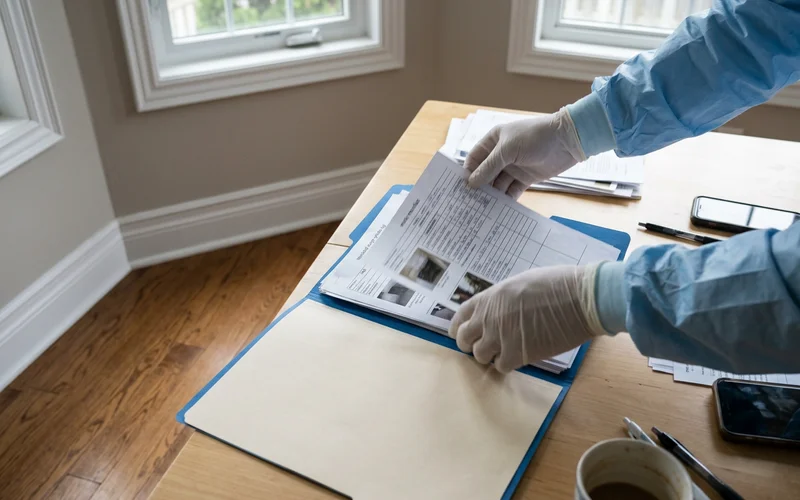
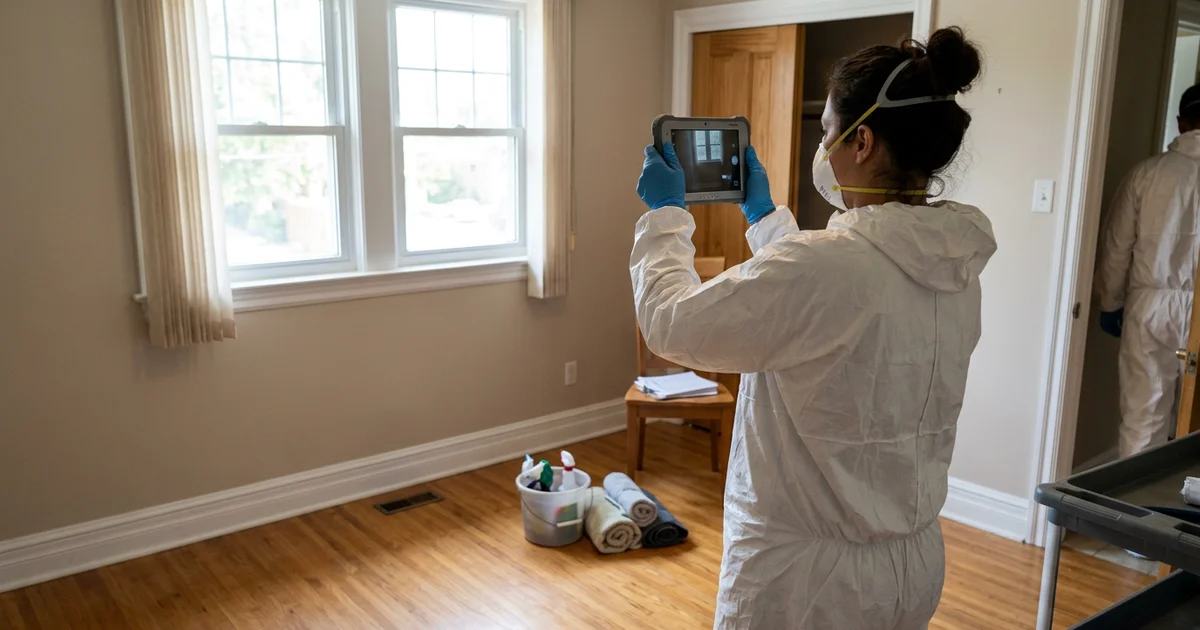
Every biohazard job where a claim is possible now comes with the same standard package, prepared as the work happens rather than pieced together afterwards.
| Document | What it shows |
|---|---|
| Conditions-as-found photo log | Dated photos of each affected area before anything moves |
| Itemized scope | Containment, materials removed, disinfection steps, crew hours, disposal |
| Moisture and spread notes | How far fluids or water travelled, including below the surface |
| Materials removal list | Carpet, pad, subfloor, drywall and contents removed, with photos |
| Biohazard waste manifest | Licensed carrier, weight and receiving facility under O. Reg. 347 |
| ATP verification results | Surface readings confirming decontamination |
| Before and after photos | The completed work, room by room |
| Completion letter | Summary of work, dates and our certifications |
Adjusters tell us the manifest and the conditions-as-found photos are the two items most often missing from other files, so we treat both as non-negotiable.
Photograph before you touch
Once contaminated materials are moved, the evidence of the loss is gone. If you can, take a few photos from the doorway before anyone cleans, then close the door.
How We Coordinate With Adjusters
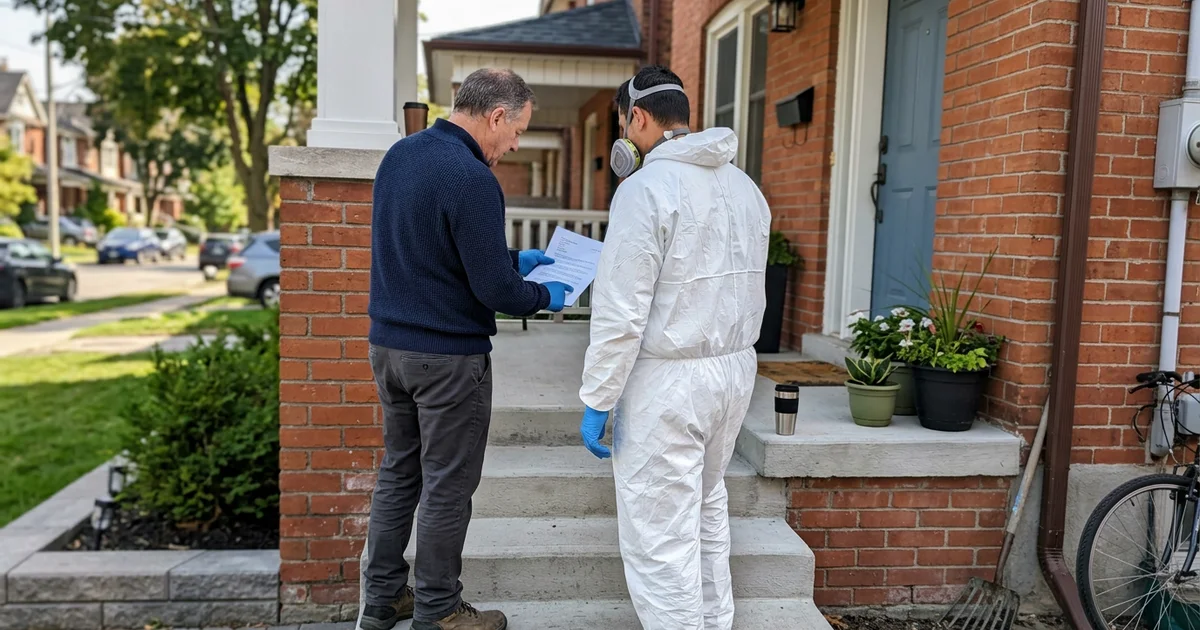
We regularly work with adjusters from Intact, Aviva, TD, Allstate, Economical and other major Canadian carriers. With your permission, our crew lead speaks with the adjuster directly, sends the scope in the format they ask for and answers technical questions about PPE, containment and disposal. That means you do not have to retell a painful story to several people.
Whether we bill the insurer directly depends on the carrier and the claim. We confirm that with you before work starts, and if part of the job is not covered, we split the scope so the claim and any out-of-pocket portion are clear.
A Typical Timeline, First Call to Adjuster File
- Hour 0: You call us. If the scene involved police or the coroner, we confirm it has been released.
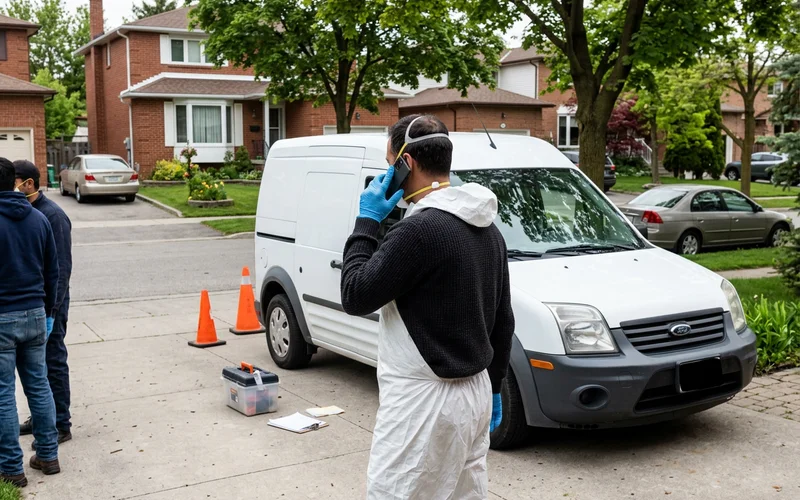
- Hours 2-3: A crew lead arrives in an unmarked vehicle, photographs conditions and maps the spread.
- Same day: Written scope sent to you and, with permission, to your adjuster.
- Days 1-3: Remediation, with materials removal documented as it happens.
- Final day: ATP verification, completion letter, manifest and photo log sent as one package.
Most families tell us the hardest part is the first phone call. After that, the paperwork largely takes care of itself.
What Families Should Keep
Keep your policy number, the claim number, the adjuster’s contact details and copies of everything we send. Write down the date and time of the incident and when the home was released. If you paid any emergency costs yourself, such as hotel stays, keep the receipts. Our guides on insurance coverage for hoarding and biohazard cleanup and biohazard waste disposal in Ontario cover the background in more detail.
Nothing Changed in the Rules, Only in Our Process
To be clear, this is not news about new insurance regulations. Policies, deductibles and coverage decisions are set by your insurer. What changed this year is how consistently we document, so that every claim we touch starts with the evidence an adjuster needs.
Dealing with a biohazard incident now? Our biohazard remediation crews respond 24/7 and start the documentation the moment they arrive.