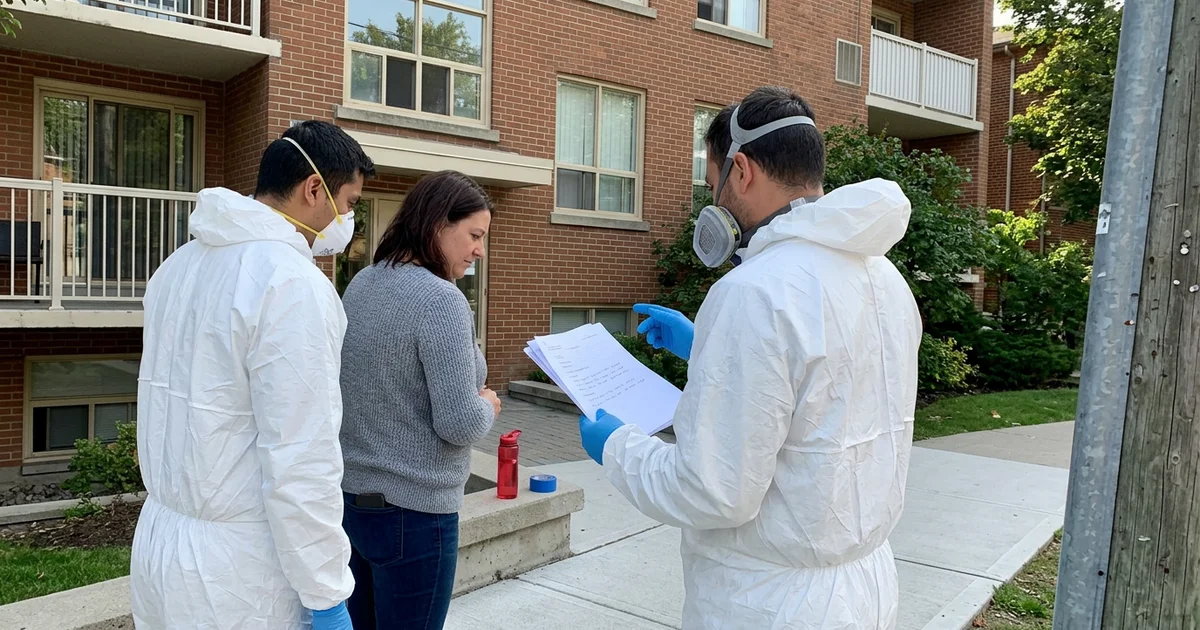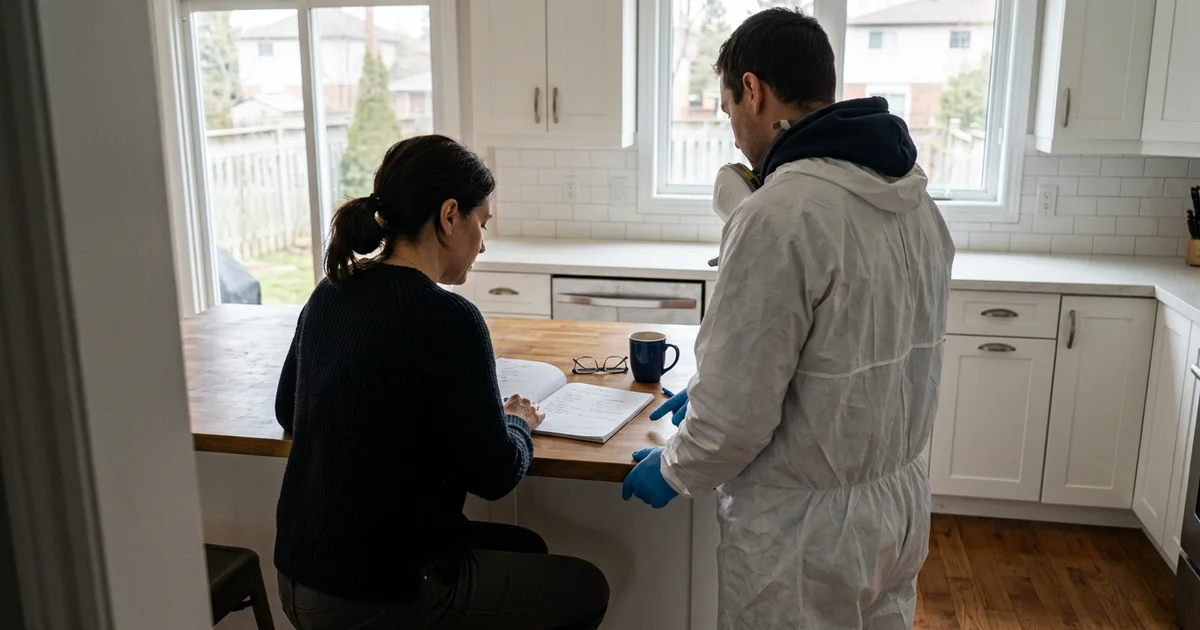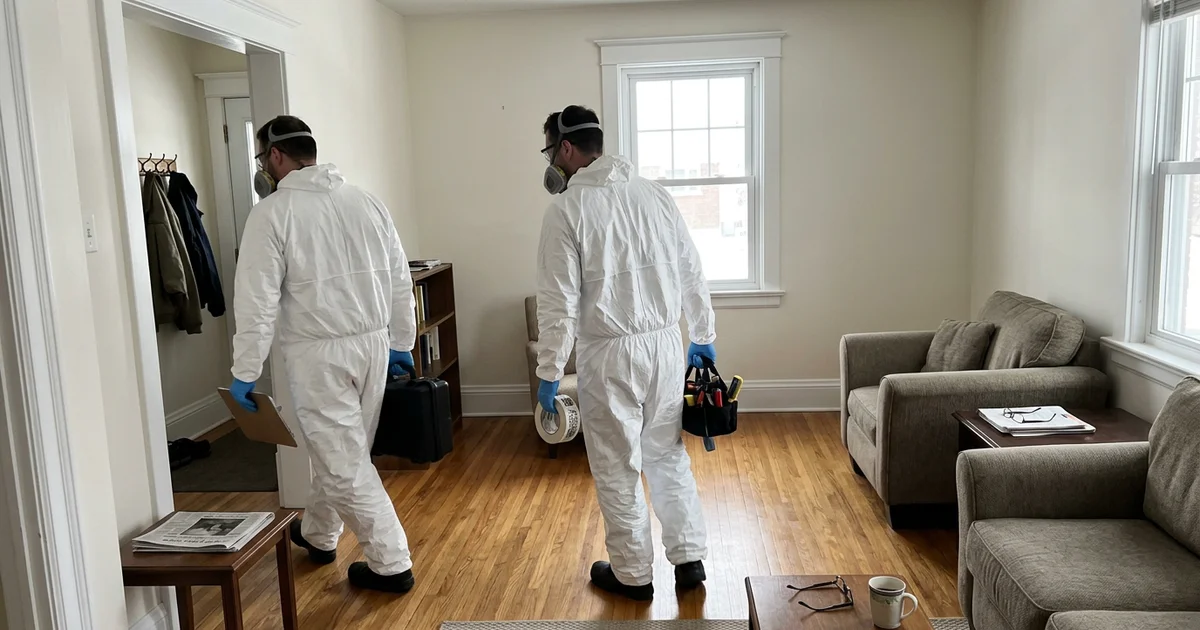
Biohazard cleaning is the professional cleanup of materials that can carry disease or cause harm to people: blood and body fluids, human and animal waste, sharps, decomposition, sewage and heavy mold. It is different from regular cleaning in almost every way, from the protective equipment to how the waste leaves the building. Most people only learn about it when they need it, usually during a very hard week. This post explains what it covers, how it works and why it is regulated.
What Counts as a Biohazard at Home
| Situation | Examples |
|---|---|
| Blood and body fluids | Injuries, accidents, crime scenes, medical events |
| Decomposition | Unattended deaths |
| Human and animal waste | Hoarded homes, animal hoarding, sewage |
| Sharps | Needles, syringes, lancets |
| Sewage | Backups into basements |
| Heavy mold and rot | Long-term leaks hidden behind contents |
| Mixed contamination | Hoarded homes where several of the above combine |
Not every messy home is a biohazard. Clutter alone is not. It becomes biohazard work when any of these materials are present.
How Biohazard Cleaning Works
Professional crews follow a set order, based on standards like IICRC S540 for trauma and crime scene work and OSHA 1910.1030 for bloodborne pathogens:
- Assess what is contaminated, including below the surface.
- Contain the area with poly sheeting and HEPA negative air.
- Remove porous materials that absorbed fluids or waste.
- Clean surfaces, often with enzyme digesters for organic material.
- Disinfect with hospital-grade products at the right contact time.
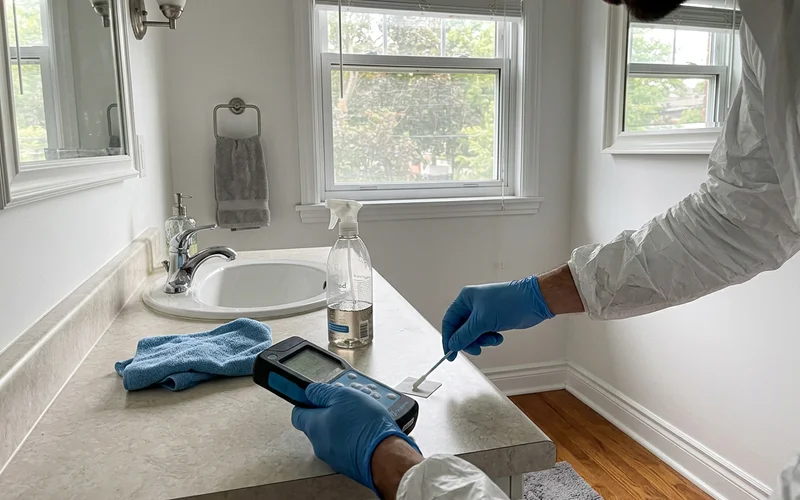
- Verify with tools like ATP testing that measure organic residue.
- Dispose of regulated waste through a licensed carrier with a manifest.
Why not just bleach it?
Bleach can disinfect hard surfaces it reaches. It cannot reach fluids soaked into carpet pad, subfloor or drywall, which is where much of the risk sits. Our guide on cleaning up blood yourself explains this in more detail.
Why It Is Regulated
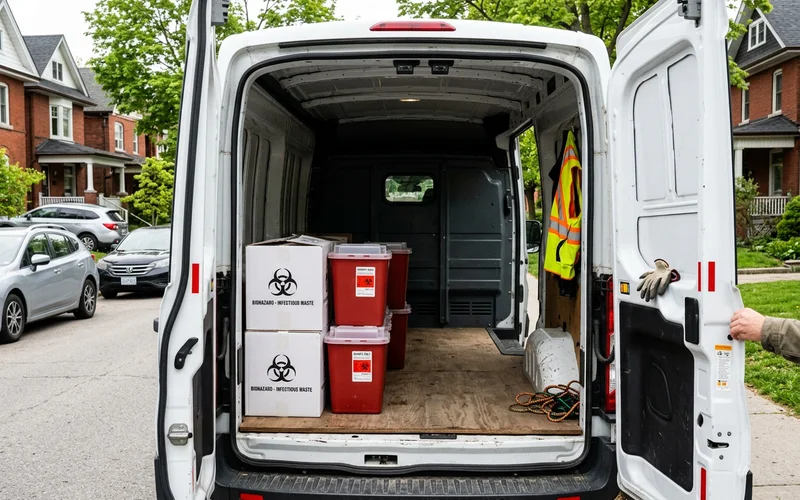
Biohazard work is regulated because the risks reach beyond the people in the home. Workers handling these materials must be trained and protected under Ontario workplace rules, including OHSA and WHMIS. Regulated waste such as sharps and fluid-soaked materials falls under O. Reg. 347, which requires proper packaging, transport by a licensed carrier and tracking with a manifest to an approved facility. That protects sanitation workers, neighbours and the environment, and it gives insurers and property owners proof that disposal was done properly.
Who Does Biohazard Cleaning
Biohazard cleaning is done by remediation companies with trained crews, the right equipment and access to licensed waste carriers. When choosing one, look for IICRC S540 certification, OSHA 1910.1030 training, WSIB registration, insurance and a clear answer about how waste is disposed of. Discretion matters too: at Toronto Hoarding Cleanup, unmarked vehicles and crews who suit up inside protect families who are already going through something difficult.
What It Costs
In Ontario, most biohazard cleanups cost $2,500 to $8,500, with complex crime scenes reaching around $9,500. Price depends on how far contamination spread, what materials must be removed and how much regulated waste is produced. Our guide on biohazard cleanup cost in Ontario breaks down the drivers. Sudden events like deaths, injuries and sewage backups are often covered by home insurance.
Facing a biohazard situation? Our biohazard remediation crews respond 24/7 across the GTA, in unmarked vehicles, with full documentation for your insurer.